Writing Dialogue That AI Video Models Can Perform
An AI video dialogue prompt works when the line is short, speakable and belongs to one speaker. How many words fit a shot, and how to split a long speech.
By Aaditya Brahmbhatt (guest)7 min read
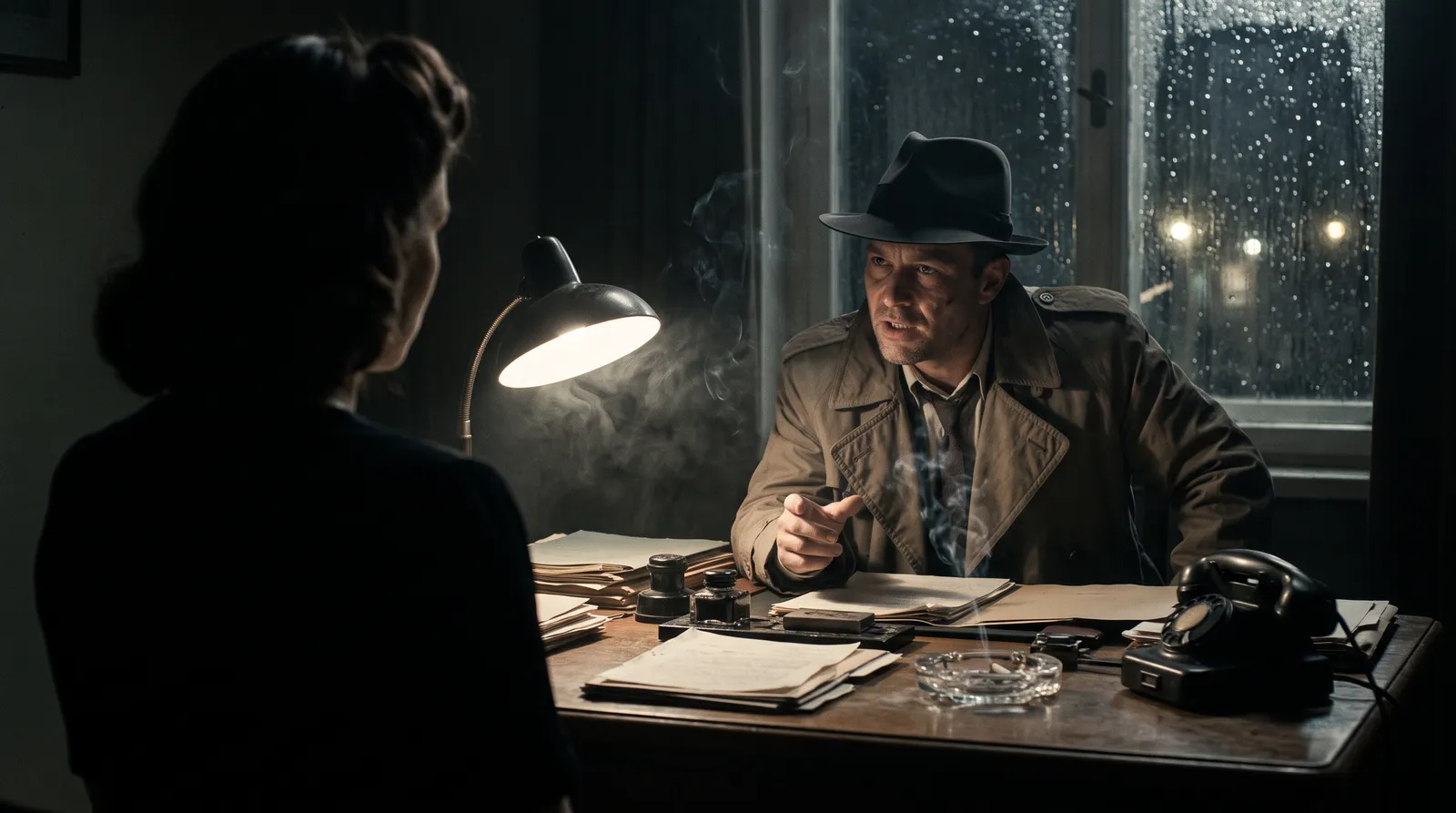
Dialogue that an AI video model can perform is short, easy to say and owned by one speaker. Write lines of 12 words or fewer, give each shot one speaker and one thought, and put the line in quotation marks with who says it and how. Longer speeches are split across shots.
Key takeaways
- Two to three words a second. A 5-second clip holds about 10 words. A 10-second clip holds about 22.
- One speaker a shot. The other person listens, mouth closed.
- One thought a line. If the line has an "and" in the middle, it is probably two lines.
- Write it as it is said. "Nineteen ninety-eight", not "1998".
- Split at the breath. A 30-word speech is three shots, not one.
Why does dialogue for AI video need its own rules?
Four things are different from writing for actors.
The clip is short. Most video models make a few seconds at a time, up to about half a minute on the longest. The line has to fit inside the clip with room to breathe.
The voice is made fresh each time. When the model makes the voice with the picture, each clip is a new performance. The more a character says in one stretch, the more there is to drift.
The model reads text, not intent. An actor knows that "Dr." is "doctor" and "St." might be "street" or "saint". A model guesses.
Mouths must match. Two people speaking at once, or a line that starts before the speaker turns to camera, gives the model more to get wrong.
None of this is bad for the writing. Short lines are usually better lines.
How many words fit in a shot?
People speak about two to three words a second. Leave half a second before the line and half a second after. So the sum is:
Words = (clip length in seconds, minus 1) × 2.5
| Clip | Words that fit | An example of that length |
|---|---|---|
| 4 s | 7 | "You're early. I haven't lit the oven." |
| 5 s | 10 | "I walked past this door every morning for a year." |
| 6 s | 12 | "My mother baked here once. She said you still use her recipe." |
| 8 s | 17 | Two short sentences |
| 10 s | 22 | Three short sentences, or split it |
| 15 s | 35 | A short speech. Usually better as two shots |
Slow down for emotion. A line said through tears or in a whisper needs more time than its word count suggests. Give it the next size up.
The same sum sets the length of a shot in the edit. See pacing an AI film.
What makes a line easy to perform?
One thought. "I came back for the recipe" is a line. "I came back for the recipe, and also because I never got to say goodbye to her" is two.
Plain, concrete words. Short words with clear sounds. Avoid tongue-twisters and long runs of "s" sounds.
Contractions. "I didn't know", not "I did not know", unless the character is being formal on purpose.
Numbers and names as they sound. Write "twenty-five thousand", "three p.m." as "three in the afternoon", and "Dr." as "Doctor". If a name keeps coming out wrong, respell it the way it is said.
Punctuation as a nudge. A comma suggests a breath. An ellipsis suggests a trailing pause. A dash suggests a line cut off. Many models respond to these, but not reliably. Treat them as hints.
The language's own script. If the line is in Hindi, write it in Devanagari, not in Roman letters, and name the language in the prompt. Check which languages your model speaks before you write the scene.
How do you split a long speech?
Find the breaths. Each one is a possible cut.
Here is a 36-word speech:
"I walked past this door every morning for a year because my mother used to bake here, and she always told me that the smell of your bread was the only thing that got her up."
At 36 words it needs about 15 seconds in one take, with no mistakes. Split in three:
| Shot | Picture | Line | Words | Length |
|---|---|---|---|---|
| 1 | Close on Sam | "I walked past this door every morning for a year." | 10 | 5 s |
| 2 | Close on Mira, listening | SAM, off screen: "My mother baked here." | 4 | 3 s |
| 3 | Two-shot, Sam speaks | "She said your bread was the only thing that got her up." | 12 | 6 s |
Three shots, 14 seconds, 26 words. Ten words were cut and nothing was lost. Shot 2 plays his line over her face. Her mouth is closed, so there is nothing to match, and we see the line land.
That is the most useful trick in this post. A line heard over a listener, a pair of hands or a window does not need to match anyone's mouth.
How do you write the line into the prompt?
Put four things in this order.
- Who speaks. By name if the tool knows the character. By position or description if not: "the woman on the left".
- How. Two or three words: "quietly, not looking up".
- The line, in quotation marks. Nothing else in quotation marks.
- Who does not speak, and what else we hear. "Sam listens, mouth closed. Oven hum, no music."
These are examples written for this post. They have not been tested on any model.
| Shot | Example prompt |
|---|---|
| A single | Close-up, static. Mira looks up from the dough and says quietly: "You're early." Oven hum. No music. |
| A two-shot, one line | Two-shot, static. Mira on the left, Sam on the right. Sam says, almost smiling: "I smelled the bread." Mira listens, mouth closed. A door bell fades. |
| A listener | Close-up, static. Mira listens. Her eyes drop, then lift. She does not speak. Room tone only. |
| A cut-off line | Medium, static. Sam starts, unsure: "I just wanted to—" He stops and looks at the floor. Silence. |
General prompt structure is in how to write AI video prompts.
What about two people in one shot?
Give the shot one line. Name who says it and say that the other listens. Then cut for the reply.
A fast exchange is four short shots, not one long one:
- Close on Mira: "You're early."
- Close on Sam: "I couldn't sleep."
- Close on Mira: "Hungry?"
- Two-shot: Sam nods. No line.
That is four shots of 2 to 3 seconds each, about ten seconds in all, and the last answer is a nod. The picture can do the talking.
How do you keep a voice the same from shot to shot?
- Write one voice line per character and reuse it word for word. "Mira: low, unhurried, a little hoarse." Paste it into every prompt she speaks in.
- Keep her lines close to the same length and energy within a scene.
- Or separate voice from picture. Some tools let you record or generate all of a character's lines in one voice and lay them under the shots, or say a line again in a chosen voice after the render. If yours does, use it for any character with more than a few lines.
How do you check dialogue before you render?
Read it aloud with a timer. Every line, at the pace the character would say it. If you run out of breath, so will the shot.
Then do three passes:
- Cut what the picture shows. If we see her unlock the door, she does not say "let me open up".
- Cut the first line of each scene. Scenes often start one line too early.
- Mark the hard words. Names, numbers, anything in another language. Fix them now.
An AI script writer can draft a scene or tighten one. Read every line aloud yourself all the same. The whole process, from script to edit, is in how to make a movie with AI.
What are the common dialogue mistakes?
- A 25-word line in a 5-second clip. Shorten it or split it.
- Two speakers in one shot. One line a shot.
- Explaining the plot aloud. Show it, or put it in narration.
- Digits and abbreviations. Write them as they are said.
- No air. Half a second before and after every line.
- Every line on the speaker's face. Play some over the listener.
- A different voice description each time. Reuse one line.
How we checked
Written on 10 November 2026. The speaking rate of two to three words a second and the word counts worked out from it are rules of thumb from ordinary screenwriting and editing practice. They are starting points, not measurements, and nothing here is a test of a tool. How well a model handles punctuation, names, languages and two people in a frame differs by model and changes often, so try a line before you write a whole scene around it. The bakery lines and the example prompts are made up for this post and are untested.
Questions people ask
Twelve words or fewer for most shots. People speak two to three words a second, so a 5-second clip holds about 10 words and a 6-second clip about 12, with half a second of air on each side.
Keep reading
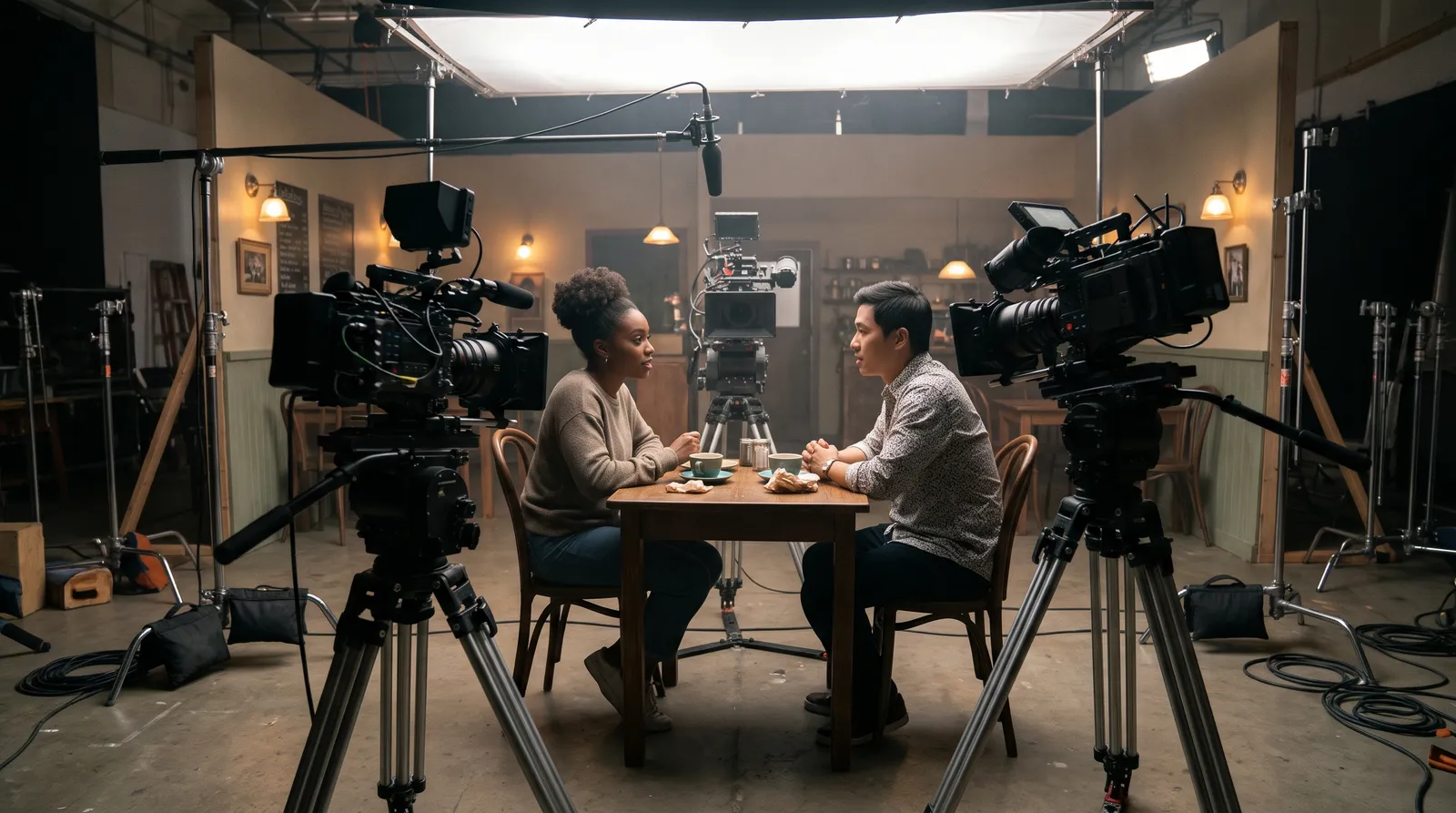
Craft23 November 20267 min read
Coverage for AI Films: How Many Shots Does a Scene Need?
Film coverage is the set of angles a scene is filmed from. How many shots a scene needs, master shot and coverage, shot reverse shot, and what AI clips change.
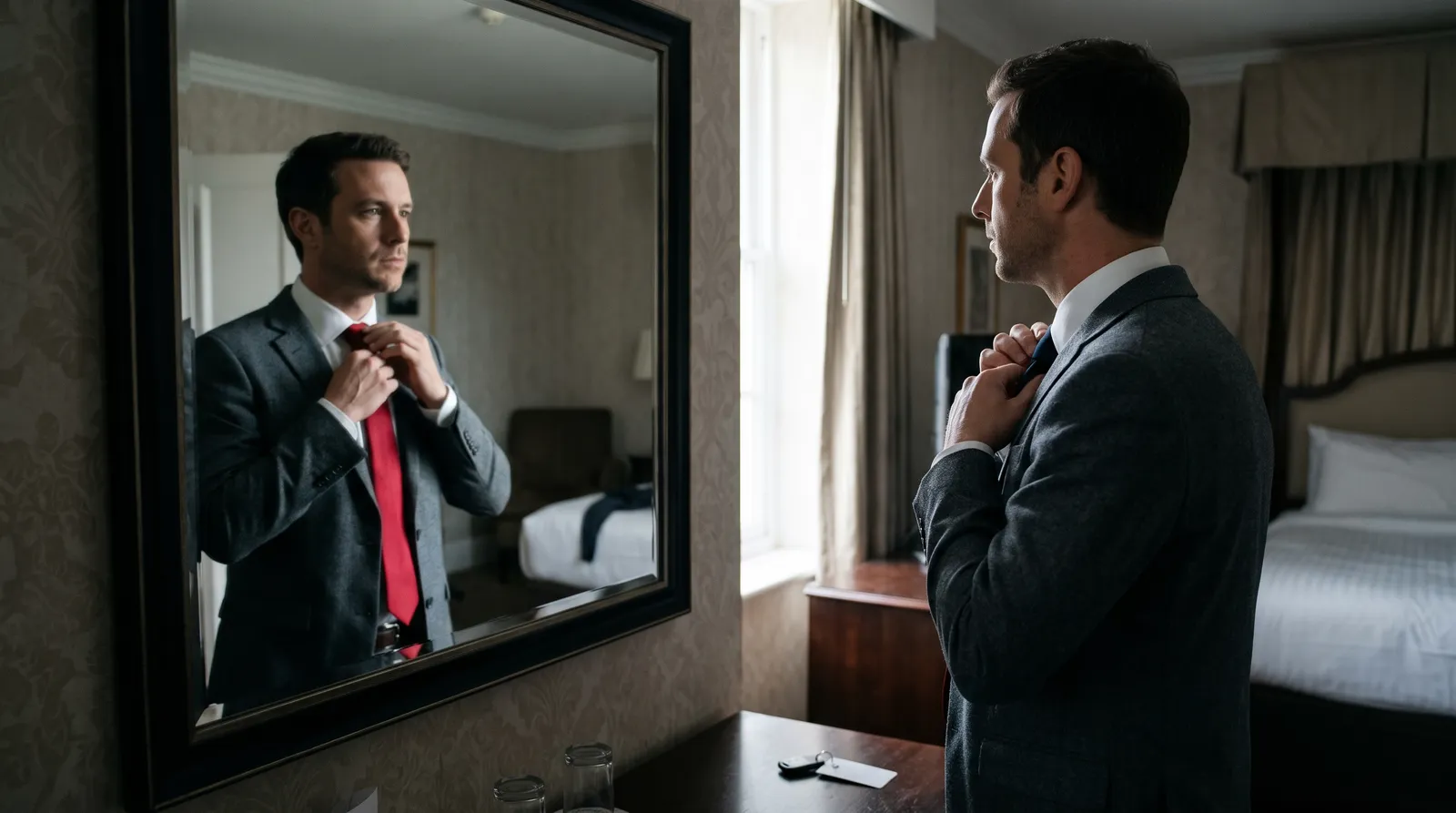
Craft22 November 20267 min read
Continuity Mistakes in AI Films and How to Catch Them
AI video continuity errors come in nine kinds, from a changed face to a flipped screen direction. A checklist to run on every clip before you start the edit.
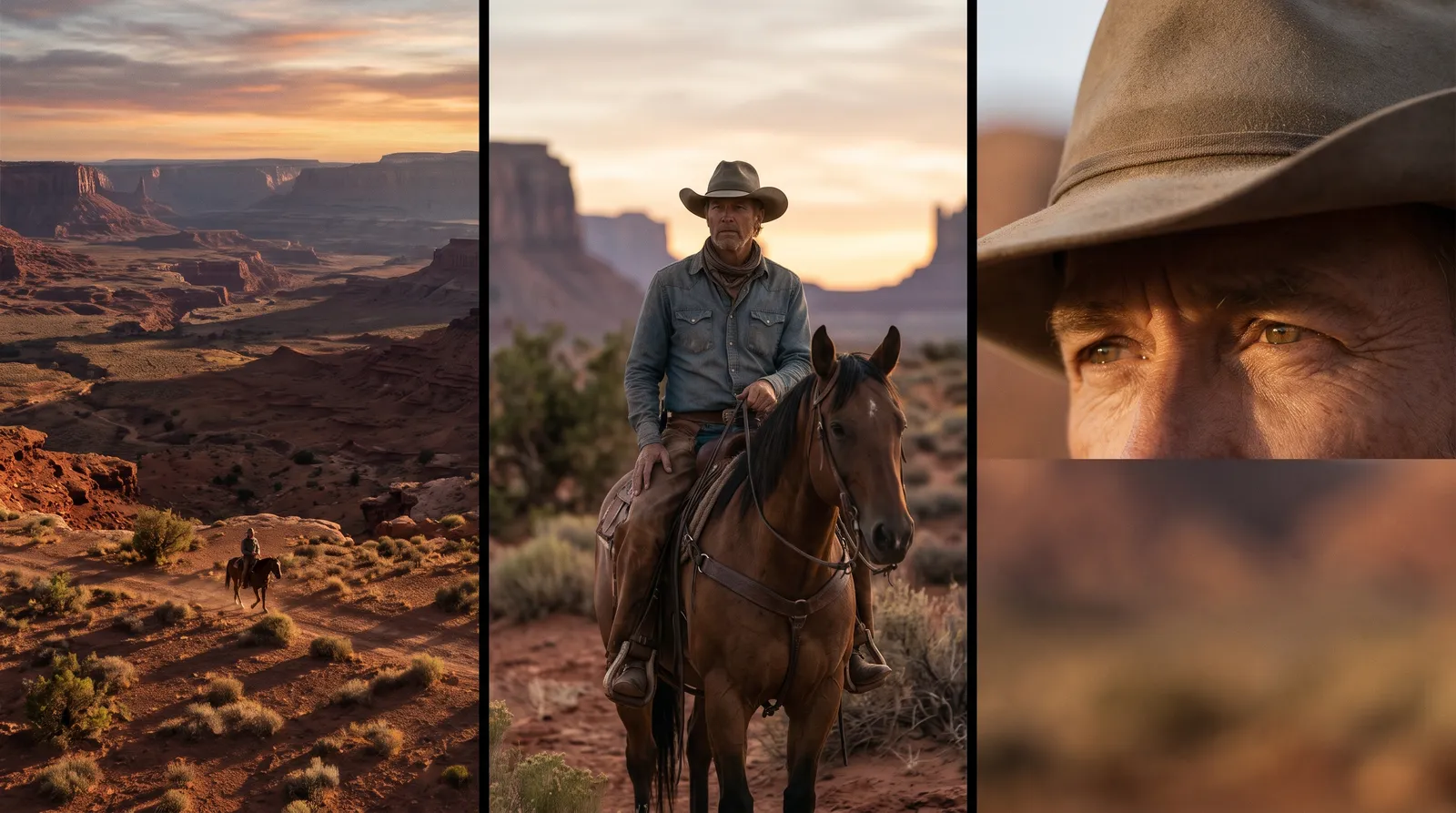
Craft20 November 20267 min read
Shot Sizes Explained: Wide, Medium, Close and When to Use
Shot sizes are how much of the subject fills the frame. A chart of the eight common sizes, what each is for, and how to ask a video model for one.
More than images and video
Scripts, storyboards, motion, and characters in every version. Each one on its own, or all of them in a film.
Write a script
An idea in, a properly formatted screenplay out. Edit any line, then board it or film it.
Board a storyboard
A panel for every shot, as AI stills or quick vector frames. Export it as a pitch deck.

Make motion
Titles, explainers and moving storyboards, drawn as vector animation by the AI you pick.
Characters, places, products
One subject in many versions, or new ideas for it. Every angle, look and light.
Your first film is one sentence away.
Free to start. Pay only for what you render.