Best AI Film Studios in 2026: 9 Platforms Compared
The best AI film studio depends on the job. Nine platforms compared on price, film workflow and team controls. Every price checked on 10 November 2026.
By Divy Brahmbhatt9 min read
There is no single best AI film studio in 2026. LTX Studio suits solo filmmakers who want storyboards and its own video model from $15 a month. OpenArt Director is the cheapest film agent at $14. Runway and Higgsfield have the most scale. Hyperdream suits teams that make whole films for clients and need per-client budgets. Every price here was checked on 10 November 2026.
Key takeaways
- LTX Studio starts at $15 a month and runs its own LTX-2.5 and LTX-2.3 video models. AI storyboards and pitch decks start on the $35 Standard plan.
- OpenArt Director is on every paid OpenArt plan from $14 a month and builds multi-scene videos up to five minutes long.
- Runway Team costs $69 a seat with 6,900 pooled credits. Higgsfield reports more than 32 million users and 250+ effect presets.
- Hyperdream takes a film through eight steps, Script to Edit. Its film agent, Director, is on the $99 Pro plan. Its Team plan, from $59 a seat, has a monthly credit budget per client.
- Hyperdream is not the cheapest. Its entry plan is $29 a month, above LTX Studio, OpenArt, Runway and Higgsfield.
What is an AI film studio?
An AI film studio is one project that holds the whole film: the script, the characters, the storyboard, the shots and the cut. An AI video generator makes one clip from one prompt. The difference shows at shot five, when the lead still has to look like the lead.
The nine platforms here fall into two groups. Six plan a film from a script or an idea: LTX Studio, OpenArt Director, Invideo AI, Katalist, Morphic and Hyperdream. Three are model-first platforms that filmmakers build a workflow around: Runway, Google Flow and Higgsfield.
How do the nine platforms compare?
| Platform | Best for | Lowest paid plan | Film workflow | Where it is ahead of Hyperdream |
|---|---|---|---|---|
| LTX Studio | Solo filmmakers who want storyboards | $15 a month | AI storyboards, Elements, pitch decks | Lower price, own video model, far more reviews |
| OpenArt Director | Trying a film agent cheaply | $14 a month | Films directed by chat, up to five minutes | Lower price, 100+ models, a public model ranking |
| Runway | Studios that want Runway's own models | $15 a month | Model-first, with an agent and workflows | Own models, an API, plugins for editing software |
| Google Flow | Google's models at the source | Inside Google AI plans | Scenebuilder for editing and extending shots | Google's own models, bundled with Gemini |
| Higgsfield | Effects, social video, large teams | $19 a month | Storyboard tool and Cinema Studio | 35+ models, 250+ presets, 32 million users |
| Invideo AI | Editors who want an AI timeline | $9 a seat | Script, storyboard and timeline | Lowest price, free guest seats |
| Katalist | Storyboards for ads and pitches | $19 a month | Script to storyboard to video | Premiere Pro integration on mid plans |
| Morphic | Frame-level control on a canvas | $19 a month | Canvas, inbetweening, style training | Lower price, train your own style |
| Hyperdream | Teams making whole films for clients | $29 a month | Eight steps, Script to Edit | Not applicable |
Credits are left out of this table on purpose. Each tool counts them differently, so 8,000 credits on one is not twenty times 390 on another. AI film studio pricing compared goes through the numbers.
What does each platform do well?
LTX Studio: for solo filmmakers who want storyboards
LTX Studio comes from the company that makes the LTX video models. Its pricing page lists Lite at $15 a month (8,000 credits), Standard at $35 (28,000) and Pro at $125 (110,000), plus 800 one-time credits on the free plan. AI storyboards, pitch decks and saved Elements, its word for reusable characters and objects, start on Standard. Pro allows three collaborators per project. Brand Kit and credit allocation across an organisation are on Enterprise.
When we asked ChatGPT for the best AI filmmaking platform on 10 November 2026, it called LTX Studio the "best complete filmmaking workflow". It also has a long public record: one directory counts 632 reviews across three platforms (its check of 6 October 2026). Full comparison: Hyperdream vs LTX Studio.
OpenArt Director: the cheapest way to try a film agent
OpenArt launched Director in June 2026 under the line "Create videos by chatting with AI." It has a Chat Mode and a Director Mode for a "Full film / long video", and OpenArt says it builds multi-scene videos up to five minutes long. Director is on all four paid plans on OpenArt's pricing page: Starter $14 a month (4,000 credits), Plus $34, Pro $56 and Wonder $240. OpenArt also runs a public Arena that ranks image and video models. Full comparison: OpenArt Director vs Hyperdream.
Runway: its own models, an API and a proven team plan
Runway's headline is "Intelligent tools for scaling content and teams." It makes its own models (Gen-4.5, Aleph 2.0) and lists some from other makers. Plans are Standard $15 (625 credits), Pro $35 (2,250) and Max $95 (9,500). Team is $69 a seat for two to nine people, with 6,900 credits per seat in one pool, rolling over for one month. Team adds frame-accurate comments, API access and plugins for Premiere Pro, After Effects and Resolve. Runway's product page now lists Runway Agent for end-to-end videos, a Multi-Shot Video app, and storyboards and animatics (checked 10 November 2026). We have not tested how they carry characters across a film. See Runway Team vs Hyperdream Team.
Google Flow: Google's models at the source
Flow is Google's filmmaking tool. It is sold inside Google AI Plus, Pro and Ultra, and the plans page lists 200, 1,000, 10,000 and 25,000 Flow credits a month by tier. The page showed us no US price on 10 November, so we give none. Flow's help page says qualifying Google Workspace plans include Flow with 50 daily credits, and names Veo, Omni and Nano Banana as its models. Its Scenebuilder edits and extends existing shots. We found no script step, client folders or per-client budgets on the pages we read.
Higgsfield: effects, presets and scale
Higgsfield's page title is "AI-native creative suite". Its pages list 35+ models, 250+ VFX presets, a storyboard tool and Cinema Studio, with "30+ camera movement presets and 50+ color palettes". It reported more than 32 million users and nearly 1 million paying subscribers on 29 September 2026. Its pricing page showed no prices to our reader. Higgsfield's own billing article (prices checked 5 November 2026) lists Starter $19 for 270 credits, Plus $59 for 1,200 and Ultra $129 for 3,000. Team is $79 a seat. We did not see a script writer or a film timeline on the pages we read. Full comparison: Hyperdream vs Higgsfield.
Invideo AI: for editors who want an AI timeline
Invideo calls itself "The agentic video editor for serious creatives." Its site describes a script co-writer, a storyboard step ("Turn any script or idea into a shot-by-shot plan") and a timeline ("Picture Premiere Pro with full AI"). Plans are Basic $9, Pro $30 and Ultra $80 per seat a month, with 190, 1,000 and 3,000 credits a seat. Yearly billing roughly halves those prices. Pro and Ultra add free guest seats with 190 credits each. Unused credits do not roll over.
Katalist: storyboards for ads and pitches
Katalist turns a script into shots and a storyboard "with consistent characters and scenes", then into video. Its pricing page shows Essential $19, Pro $39 and Unlimited $99 a month, and a second set "billed annually" at $29, $31 and $79. We could not tell which set is current. Pro and Unlimited list an Adobe Premiere Pro integration.
Morphic: frame-level control on a canvas
Morphic describes itself as "an AI video and image studio — from ideation to a finished story." You work on a canvas: iterate on frames, animate characters, fill in the frames between two stills, and train your own style. Plans are Basic $19, Standard $24, Pro $45 and Max $170 a month, with a free plan of up to 20 credits. Pro and Max share credits with up to four and nine more users at extra cost.
Hyperdream: whole films for clients, with budgets
Hyperdream is ours, so weigh this part with that in mind. Create makes one thing at a time. Director makes whole films in eight steps: Script, Look, Cast, Places, Storyboard, Sound, Shots, Edit. Director is on the Pro plan ($99 a month, 2,000 credits) and up.
The Team plan is self-serve for 2 to 9 seats, at $59, $119 or $249 a seat a month. Credits go into one pool. Work is filed under client folders, each with a monthly credit budget that stops work or warns. Each member can have a spend limit. Viewers are free. A "Share for review" link lets a client comment and approve with no account.
Where Hyperdream is weaker:
- The entry plan is $29 a month for 390 credits. Director needs the $99 plan.
- It trains no video model. It offers ten from seven makers, see the models page.
- The current version went live on 9 November 2026, so independent reviews are few.
- Film export is one MP4 at up to 1080p. A hand-off file for editing software is marked "Coming soon".
Which AI film studio should you pick?
- You work alone and want storyboards at a low price: LTX Studio.
- You want to try a film agent for $14: OpenArt Director.
- You need an API or Runway's own models: Runway.
- You already pay for Google AI Pro or Ultra: Google Flow.
- You make effects-led social video, or need 10 to 15 seats: Higgsfield.
- You think in timelines: Invideo AI.
- You sell storyboards and pitches: Katalist.
- You want to shape each frame by hand: Morphic.
- A team makes films for several clients and must track spend per client: Hyperdream.
More from this series: 7 LTX Studio alternatives, Higgsfield alternatives for films, One AI tool for script, storyboard, characters and video and Same models everywhere.
How do you make a film in Hyperdream?
- Open Director, type the idea, add references (a brief, a script, pictures) and pick the shape.
- Choose a chat mode. Agent does the work and spends credits. Ask only answers. Plan proposes one change and waits.
- Script: paste a screenplay or have Director write it.
- Look, Cast and Places: set the palette and camera, then make one reference sheet per character, place and product. A character's sheet has four full-body views and four expressions.
- Storyboard: scenes and shots, with a still frame per shot before any video.
- Sound and Shots: add voices and music, then render each shot.
- Edit: trim on the timeline and export an MP4.
A 30-second vertical ad we made this way for Shilp Group in November 2026 used 941 credits across 100 generations. The numbers are in the Shilp case study. Plans are explained in Hyperdream pricing explained, and the product page is /ai-movie-maker.
How we checked
We read each company's own pricing and product pages on 10 November 2026. LTX's site would not load directly, so we read its pricing page through a text reader; the numbers match a third-party check dated 24 August 2026. Higgsfield's pricing page showed no prices, so its figures come from Higgsfield's own articles dated 4 and 5 November 2026. Google showed no US prices. We could not read OpenArt's business plans or settle which Katalist price set is current. "Not seen" means not on the pages we read, not proof a feature is missing. We left usage rights and privacy terms out: read each tool's terms before client work. We did not run the same film through all nine tools, so this compares what each offers and costs, not output quality.
Questions people ask
It depends on the job. LTX Studio suits solo filmmakers from $15 a month, OpenArt Director is the cheapest film agent at $14, Runway and Higgsfield have the most scale, and Hyperdream suits teams making client films with per-client budgets. Prices checked 10 November 2026.
Keep reading

Comparisons10 November 20267 min read
Higgsfield Alternatives for Films, Not Just Clips (2026)
Looking for a Higgsfield alternative to make whole films? Five film studios compared, with credit rules side by side. Checked on 10 November 2026.
Comparisons10 November 20267 min read
Hyperdream vs Higgsfield: Film Studio or Creative Suite?
Hyperdream vs Higgsfield compared on price, team seats, models and film workflow. Higgsfield wins on effects and scale. Checked on 10 November 2026.

Comparisons10 November 20266 min read
Hyperdream vs LTX Studio: Which AI Film Studio in 2026?
Hyperdream vs LTX Studio on price, models, film workflow and team controls. LTX is cheaper and has its own model. Hyperdream adds per-client budgets.
More than images and video
Scripts, storyboards, motion, and characters in every version. Each one on its own, or all of them in a film.
Write a script
An idea in, a properly formatted screenplay out. Edit any line, then board it or film it.
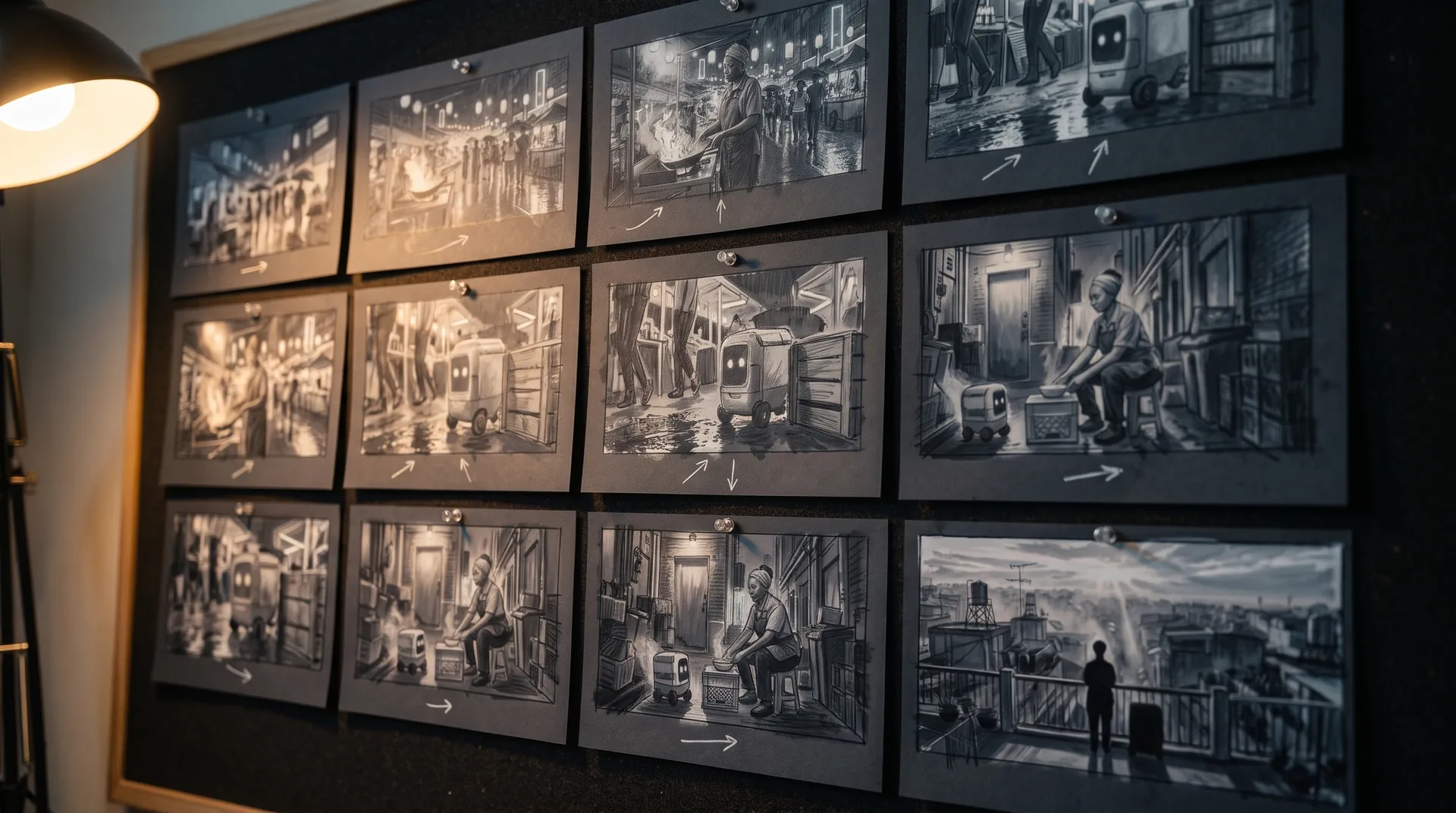
Board a storyboard
A panel for every shot, as AI stills or quick vector frames. Export it as a pitch deck.

Make motion
Titles, explainers and moving storyboards, drawn as vector animation by the AI you pick.
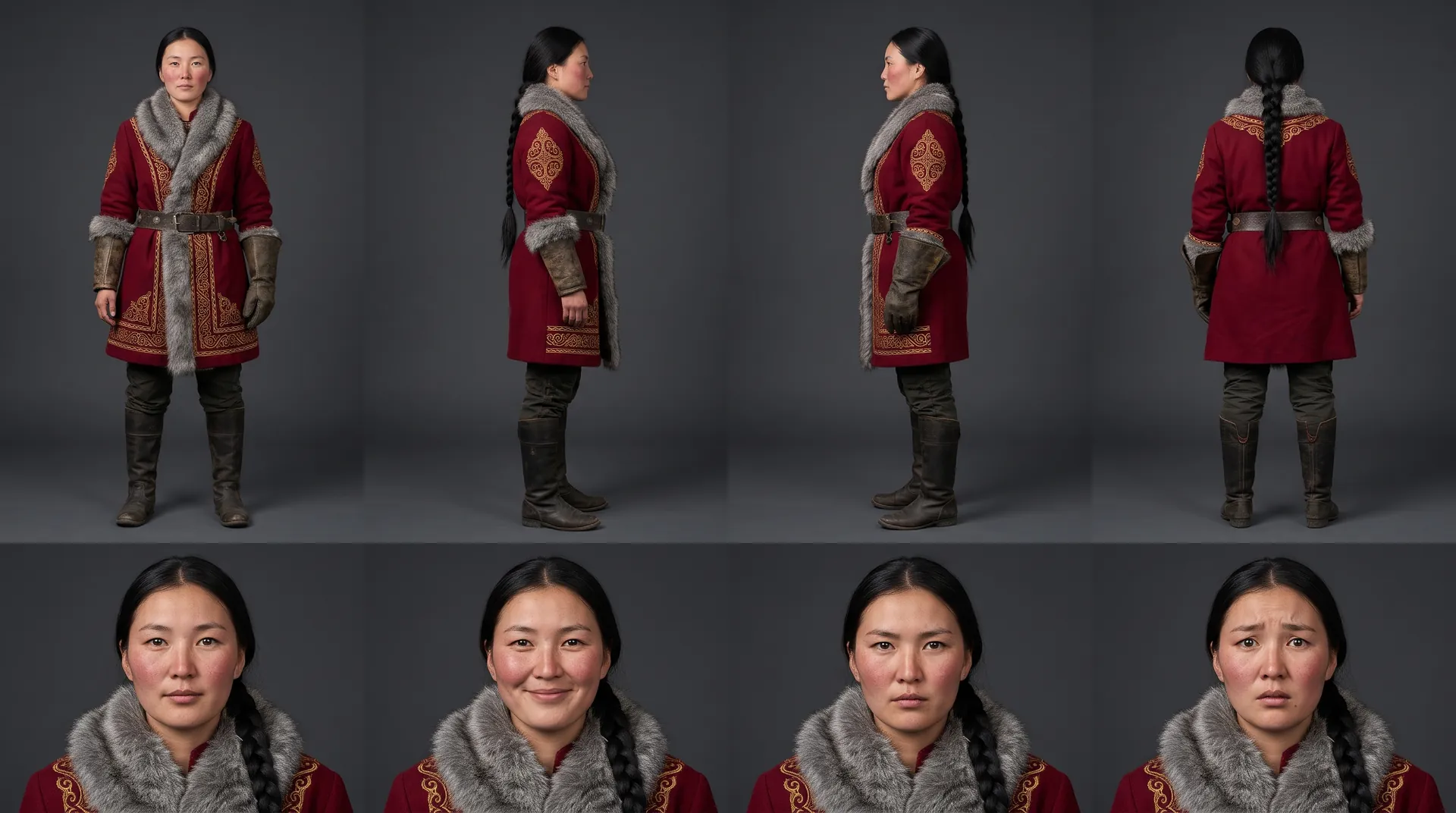
Characters, places, products
One subject in many versions, or new ideas for it. Every angle, look and light.
Your first film is one sentence away.
Free to start. Pay only for what you render.