How to Write AI Video Prompts: Subject, Action, Camera
How to write AI video prompts: name the subject, give it one action, give the camera one job, then add place, light and sound. Twelve before-and-after examples.
By Aaditya Brahmbhatt (guest)7 min read
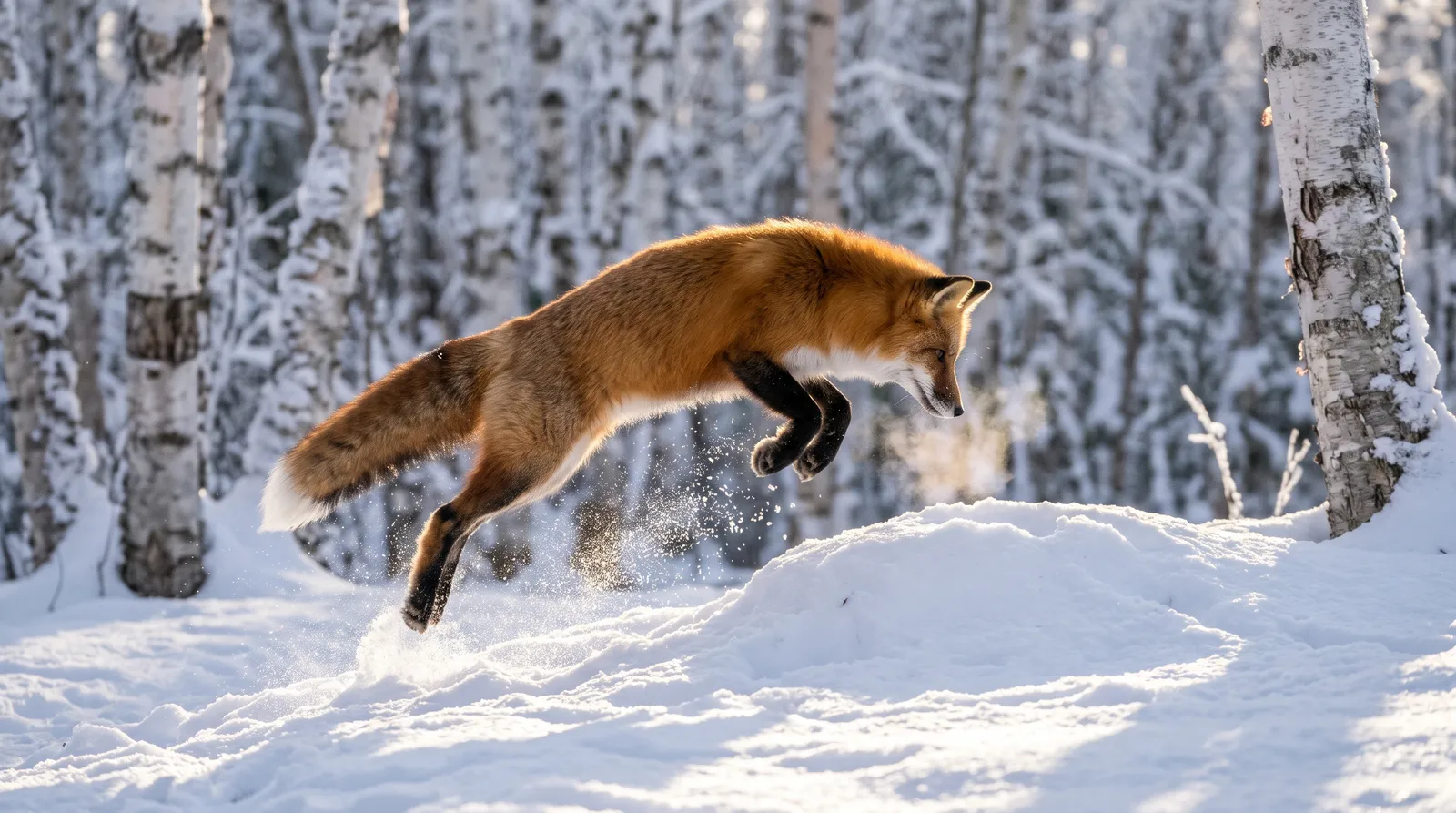
To write an AI video prompt, say three things in this order: who or what we see, the one thing it does, and what the camera does. Then add the place, the light and the sound. A prompt built this way reads like one row of a shot list, and it gives the model one clear job.
Key takeaways
- Three parts come first: subject, action, camera. Place, light, style and sound follow.
- One shot, one action, one camera move. If the prompt needs the word "then", it is two prompts.
- Write what is visible. "She is sad" can't be filmed. "She turns her cup around and doesn't drink" can.
- Two to four sentences is enough. Past about 80 words, look for a second action hiding in there.
- Time the line. People speak two to three words a second, so a 5-second shot holds 10 to 15 words.
What goes in an AI video prompt?
Seven parts. The first three carry the shot. The other four dress it.
| Part | The question it answers | Example |
|---|---|---|
| Subject | Who or what do we see? | A woman in her sixties, grey braid, blue apron |
| Action | What one thing happens? | kneads dough slowly on a floured table |
| Camera | How much do we see, and does the camera move? | Medium shot, static |
| Place and time | Where and when? | A small bakery kitchen before dawn |
| Light | Where does the light come from? | Warm glow from the oven, the window still dark |
| Style | What does the picture feel like? | Natural colour, shallow focus |
| Sound | What do we hear? | The thud of dough, an oven fan, no music |
Put together:
A woman in her sixties with a grey braid and a blue apron kneads dough slowly on a floured table. Medium shot, static. A small bakery kitchen before dawn, warm glow from the oven, the window still dark. Natural colour, shallow focus. The thud of dough and an oven fan, no music.
Why subject, action, camera, in that order?
It is how you would describe a shot out loud: "the baker kneads dough, medium shot". Subject and action make the sentence. The camera frames it.
It also matches the columns of a shot list, so each row is most of a prompt. How to write a shot list for an AI film has a table you can copy.
Twelve before-and-after prompts
Each pair fixes one common problem.
| # | Before | After | What changed |
|---|---|---|---|
| 1 | A man walking in a city. | A man in a yellow raincoat walks toward us down a narrow market street at night. Medium shot, the camera tracks backward at his pace. Wet pavement, neon in the puddles. | The subject has details, the walk has a direction, the camera has a job. |
| 2 | A sad woman in a kitchen. | A woman in her sixties sits at a kitchen table and turns a full cup of tea around without drinking. Close-up on her hands, static. Grey light from one window. A clock ticks. | The feeling became something we can see. |
| 3 | A boy runs in, grabs his bag, hugs his mother and runs out to catch the bus. | A boy of ten grabs a red school bag from a chair and swings it onto his shoulder. Medium shot, static, a hallway by the front door. Morning light. | One action. The hug and the bus are their own shots. |
| 4 | A lighthouse on a cliff in a storm. | Wide shot of a white lighthouse on a black cliff in a storm. The camera stays still. Waves break on the rocks and the lamp sweeps once across the frame. Wind and surf, no music. | A shot size, and the camera is told to hold. |
| 5 | Drone flies over the forest, zooms into the cabin window and pans around the room. | Aerial shot moving slowly forward over a pine forest at dawn, toward one cabin with smoke rising from its chimney. Mist between the trees. | One camera move. The window is the next shot. |
| 6 | An epic, stunning, cinematic mountain. | Wide shot of a snow-covered peak at sunrise. Orange light on the east face, blue shadow on the west. Cloud drifts across the summit. The camera tilts up slowly. | Praise replaced by light, colour and motion. |
| 7 | The chef explains how she left her bank job ten years ago and why she only cooks her grandmother's recipes. | A chef in her forties in kitchen whites stands at the pass and says to camera, warmly: "Every dish here was my grandmother's first." Medium close-up, static. Kitchen noise behind her. | One line of eight words, which fits a 5-second shot. |
| 8 | A street with no cars and no people, not at night. | An empty cobbled street at midday, shop shutters down, one bicycle leaning on a wall. Wide shot, static. Hard overhead sun, short shadows. | Says what is there, not what isn't. |
| 9 | In the style of a famous director. | Symmetrical wide shot, flat front-on framing, pastel pink and mint walls, soft even light, slow push in. | The look is described in terms a model can draw. |
| 10 | With a start image: A woman with red hair and a green coat stands on a bridge in the fog. | With a start image: She turns her head toward the camera and almost smiles. Her hair moves in the wind. The camera pushes in slowly. Fog drifts across the bridge. | The picture already shows who and where. The prompt says only what moves. |
| 11 | With reference pictures: The hero meets the kid from before. | With reference pictures: Mira hands Sam a paper bag across the bakery counter. Two-shot, static. Mira on the left, Sam on the right. | The names match the references, and each person has a side of the frame. |
| 12 | Product video of a watch. | A steel wristwatch with a black dial lies on dark slate. The camera orbits a quarter turn to the right, slowly. One soft light from the left catches the edge of the case. Silent. | Material, surface, the move and how far it goes. |
How long should a prompt be?
Long enough to answer the seven questions, and no longer. For most shots that is two to four sentences.
Cut any word the camera can't see. "Breathtaking" is not a light source. "Low sun behind her" is. If the prompt keeps growing, the shot is doing too much. Split it.
How do you prompt when you give the model a picture?
Many tools let you add a start image or reference pictures, and a text-to-video prompt changes when you do.
- With a start image, write the motion only. If the prompt describes the picture again and gets a detail wrong, the model has two instructions that disagree.
- With reference pictures, use the same names every time. "Mira" in one prompt and "the baker" in the next is how you get two different women.
- Say who stands where. It matters most when two characters share the frame.
More on holding a face from shot to shot is in how to keep characters consistent.
How do you write a spoken line?
- Name who speaks, and how. "Says to camera, warmly" does more than "talks".
- Put the line in quotation marks. Add the language if it isn't English.
- Count the words. A 5-second shot holds 10 to 15. Leave half a second of quiet at each end.
- Keep one speaker per shot where you can. A reply is a new shot.
- Say what else we hear. If you plan to add music in the edit, write "no music".
What should you check before you render?
- Is there one subject doing one thing?
- Does the camera have one instruction: a shot size, and "static" or one move?
- Could a stranger draw the frame from your words alone?
- Does the line fit the length of the clip?
- Do the names match your references?
- Have you said what we hear?
Where prompts sit in the whole process is covered in how to make a movie with AI.
How we checked
Written on 10 November 2026. The structure is ordinary shot description from film practice, applied to generated video. The twelve prompts were written for this post as examples. They are not test results from any model, and no clips are attached. Models differ in what they follow, so try a prompt at a small size on your own model first.
Questions people ask
Say who or what we see, the one thing it does, and what the camera does, in that order. Then add the place, the light, the style and the sound. Keep it to one shot, one action and one camera move.
Keep reading
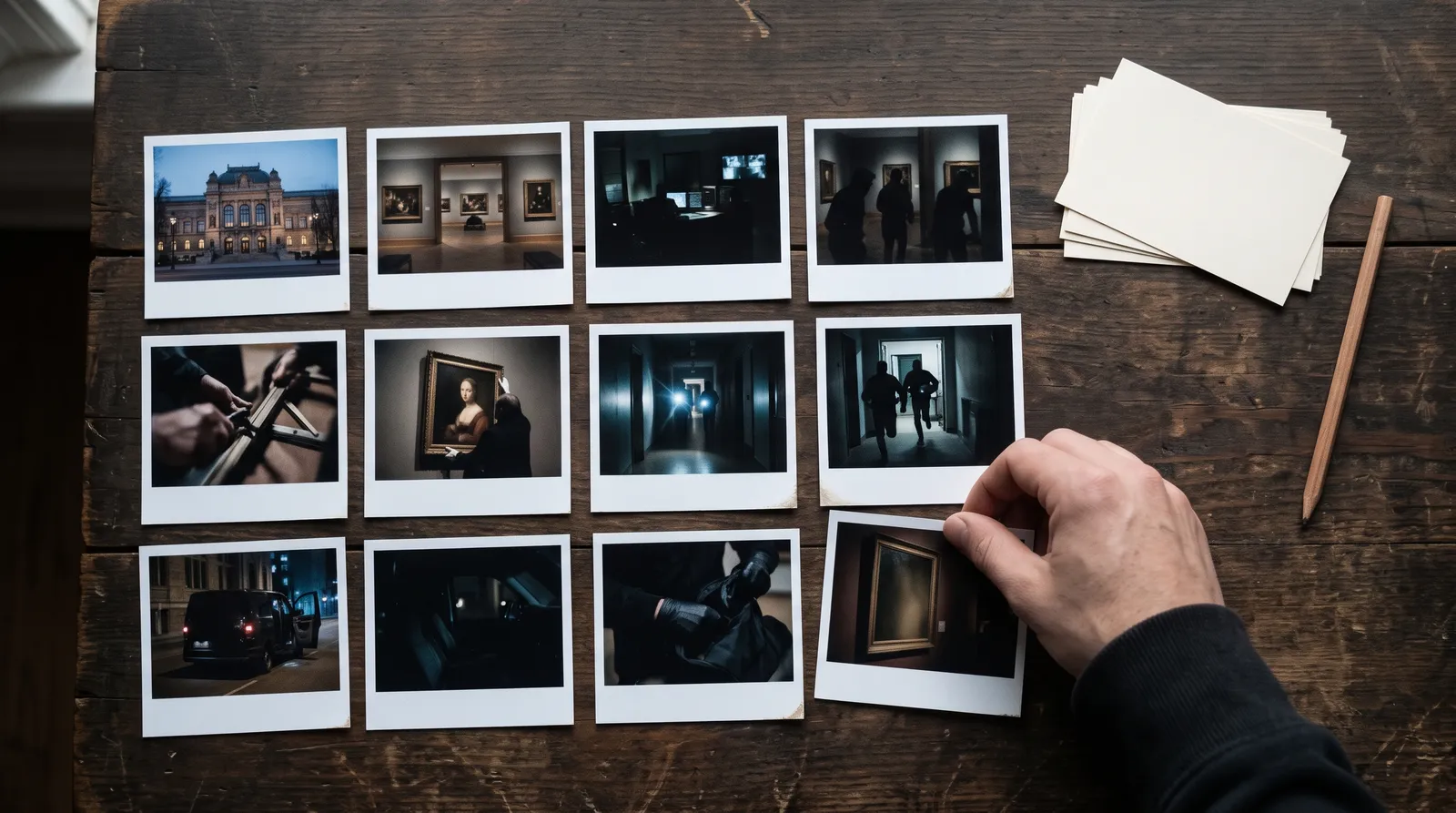
Craft10 November 20267 min read
How to Write a Shot List for an AI Film
An AI film shot list is a table with one row per shot: what we see, shot size, camera, length, references and sound. A method and an example you can copy.
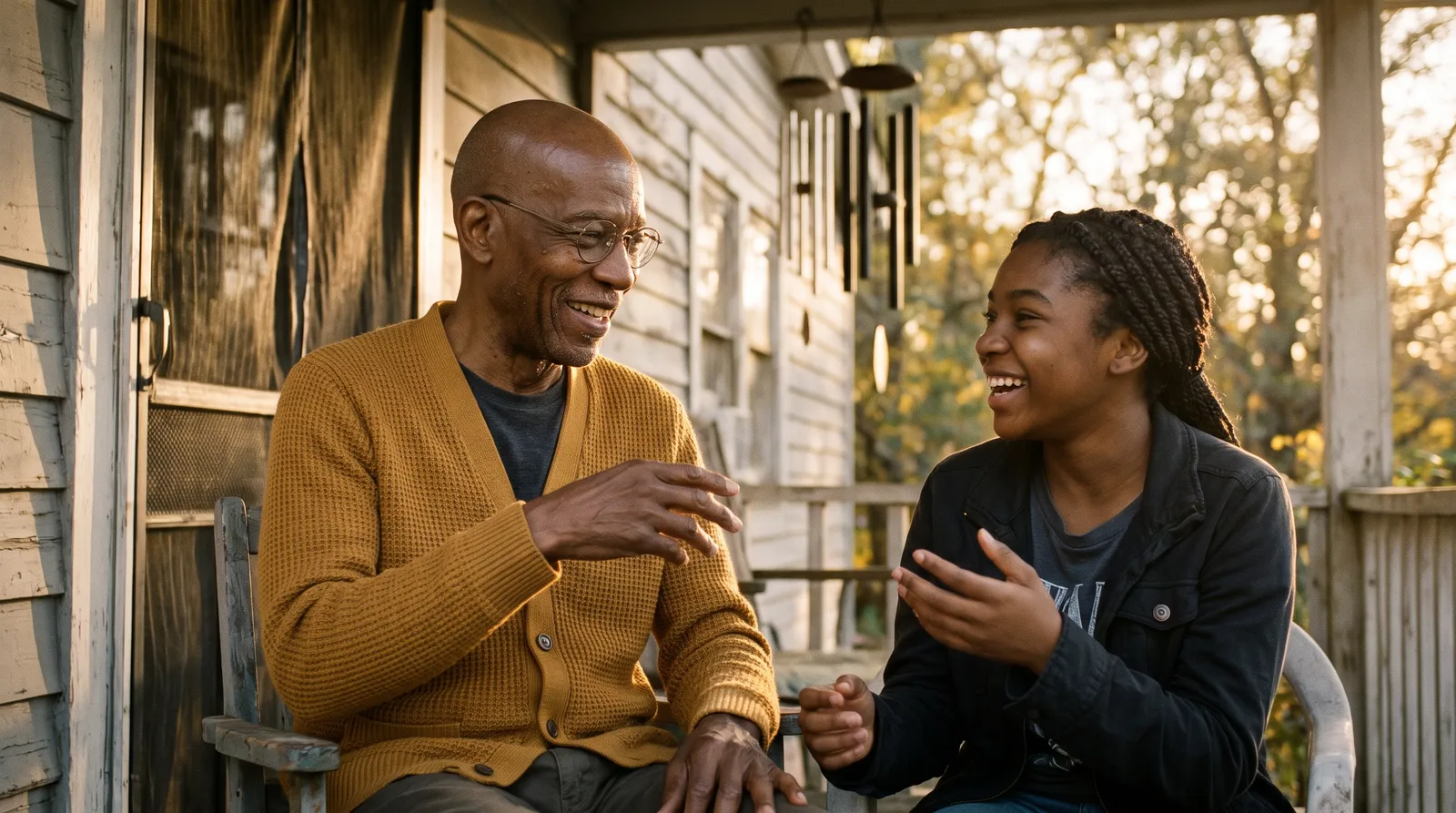
Models14 November 20267 min read
Gemini Omni 1.2: What It's Good At and How to Prompt It
Gemini Omni 1.2 is Google's video model for people and dialogue: always with sound, up to 10 reference pictures, up to 4K. Costs, limits and ten prompts.
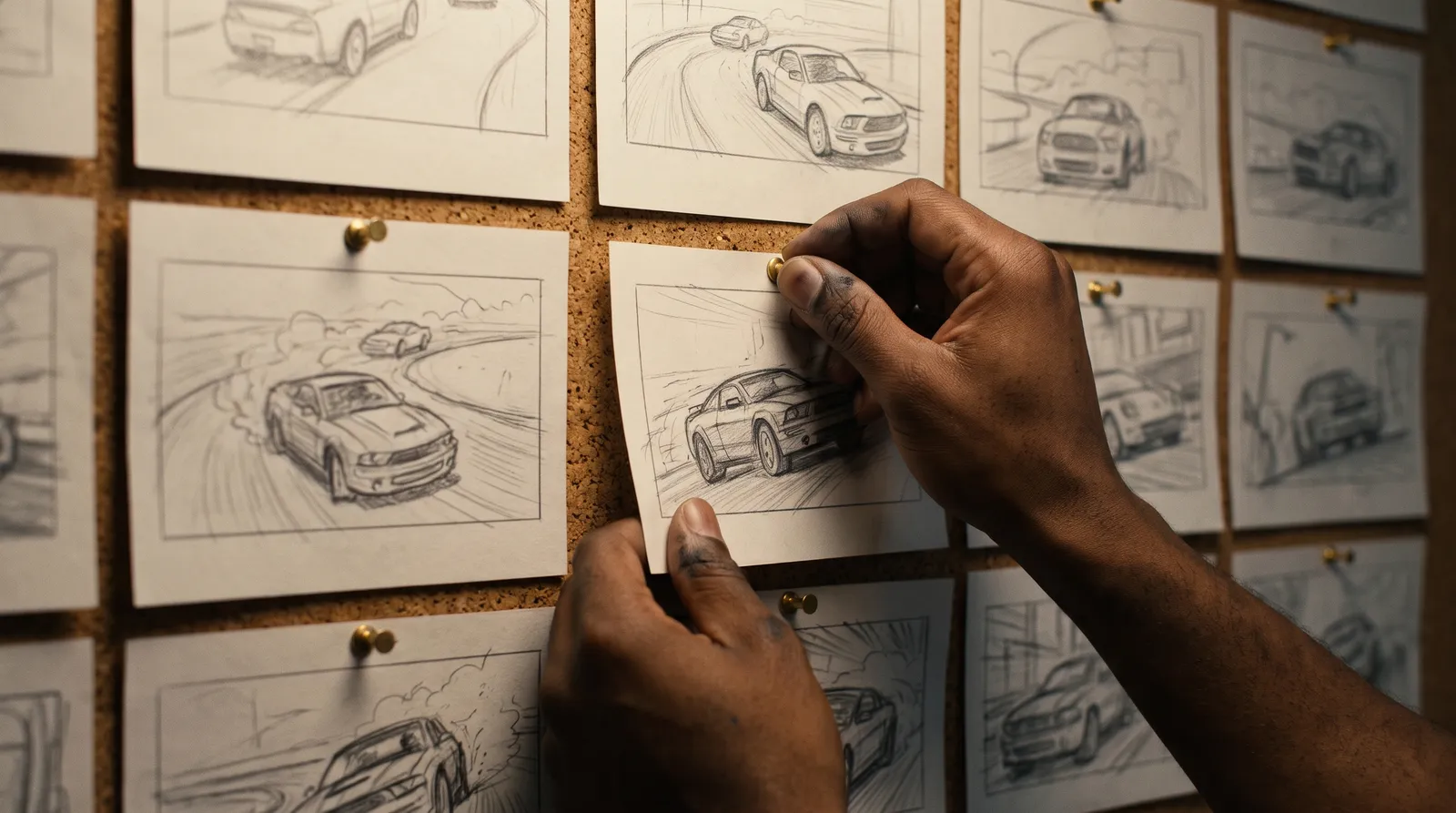
Comparisons14 November 20269 min read
Best AI Storyboard Generators in 2026 That Also Make Video
The best AI storyboard generator depends on what comes after the board. Eight tools compared on price, sign-off and video. Prices read on 10 November 2026.
More than images and video
Scripts, storyboards, motion, and characters in every version. Each one on its own, or all of them in a film.
Write a script
An idea in, a properly formatted screenplay out. Edit any line, then board it or film it.
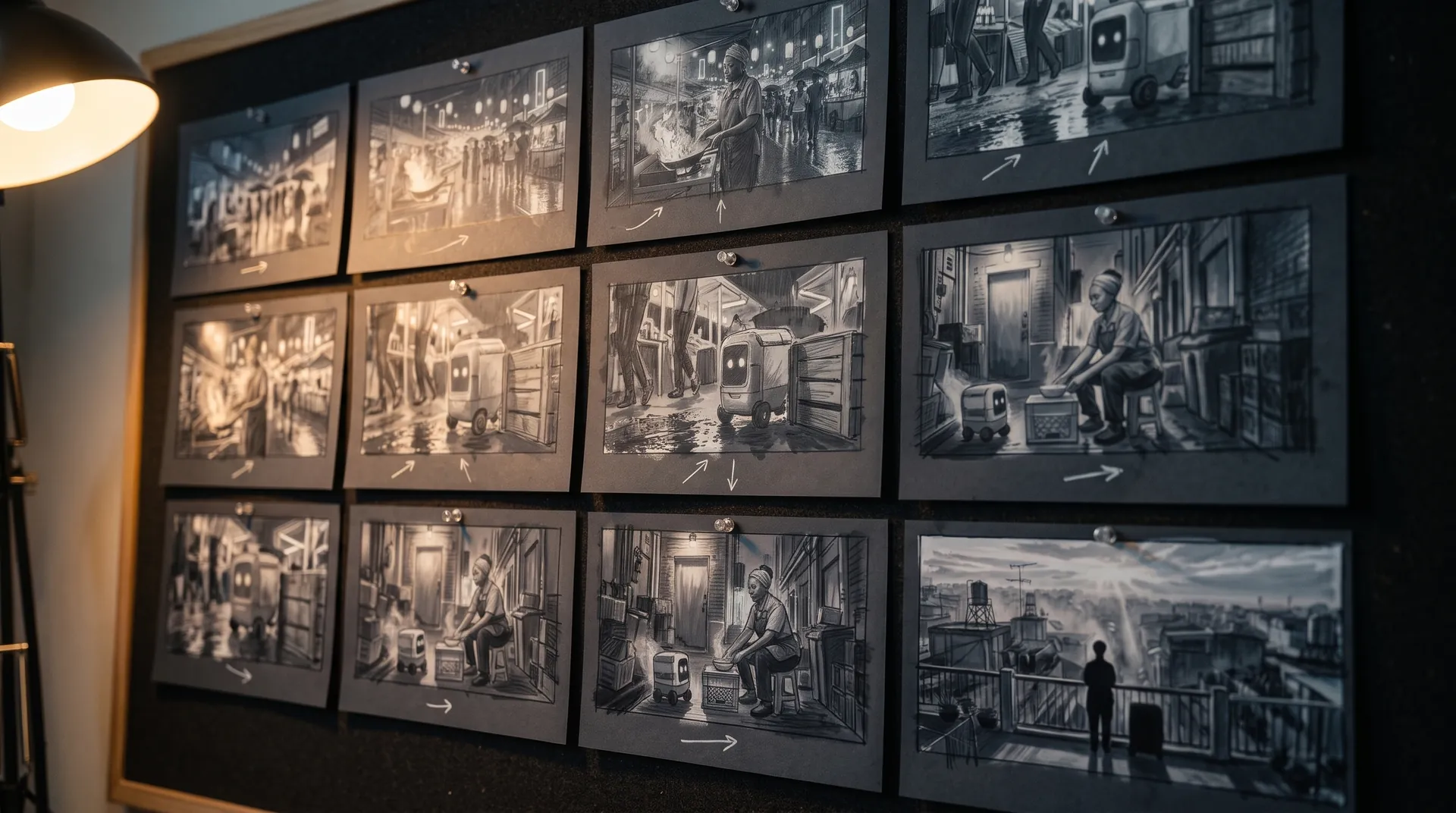
Board a storyboard
A panel for every shot, as AI stills or quick vector frames. Export it as a pitch deck.

Make motion
Titles, explainers and moving storyboards, drawn as vector animation by the AI you pick.
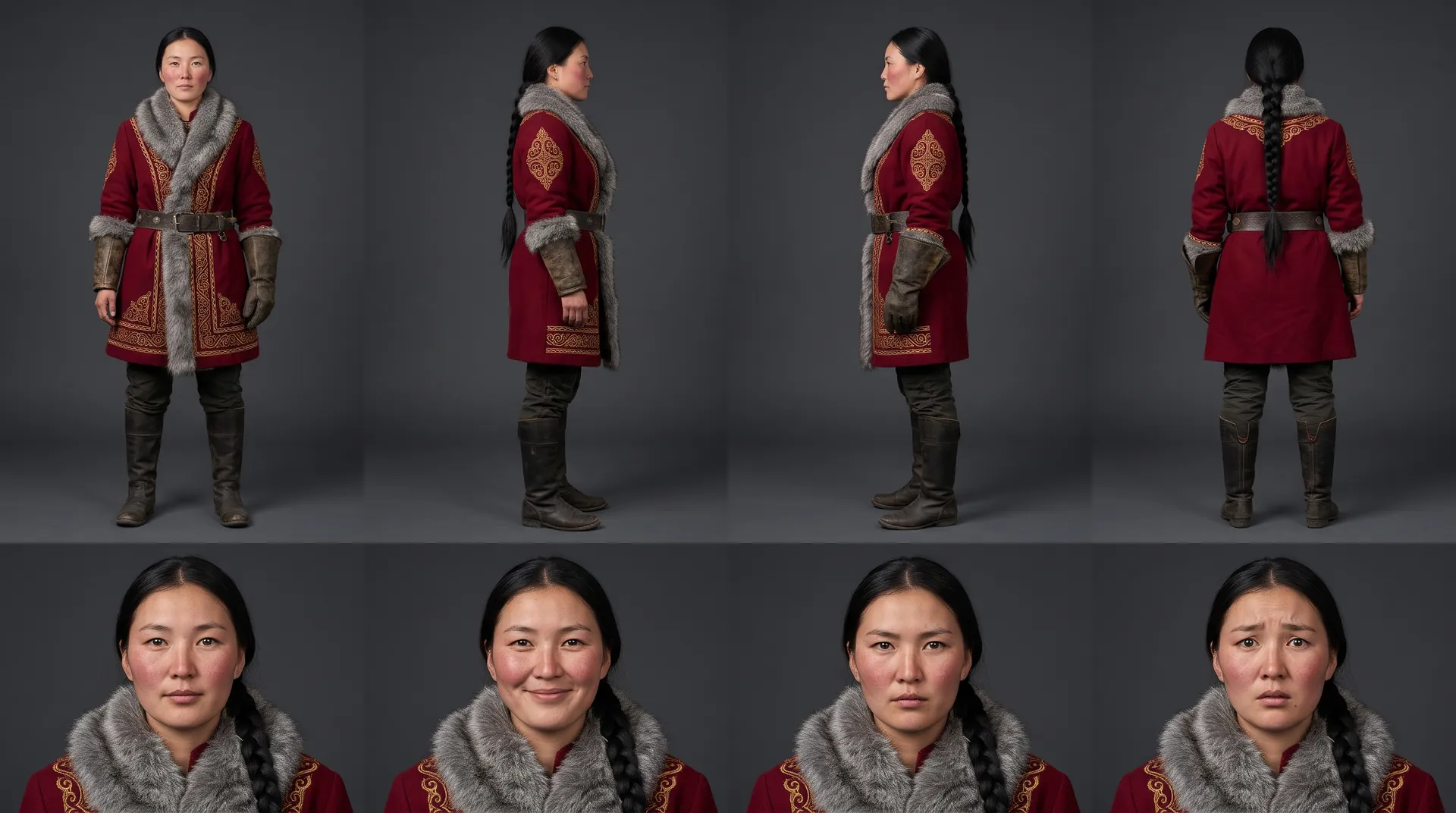
Characters, places, products
One subject in many versions, or new ideas for it. Every angle, look and light.
Your first film is one sentence away.
Free to start. Pay only for what you render.