Nano Banana 2.1 vs GPT Image 2.6 vs FLUX 3 for Film Stills
Nano Banana 2.1 vs GPT Image 2.6 vs FLUX 3 for storyboards and reference sheets: credits, reference pictures, images per go, and what two real films used.
By Hyperdream Team8 min read
For film stills, Nano Banana 2.1 is the working default on Hyperdream: 2 credits an image, up to 10 reference pictures, four images per go, open to every account. GPT Image 2.6 costs 3 credits and is noted for fine detail and careful edits. FLUX 3 costs 2 credits, is noted for photoreal skin and light, and makes one image at a time. All figures were checked on 10 November 2026.
Key takeaways
- Nano Banana 2.1 (Google): 2 credits, up to 10 references, 4 per go, free level.
- GPT Image 2.6 (OpenAI): 3 credits, up to 8 references, 4 per go, Starter plan.
- FLUX 3 (Black Forest Labs): 2 credits, up to 10 references, 1 per go, Creator plan.
- Two real films: Nano Banana 2.1 made 80 of 110 image requests. Both went back to it after trying GPT Image 2.6 for frames.
- Not tested: we have not run the same stills through all seven models. This page compares limits, prices and project records.
What does a film ask of an image model?
Four jobs, and they pull in different directions.
- Look stills. A handful of pictures that set the palette and the lens. Picture quality matters most.
- Reference sheets. One per character, place and product. The model must draw the same person in several views, from pictures you give it.
- Storyboard frames and first frames. One per shot, with the right characters in the right place. Price, speed and reference pictures matter most, because there are dozens.
- Fixes. Change one thing and keep the rest. All seven image models on Hyperdream edit from a written instruction.
How do the seven image models compare?
Read from Hyperdream's live model list on 10 November 2026. Credits are per image.
| Model | Maker | Credits | Lowest plan | Reference pictures | Images per go | Staff note |
|---|---|---|---|---|---|---|
| Nano Banana 2.1 | 2 | Free level | Up to 10 | 4 | Fast and cheap. The suggested model for images and edits | |
| GPT Image 2.6 | OpenAI | 3 | Starter | Up to 8 | 4 | Finer detail, and edits that keep everything else |
| GPT Image 2.5 | OpenAI | 2 | Starter | Up to 8 | 4 | Long, exact prompts and text |
| FLUX 3 | Black Forest Labs | 2 | Creator | Up to 10 | 1 | Photoreal skin, light and lenses |
| Nano Banana Pro | 5 | Free level | Up to 8 | 4 | Editing with references, legible text | |
| Grok Imagine Pro | xAI | 2 | Free level | Up to 3 | 4 | Bold, graphic styles |
| Flux 2 Flash | Black Forest Labs | 1 | Free level | Up to 2 | 4 | Fast sketches |
The staff note is a one-line description, not a lab result.
Nano Banana 2.1 vs GPT Image 2.6 vs FLUX 3, head to head
| Nano Banana 2.1 | GPT Image 2.6 | FLUX 3 | |
|---|---|---|---|
| Credits an image | 2 | 3 | 2 |
| A 30-frame board | 60 credits | 90 credits | 60 credits |
| Lowest plan | Free level | Starter, $29 a month | Creator, $49 a month |
| Reference pictures | Up to 10 | Up to 8 | Up to 10 |
| Images per go | Up to 4 | Up to 4 | 1 |
| Shapes | Eight, including 21:9 | Five: 1:1, 16:9, 9:16, 4:3, 3:4 | Eight, including 21:9 |
| Expected wait, per the model list | About 15 seconds | About 50 seconds | About 25 seconds |
| Used on our two November films | 80 requests | 21 requests | None |
Three things in that table matter more than they look.
Images per go. "Four per go" means four versions of the same frame from one request, so you choose the best. With FLUX 3 you get one and ask again.
Shapes. The two GPT Image models list five shapes and no 21:9. If your film is cinema-wide, check the frame before you commit a whole board to them.
Wait. The model list gives an expected wait for each model. For 30 frames, about 15 seconds each and about 50 seconds each feel very different. These are the list's own estimates. We did not time them.
What did two real films use?
Both films were made on Hyperdream in November 2026. The counts are from their project records.
| Image model | Diwali ad (Shilp Group) | Mantra video (Om Infinity Music) | Both |
|---|---|---|---|
| Nano Banana 2.1 | 56 requests, 136 credits | 24 requests, 48 credits | 80 requests, 184 credits |
| GPT Image 2.6 | 6 requests, 18 credits | 15 requests, 45 credits | 21 requests, 63 credits |
| Nano Banana Pro | 3 requests failed, not charged | 6 requests, 30 credits | 6 requests, 30 credits |
| GPT Image 2.5 | 3 requests, 17 credits | None | 3 requests, 17 credits |
| FLUX 3, Grok Imagine Pro, Flux 2 Flash | None | None | None |
What the records say about choices:
- On the mantra video, frames were tried on GPT Image 2.6 and judged less real. The frame model was then fixed to Nano Banana 2.1.
- On the Diwali ad, a switch to GPT Image 2.6 for frames was reversed within minutes.
- Nano Banana Pro did not respond on three requests on the ad. Nothing was charged for them.
Read this with care. It is what one team chose on two films, both photoreal, both with human or divine figures. It is not a ranking. A film in a graphic style could come out the other way. The films are in the Shilp case study and the Mahalakshmi case study.
Which model for which job?
Storyboard frames and first frames: Nano Banana 2.1. Of the three named here, it ties with FLUX 3 on price and reference pictures, gives four options a go and has the shortest expected wait. On the mantra video, the 20 shot frames cost 46 credits in all.
Text in the picture: GPT Image 2.5 or Nano Banana Pro. A shop sign, a title card, a label on a pack. Both are noted for text. GPT Image 2.5 does it for 2 credits.
A careful fix: GPT Image 2.6. Its note is "edits that keep everything else". When a frame is nearly right and one prop is wrong, that is the claim to try. We have not measured it against the others.
A hero still or a look still: FLUX 3. Its note is photoreal skin, light and lenses. One image per go suits a job where you make a few pictures and study each. Neither of our November films used it, so this rests on the staff note alone.
Rough ideas: Flux 2 Flash. At 1 credit an image, it is for finding a composition, not for finishing one. With only 2 reference pictures, it won't hold a cast.
A graphic or stylised film: Grok Imagine Pro. It takes 3 reference pictures, so keep the cast small.
Which one draws reference sheets best?
We don't know, and we'd sooner say so than guess. We have not put the same character through all seven models.
What we can say:
- A sheet needs references in. A character's sheet has four full-body views and four expressions, drawn from the pictures you supply. Nano Banana 2.1 and FLUX 3 take up to 10 pictures, the GPT Image models and Nano Banana Pro up to 8.
- A sheet needs edits. When seven views are right and one is wrong, you ask for that one change. All seven models edit.
- Sheets take tries. On the mantra video, 12 character sheets were made for 45 credits before one look was approved. The records don't say which model drew the approved one.
The method is in how to make a character reference sheet.
What do the stills for a whole film cost?
Less than the video, by a wide margin. On the two November films, images came to 171 and 123 credits out of totals of 941 and 1,289. Video took most of the rest, at 2 to 9 credits a second (AI video cost per second).
So the model's price per image is rarely the deciding number. A still that is approved before video saves a render that costs tens of credits. Pick the image model that gets you to an approved frame in the fewest tries.
Where is another choice better?
- You need an image model that isn't on this list. Midjourney, for one, is not offered. Use it where it lives and upload the result as a picture to draw from.
- You only make single images. The maker's own app may be simpler, and you may already pay for it. We did not compare prices.
- You want measured picture quality. This page has none. Look for a published side-by-side test, and check its date.
For the video side, see AI video models compared.
How do you pick an image model in Hyperdream?
- In Create, choose Image and open the model picker. Each model shows its price.
- Set "What is it" to Anything, Character, Location or Product.
- Add reference pictures from the Library or upload them, and mention one in the prompt with
@name. - To fix a result, use Edit by asking: draw marks and notes on the picture and ask for the change. The edit is saved as a new version.
- Set your default models in Settings > Preferences.
The whole Create flow is on the AI image and video generator page.
How we checked
Prices, plans, reference limits, shapes, images per go and expected waits were read from Hyperdream's live model list on 10 November 2026. Request counts and credits come from the project records of two films made that month. We did not run the same stills through all seven models, and we did not time any render, so nothing here measures picture quality or speed. The "staff note" lines are Hyperdream's own short descriptions. Staff can change models and prices, so check /models before you quote a number.
Questions people ask
On two client films made on Hyperdream in November 2026, Nano Banana 2.1 made 80 of the 110 image requests, and both projects went back to it after trying GPT Image 2.6 for frames. It is also cheaper, at 2 credits an image against 3. That is two projects, not a test.
Keep reading
Comparisons14 November 20269 min read
Best AI Storyboard Generators in 2026 That Also Make Video
The best AI storyboard generator depends on what comes after the board. Eight tools compared on price, sign-off and video. Prices read on 10 November 2026.
Comparisons10 November 20266 min read
One AI Tool for Script, Storyboard, Characters and Video
An all-in-one AI filmmaking tool versus a stack of chat, image, video and editing apps, step by step, and where the four-tool stack is still better.
Models15 November 20266 min read
Which AI Video Models Make Sound? A Checked List
AI video models with audio, checked 10 November 2026: five of the ten on Hyperdream always make sound and five make it when you switch it on. The full list.
More than images and video
Scripts, storyboards, motion, and characters in every version. Each one on its own, or all of them in a film.
Write a script
An idea in, a properly formatted screenplay out. Edit any line, then board it or film it.
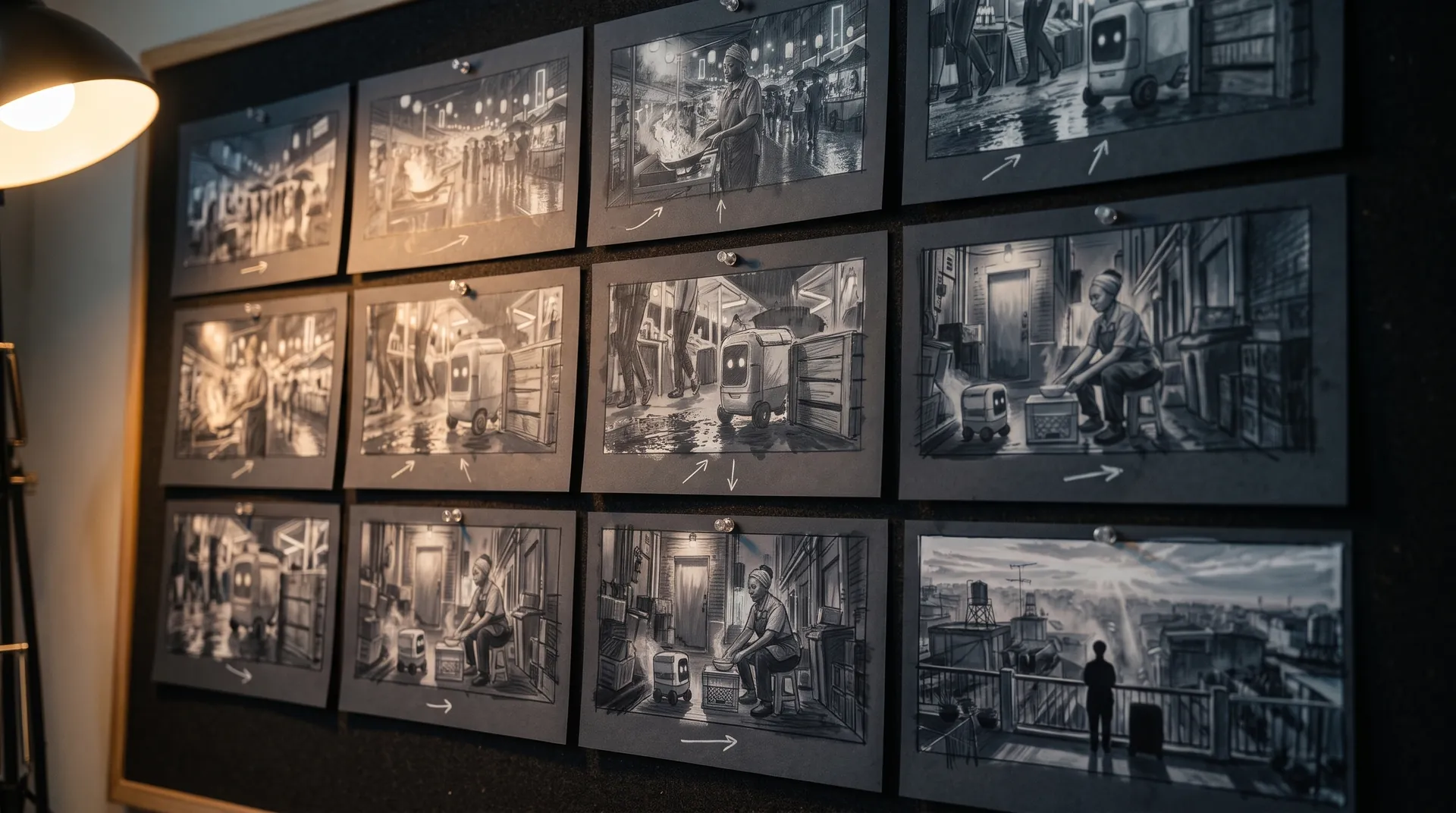
Board a storyboard
A panel for every shot, as AI stills or quick vector frames. Export it as a pitch deck.
Make motion
Titles, explainers and moving storyboards, drawn as vector animation by the AI you pick.
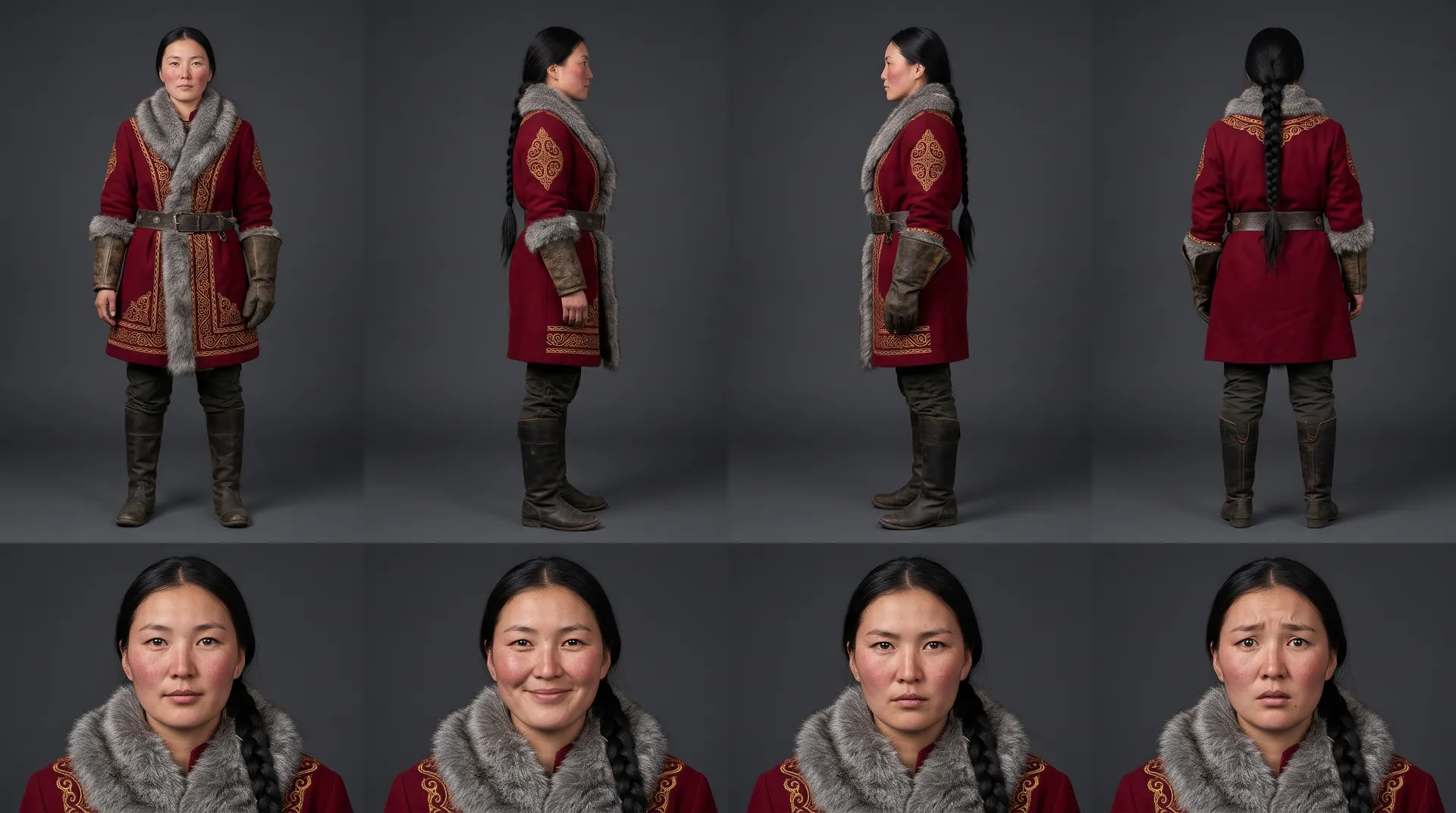
Characters, places, products
One subject in many versions, or new ideas for it. Every angle, look and light.
Your first film is one sentence away.
Free to start. Pay only for what you render.