One AI Tool for Script, Storyboard, Characters and Video
An all-in-one AI filmmaking tool versus a stack of chat, image, video and editing apps, step by step, and where the four-tool stack is still better.
By Divy Brahmbhatt6 min read
Yes, one tool can now hold the script, storyboard, characters and video for a film. AI film studios such as LTX Studio, OpenArt Director, Invideo AI and Hyperdream do it in one project. The four-tool stack of a chat assistant, an image model, a video model and an editor is still better for two things: picking any single model you like, and professional editing.
Key takeaways
- The stack is four tools and at least three hand-offs: chat to image tool, image tool to video tool, video tool to editor.
- One project in Hyperdream is eight steps: Script, Look, Cast, Places, Storyboard, Sound, Shots, Edit. Director is on the $99 Pro plan.
- The hand-offs add up. One 30-second ad we made took 31 shot renders, each given 1 to 7 reference pictures. In a stack, you upload those by hand every time.
- The stack still wins on single-model choice (Midjourney is not in Hyperdream) and on pro editing in Premiere Pro or DaVinci Resolve.
- Other one-project tools: OpenArt Director from $14 a month and LTX Studio's storyboards from $35 (checked 10 November 2026).
What is the four-tool stack?
It is how most people make an AI short today:
- A chat assistant such as ChatGPT or Claude writes the script and the prompts.
- An image model such as Midjourney makes the characters and the frames.
- A video model such as Kling turns each frame into a clip.
- An editor such as Premiere Pro or DaVinci Resolve cuts it together.
Voice and music usually add a fifth and sixth tool.
Assistants recommend it too. When we asked ChatGPT how to make a three-minute short with the same two characters in every scene (10 November 2026), it suggested a video model plus Midjourney for images, ElevenLabs for voice and DaVinci Resolve for the edit.
The stack works. Many good AI films are made this way. Its cost is the copying between tools.
How do the stack and one project compare, step by step?
| Step | Four-tool stack | One project in Hyperdream |
|---|---|---|
| Script | The chat writes it. You copy it out | Script step: paste your own or have Director write it |
| Look | A style line pasted into every prompt | Look: palette, camera, lens and grain, set once |
| Characters | Made in the image tool. You save the files and upload them again for each shot | Cast: one reference sheet per character, used by every shot |
| Locations | The same, again | Places: one sheet per location and product |
| Storyboard | Frames made one at a time and named by hand | Storyboard: scenes and shots, with a still frame per shot |
| Video | Upload the frame and the references to the video tool, clip by clip | Shots: render from the board, with a model per shot |
| Voice and music | A fifth and sixth tool | Sound: dialogue, narration, music and effects |
| Edit | Your editor, with all its power | Edit: a timeline for assembly, and an MP4 at up to 1080p |
| Client review | Email, or a review tool | "Share for review" link, no account needed |
| What it knows | Each tool knows only what you paste in | Every render draws on the same script, sheets and look |
| Bills | Four or more subscriptions | One plan |
Where does the stack break down?
References do not travel. The video tool has never seen your character. You upload the reference for every clip. In the 30-second Diwali ad we made for Shilp Group, there were 11 cast members, 5 places and 31 shot renders, and each render was given between 1 and 7 reference pictures. In one project the sheets and frames are already there for each shot. In a stack, that is 31 rounds of finding and uploading the right files.
Nothing links a take to its shot. After forty renders, which file is shot 12, take 3? In a stack, the answer is your file names. In a project, each take sits under its shot.
The script and the shots drift apart. Change a line of dialogue and you must carry the change into the prompt, the frame and the clip yourself.
Spend is spread over four bills. It is hard to say what one film cost.
This is the "stitching across tools" problem. When we told ChatGPT that a user's characters kept changing and that stitching across tools was a mess, it changed its advice from single tools to film studios.
Where is the stack still better?
Be honest with yourself about these.
You can pick any model for each job. A stack lets you use any image model, any video model and any voice tool, including ones a studio does not carry. Hyperdream has seven image models and ten video models. Midjourney is not among them. If one model's look is the point of your film, use that model where it lives.
Professional editing. Premiere Pro and DaVinci Resolve do colour grading, sound mixing, effects and fine control that a browser timeline does not. Hyperdream's Edit step is for assembly: tracks for captions, two video layers, dialogue, narration, music and effects, with split, trim and snap. It exports one MP4 at up to 1080p. It is not a substitute for professional editing software, and a hand-off file for those editors is marked "Coming soon".
Our own work shows the limit. The Shilp ad was planned, cast, boarded and rendered in one Hyperdream project. Its cuts were finished in outside editing software and uploaded back to the Library.
You already own the tools. If you pay for a chat assistant and an editor anyway and make a few clips a month, a film studio may be an extra cost. DaVinci Resolve's base version is free.
You only need clips. A film studio earns its place when shots must match each other. For one clip, a video model on its own is enough.
What does one project look like in Hyperdream?
- Open Director. Type the idea or attach a finished script. Pick the shape and the thinking model, then "Plan it with Director".
- Script: Director writes a formatted screenplay, or you paste yours. In Agent mode it does the work. In Plan mode it proposes and waits.
- Look: set the palette, camera body and lens family, and make four test stills.
- Cast and Places: one reference sheet each. A character's sheet has four full-body views, head to toe, and four expressions.
- Storyboard: each shot has a description, shot size, camera move, lens, length and its line. A still frame is drawn before any video.
- Sound: dialogue, one narrator voice, music and per-shot effects.
- Shots: render each shot. Three render at a time. Keep the take you like.
- Edit: trim on the timeline and export. Or download the film's files as a zip and finish in your own editor.
Starting from a finished script? See /script-to-video.
The Shilp ad used 941 credits this way. The Pro plan, which includes Director, has 2,000 credits a month for $99. Numbers are in the Shilp case study.
Which should you choose?
- One or two clips, or one model you love: the stack, or just the model.
- A film for cinema-grade finishing: plan and render in one project, then finish in your editor.
- A multi-scene film with recurring characters: one project.
- Client work with approvals and a budget: one project with team features.
Hyperdream is not the only one-project tool. OpenArt Director starts at $14 a month and LTX Studio has storyboards from $35. All nine are in Best AI film studios in 2026.
How we checked
Hyperdream's steps and limits come from the live app and its pricing page on 10 November 2026. The Shilp numbers come from that project's own records. We read OpenArt's and LTX's prices the same day; LTX's page was read through a text reader because it would not load directly. We could not read today's US prices for ChatGPT, Kling or Premiere Pro, so we do not total the cost of a stack. Blackmagic Design's site lists DaVinci Resolve's base version as a free download. We did not time the same film made both ways, so the hand-off counts are from one project, not a controlled test.
Questions people ask
Yes. AI film studios such as LTX Studio, OpenArt Director, Invideo AI and Hyperdream keep the script, characters, storyboard and video in one project. Hyperdream's Director runs eight steps: Script, Look, Cast, Places, Storyboard, Sound, Shots and Edit.
Keep reading
Comparisons11 November 20269 min read
AI Director Agents Compared: Who Plans the Whole Film?
Five AI director tools compared: OpenArt Director, Invideo Agent Two, Pixo, Topview and Hyperdream Director. What each plans, makes and asks before spending.
Comparisons10 November 20269 min read
AI Film Studio Pricing Compared: 8 Platforms (Nov 2026)
AI film studio pricing for eight platforms in one table: entry price, credits, carry-over, team seats and free tiers, each marked read today or third party.
Comparisons10 November 20269 min read
Best AI Film Studios in 2026: 9 Platforms Compared
The best AI film studio depends on the job. Nine platforms compared on price, film workflow and team controls. Every price checked on 10 November 2026.
More than images and video
Scripts, storyboards, motion, and characters in every version. Each one on its own, or all of them in a film.
Write a script
An idea in, a properly formatted screenplay out. Edit any line, then board it or film it.
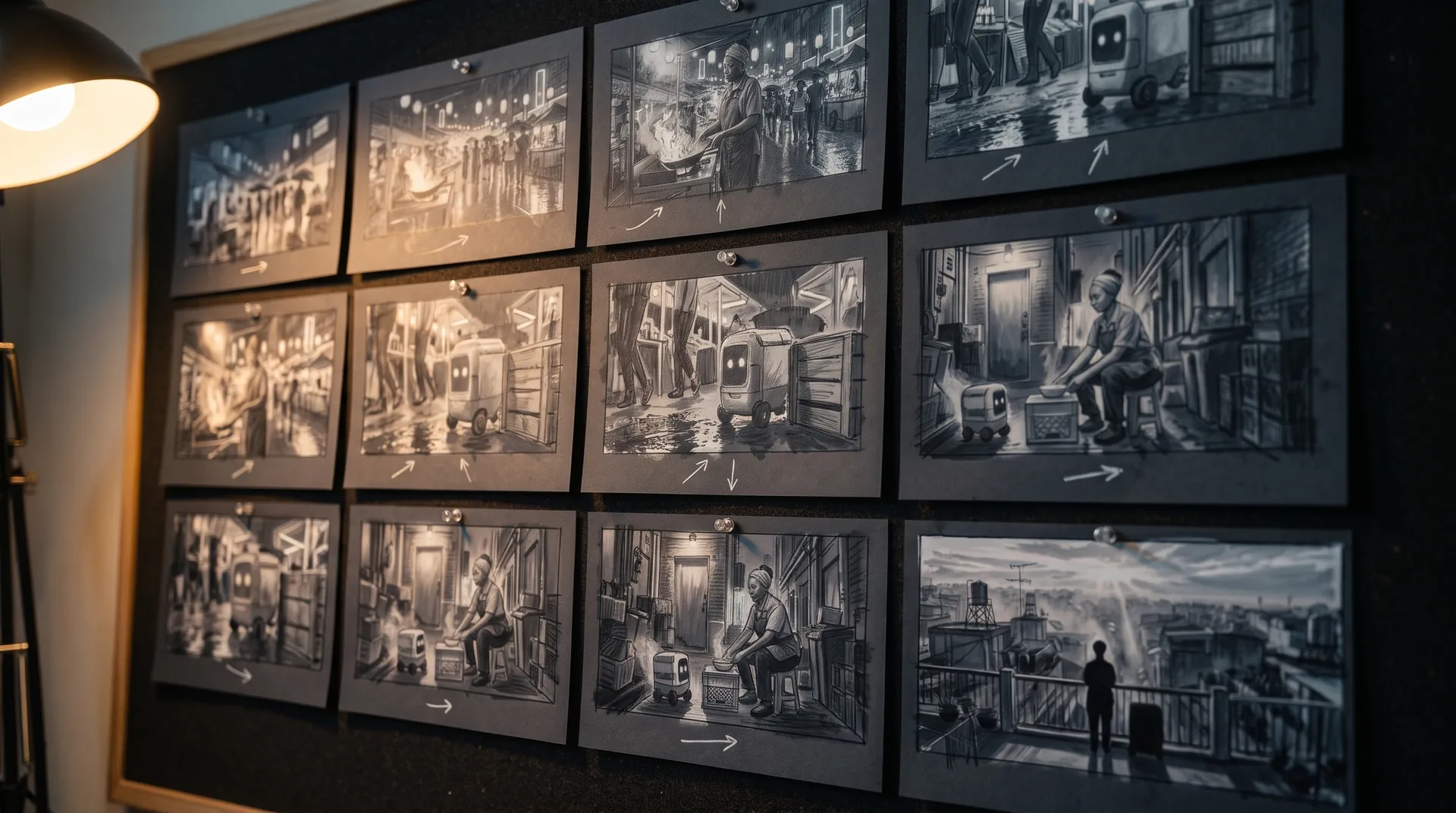
Board a storyboard
A panel for every shot, as AI stills or quick vector frames. Export it as a pitch deck.

Make motion
Titles, explainers and moving storyboards, drawn as vector animation by the AI you pick.
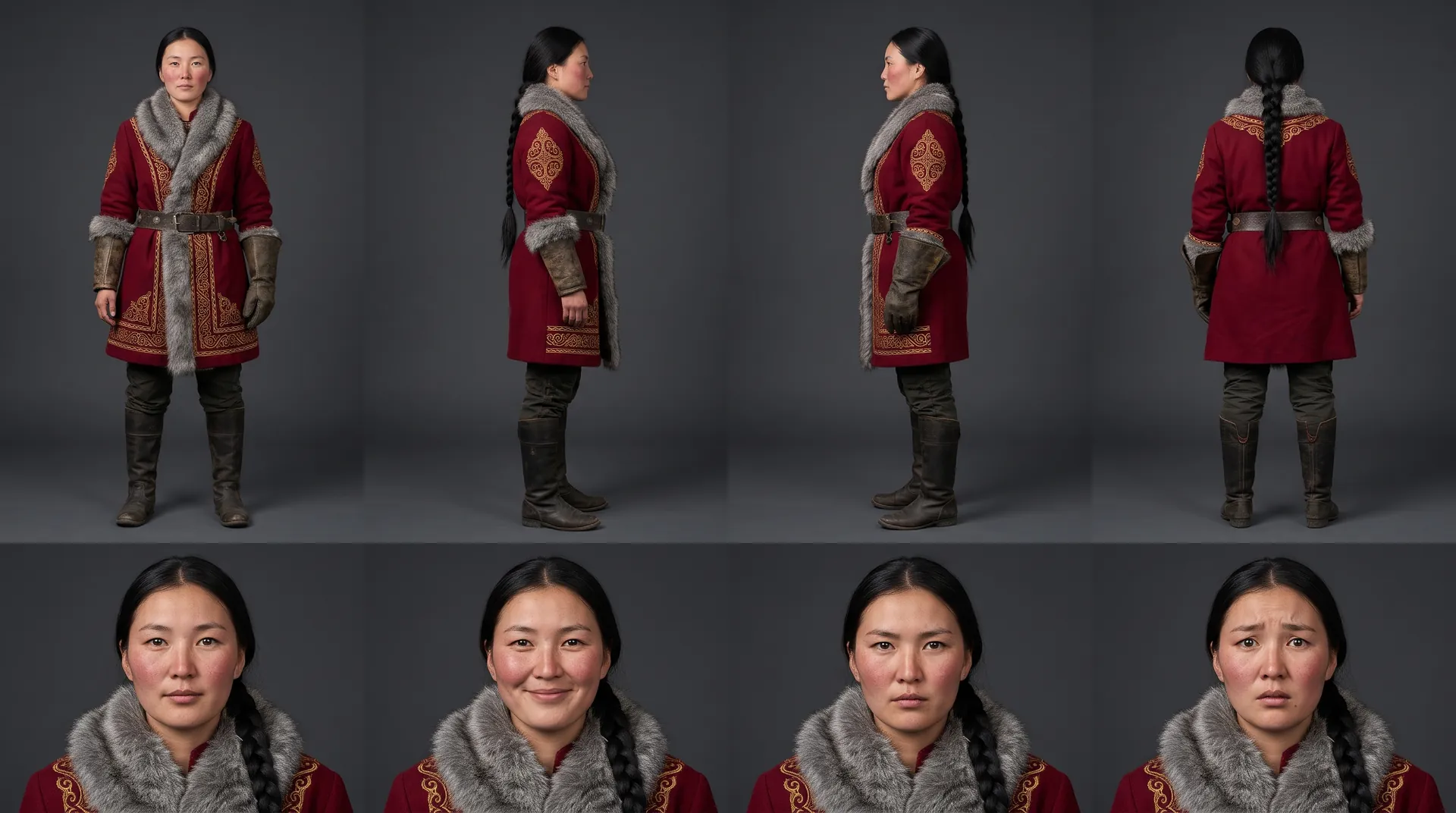
Characters, places, products
One subject in many versions, or new ideas for it. Every angle, look and light.
Your first film is one sentence away.
Free to start. Pay only for what you render.