Case Study: Shilp Group's Diwali Film, Made With AI
An AI brand film case study: Shilp Group's 30-second Hindi Diwali ad took 941 credits, 31 video renders and about 4 hours. Real numbers, misses included.
By Divy Brahmbhatt7 min read
Our studio team made a 30-second vertical Diwali ad for Shilp Group, an Ahmedabad real estate developer, in Hyperdream over two days in November 2026. It took 941 credits and 31 video renders for 7 video shots, with 3.8 to 4.4 hours of logged work. The final cut was assembled outside the app.
Key takeaways
- The film: 7 scenes and 8 shots (7 video, 1 still logo frame), Hindi dialogue, vertical 9:16, written to a 30-second cap.
- 941 credits in total: 688 on video, 171 on images, 78 on tools, 4 on music and voice.
- 4.4 video renders per finished shot: 24 renders at 720p to find each shot, then 7 of 7 finals in 4K right first time.
- A client folder: the film was made in a team workspace with Shilp Group saved as a client.
- Time: 3.8 to 4.4 hours of logged work, plus 36 minutes on the script the day before.
Who is Shilp Group and what was the brief?
Shilp Group's website describes it as a "real estate and construction company in Ahmedabad, Gujarat offering premium residential and commercial properties" (shilpgroup.com, read 10 November 2026).
The brief was a 30-second Instagram ad for Diwali, vertical, with Hindi dialogue. The idea that got made is called "In Their Own Words". The brand line is "शिल्प — हर दिन त्यौहार" ("Shilp — Every Day a Celebration").
<!-- QUOTE: Shilp Group -->What happens in the film?
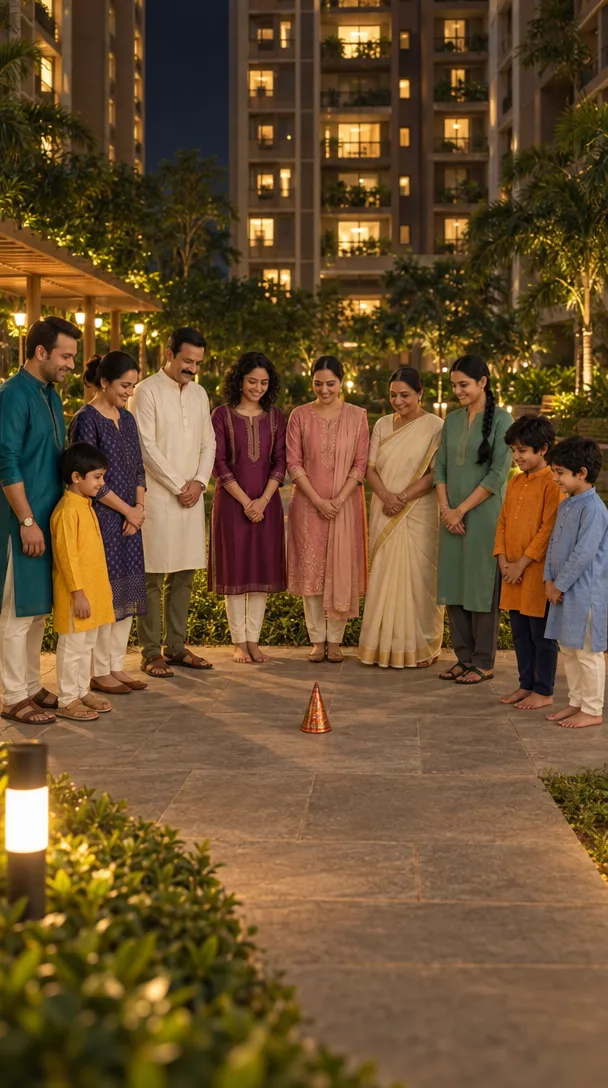
At Diwali, five residents in five different Shilp homes each say one line to camera while they carry on with what they are doing. A closing voice-over lands the brand line on the logo.
| # | Scene | Line (Hindi, with a rough English meaning) | Length |
|---|---|---|---|
| 1 | A father plays ball with his son in the garden, late afternoon | "यहाँ ये खुलकर खेलता है, और मैं बेफ़िक्र रहता हूँ।" (He plays freely here, and I don't worry.) | 5 s |
| 2 | A boy in a cushion fort with two friends | "मेरे दोस्तों का अड्डा है मेरा घर!" (My home is my friends' hangout!) | 6 s |
| 3 | A woman makes laddoos beside her husband | "यहाँ हर चीज़ सोच-समझकर बनी है।" (Everything here is thoughtfully made.) | 6 s |
| 4 | A young woman dances bhangra for a reel | "अब मेरे शौक़ के लिए भी जगह है!" (Now there's room for my hobby too!) | 5 s |
| 5 | A bride-to-be has mehndi applied, her mother beside her | "नई शुरुआत है… भरोसा शिल्प का है।" (A new beginning… the trust is Shilp's.) | 6 s |
| 6 | Brand finish: the five homes stacked in five bands, then the Shilp logo as a still | Voice-over: "क्योंकि शिल्प है तो हर दिन त्यौहार है।" (Because with Shilp, every day is a festival.) | 5 s + 5 s |
| 7 | The residents gather in the garden at night to watch an anar firework fountain, in slow motion | No line | 10 s |
Scene 7 and the five-band shot were added during production, after the script. That is why the kept takes add up to 48 seconds for a 30-second ad: the edit had more than it needed.
<!-- VIDEO: Shilp Group Diwali film, "In Their Own Words" -->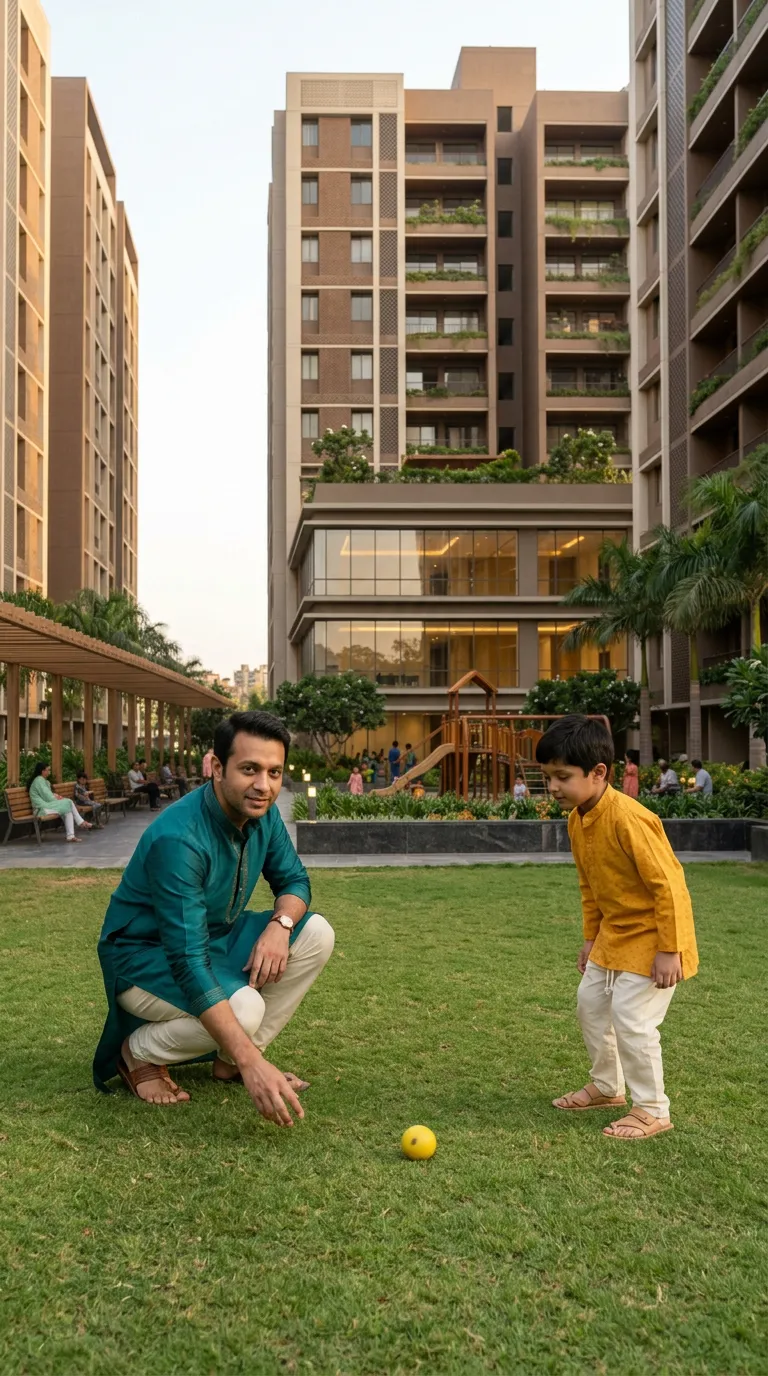 Scene 1 frame: father and son in the garden.
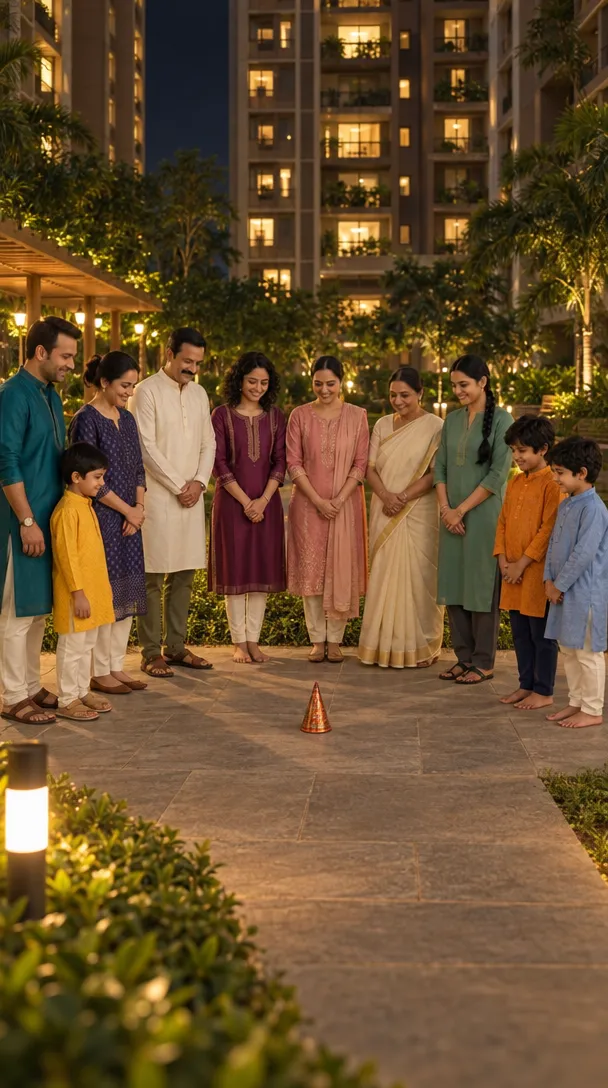 Scene 7 frame: the residents around the anar at night.
How was the work kept under the client?
The film lives in a team workspace called Hyperdream Studios. Shilp Group is saved there as a client, with its logo.
In Hyperdream, a client is a folder inside a team workspace. You pick the client in the top bar, and new work, films and spending are filed under it. Each client can have a monthly credit budget, set to stop work or to warn. People on the team only see the clients they have been given access to. Usage by client downloads as a CSV.
For this film the workspace held nothing else, so every number below is the film's own.
How long did it take?
- Script: 5 November 2026. 7 script versions in 36 minutes, covering 6 different concepts. Draft 2, "In Their Own Words", was the one produced.
- Production: 6 November, a little under six hours on the clock.
- 4K finals: 7 November, in about 70 minutes.
Start to finish was 24.5 hours across two days. Logged active time was 3.8 to 4.4 hours: the low figure ends a work session after a 15-minute gap, the high one after 30. It leaves out the edit.
Director, the film agent, ran in Agent mode over 48 requests. It wrote the script, look, cast, places and frames, and rendered about half of the first-pass shots. We started the rest, and all the 4K finals, by hand.
How many renders and credits did it take?
| Work | Succeeded | Failed or refused | Credits |
|---|---|---|---|
| Images: Nano Banana 2.1 | 56 | 0 | 136 |
| Images: GPT Image 2.6 | 6 | 0 | 18 |
| Images: GPT Image 2.5 | 3 | 0 | 17 |
| Images: Nano Banana Pro | 0 | 3 | 0 |
| Video: Gemini Omni 1.2 | 29 | 0 | 646 |
| Video: Wan 3.0 | 2 | 0 | 42 |
| Video: Seedance 2.0 | 0 | 1 | 0 |
| Tool: Upscale, on a 33-second cut | 1 | 0 | 77 |
| Tool: Upscale to 4K | 0 | 1 | 0 |
| Tool: Change the voice, shot 1 | 1 | 0 | 1 |
| Music: Lyria 2, a 30-second score | 1 | 0 | 3 |
| Voice: Eleven v3, the closing line | 1 | 0 | 1 |
| Total | 100 | 5 | 941 |
The 65 image requests made 86 pictures: 16 character sheets for a cast of 11, 32 pictures of places, references and the logo, and 38 frames and look stills. Five places were built, and the Shilp logo was stored as a product.
Every video render but one, a logo test, was given 1 to 7 reference pictures. Shilp's own material went in too: 8 screenshots of its buildings and the logo file.
Why 4.4 renders per shot, and why did every 4K final pass?
Because the tries were done cheaply first.
- Pass one, 720p: 24 renders to settle 7 shots, about 3.4 tries each. 379 credits.
- Pass two, 4K: one render per shot. 7 of 7 were kept with no re-roll. 309 credits.
Together that is 31 video renders for 7 video shots, or 4.4 per shot. The expensive renders were only made once the shot was known to work.
What went wrong?
- The first pictures were the wrong kind of home. They showed a bungalow and cramped rooms. Shilp is mainly an apartment builder. We corrected it and fed in real building references.
- Physics failed in some shots. A ball was thrown behind the player. A plate vanished. We simplified those shots on purpose instead of re-rolling them forever.
- Five requests failed or were refused. Nano Banana Pro did not respond three times, Seedance 2.0 turned one render down, and one Upscale to 4K failed. None of the five was charged.
- One model switch was undone. Frames were moved to GPT Image 2.6 and moved back to Nano Banana 2.1 within minutes.
- 4 of Director's 48 replies failed and had to be asked again.
How was the final cut made?
Outside the app. The project's timeline is empty and it has no export record.
Five cuts were uploaded back to the Library along the way: 33, 33, 28, 15 and 13 seconds, all at 720 × 1280. One 33-second cut was upscaled to 1440 × 2560. The 4K shots were rendered after the last upload, so the project does not hold a final cut made from them.
The Hindi lines were spoken on camera, with the voice made by the video model in the same render. The score is a 30-second Lyria 2 track and the closing line is an Eleven v3 voice.
What plan does a film like this fit?
Director needs a Pro seat or higher. On a Team plan a Pro seat is $119 a month and brings 2,000 credits into the shared pool, with a minimum of 2 seats (checked on /pricing, 10 November 2026). This film's 941 credits is under half of one Pro seat's month.
How would you run a client film this way?
- In Settings, open Clients and add the client. Pick it in the top bar.
- Open Director. Type the brief, add the client's photos and logo as references, and pick 9:16.
- Script: ask for several concepts, then choose one.
- Look, Cast and Places: make a reference sheet for each character and place.
- Storyboard and Shots: approve a still frame per shot, render at Draft (720p) until the shot works, then render the keepers once at 4K.
- Sound and Edit: add the score and closing line, then assemble the cut or download the shots for your own editor. Share for review gets the client's comments.
Related: the cost of an approved AI film, two Hindi industrial films for MAHA-GFC and a Mahalakshmi mantra video. To start a film, see the AI movie maker.
How we checked
Every number about the film comes from the project record and the workspace's request log, read on 10 November 2026. Times are from the logs, not a stopwatch. The line about Shilp Group comes from its own website, read the same day. What we could not confirm: the final 4K cut, which is not stored in the project, and which plan the workspace was on while the film was made. The English meanings of the Hindi lines are ours.
Questions people ask
Yes. Shilp Group's Diwali ad was made in Hyperdream in November 2026: 7 scenes and 8 shots, with five residents each saying one Hindi line to camera. The shots were made in the app and the final cut was assembled in outside editing software.
Keep reading
Case Studies10 November 20267 min read
Case Study: Two Hindi Industrial Films for MAHA-GFC
An AI industrial film case study: two Hindi films for MAHA-GFC, with the real renders, credits, hours and misses. 22 shots took 1,200 credits.
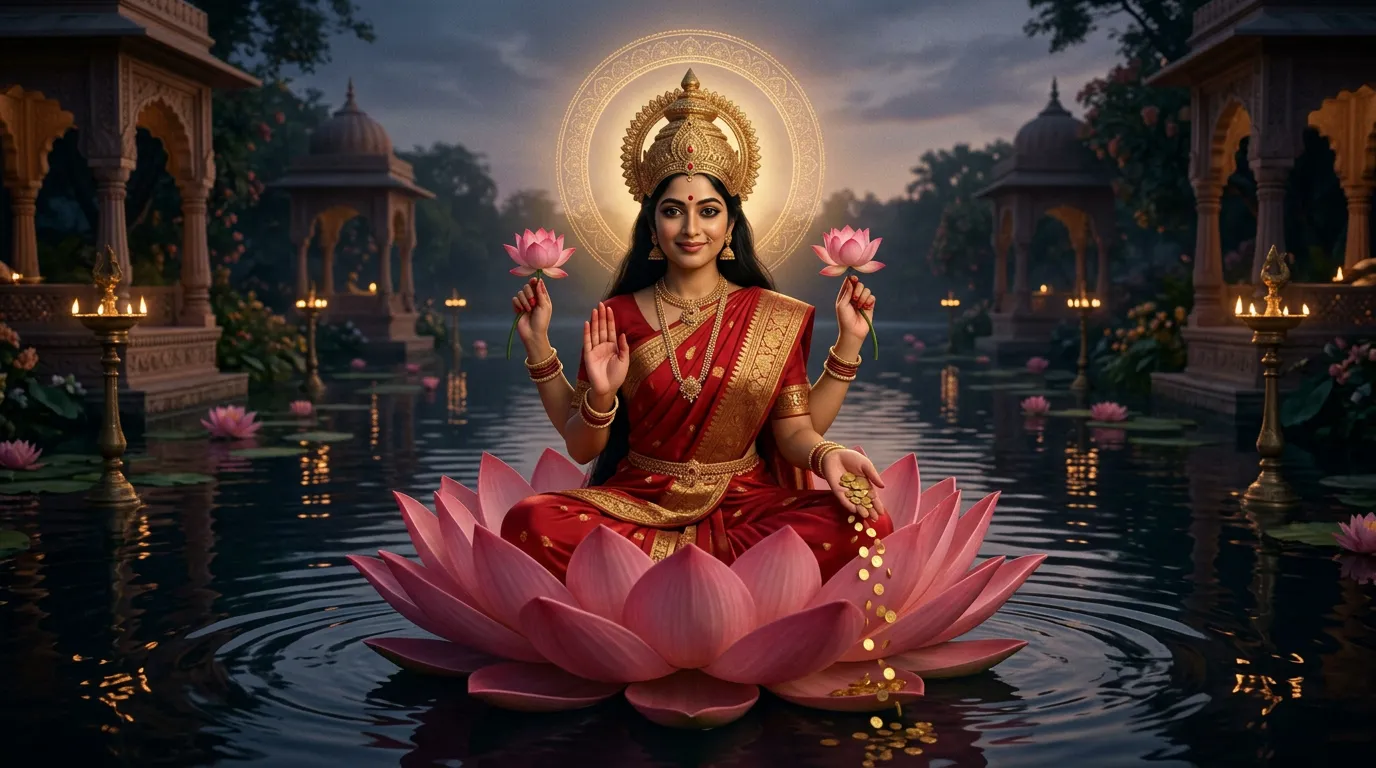
Case Studies10 November 20267 min read
Case Study: A Mahalakshmi Mantra Music Video Made With AI
An AI devotional music video case study: a Mahalakshmi mantra video with 9 finished shots, 1,289 credits and one approved look for the goddess.
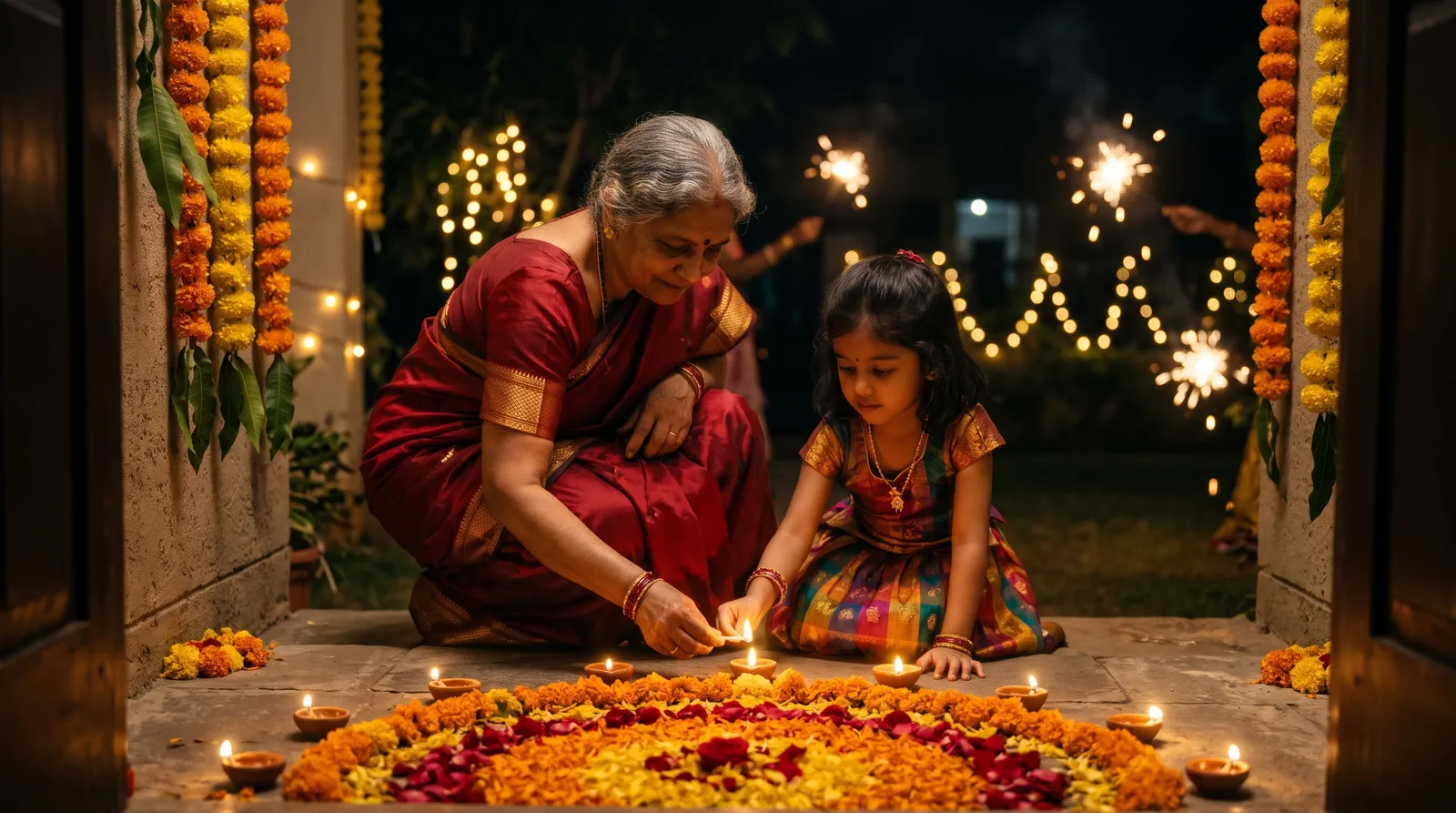
Use Cases11 November 20268 min read
How to Make a Diwali Brand Film With AI in Two Weeks
A two-week plan for a Diwali brand film with AI, built on a real 30-second Hindi film for Shilp Group: 8 shots, 941 credits and what went wrong.
More than images and video
Scripts, storyboards, motion, and characters in every version. Each one on its own, or all of them in a film.
Write a script
An idea in, a properly formatted screenplay out. Edit any line, then board it or film it.
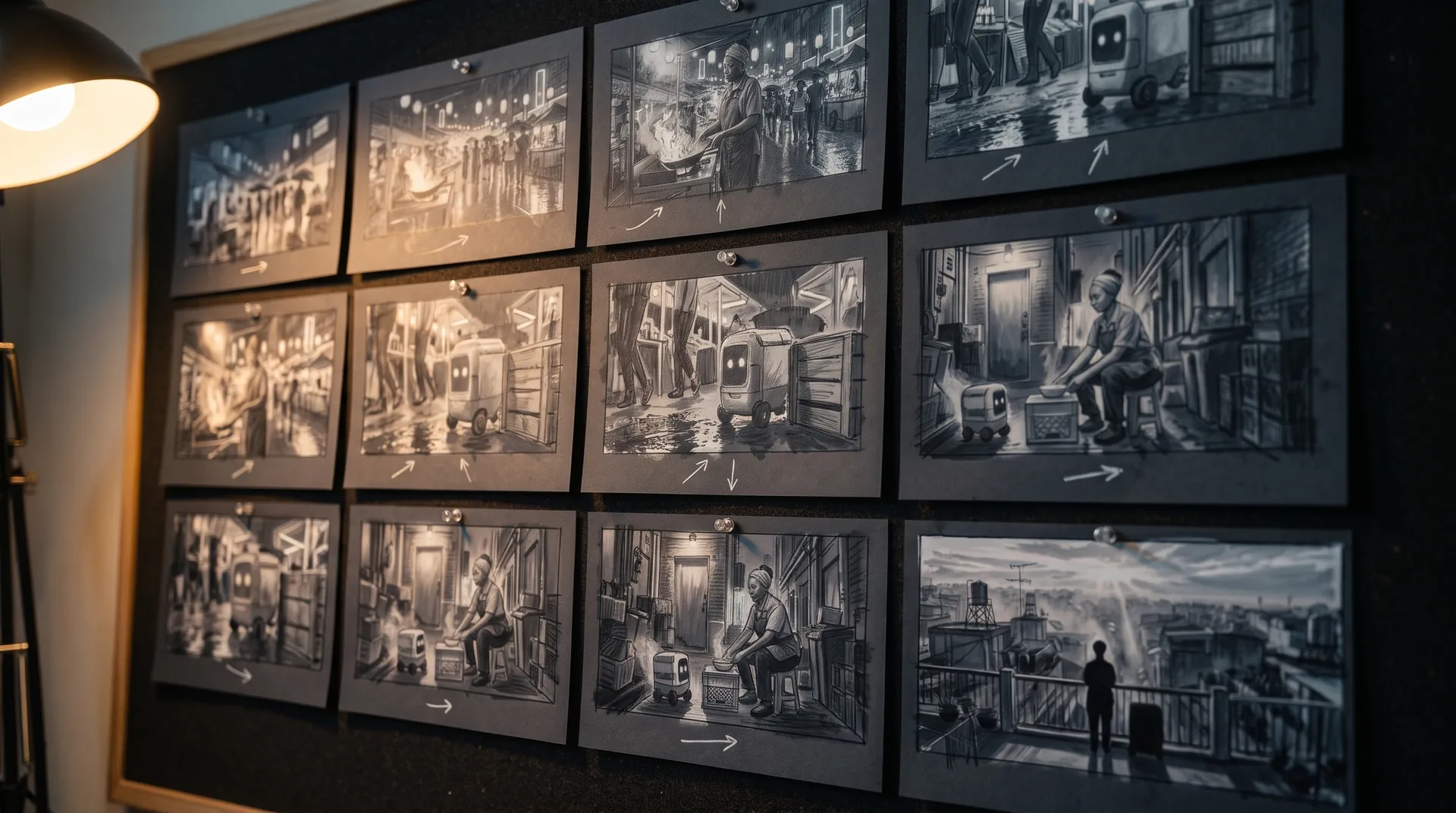
Board a storyboard
A panel for every shot, as AI stills or quick vector frames. Export it as a pitch deck.

Make motion
Titles, explainers and moving storyboards, drawn as vector animation by the AI you pick.
Characters, places, products
One subject in many versions, or new ideas for it. Every angle, look and light.
Your first film is one sentence away.
Free to start. Pay only for what you render.