OpenArt Director vs Hyperdream: An Honest Comparison
OpenArt Director vs Hyperdream on price, credits, film workflow and team controls. OpenArt is cheaper at $14 a month. Checked on 10 November 2026.
By Divy Brahmbhatt7 min read
OpenArt Director is the cheaper and broader of the two: it is on every OpenArt plan from $14 a month, with 100+ models. Hyperdream costs more, with Director on its $99 plan, and is built for teams that deliver films to clients: client folders, per-client budgets, review links and an edit timeline. Checked on 10 November 2026.
Key takeaways
- Price: OpenArt Starter is $14 a month and includes Director. Hyperdream's Director starts on Pro at $99.
- Credits: OpenArt lists 4,000 to 106,000 credits a month. Hyperdream lists 390 to 4,000. The units differ, so the numbers do not compare directly.
- Reach: OpenArt lists 100+ models and runs a public Arena that ranks them. Hyperdream has 10 video and 7 image models.
- Teams: Hyperdream's Team plan (2 to 9 seats, from $59 a seat) has client folders and a monthly budget per client. We could not read OpenArt's business plans.
- Film length: OpenArt says Director makes videos "up to five minutes long". Hyperdream sets no film length.
What is OpenArt Director?
OpenArt is an image and video platform. In June 2026 it launched Director and a name for the idea: vibe directing. The page headline is "Vibe Direct Your Next Video", and under it: "Create videos by chatting with AI."
It has two modes. Chat Mode is "Chat to create anything". Director Mode is for a "Full film / long video". OpenArt's homepage describes the flow this way: you "Layout the storyboard, shape each shot by natural chat, and let the AI help you refine the final sequence." OpenArt's own explainer says you end with "a finished, coherent piece up to five minutes long, with scenes, voices, music, and sound included."
Quick starts cover Short Film, Music Video, UGC Ads, Micro Drama, Real Estate and more.
How do OpenArt Director and Hyperdream compare side by side?
| OpenArt Director | Hyperdream | |
|---|---|---|
| Lowest plan with the film agent | Starter, $14 a month ($13 on yearly billing) | Pro, $99 a month ($79.20 for the first year on yearly billing) |
| Other plans | Plus $34, Pro $56, Wonder $240 | Starter $29, Creator $49, Business $199 |
| Credits a month | 4,000 / 12,000 / 24,000 / 106,000 | 390 / 1,000 / 2,000 / 4,000 |
| Free | A free tier with daily credits, no card | 20 credits at sign-up, no card |
| Extra credits | 5,000 for $15 a month, from Plus | Packs: 150 for $9 up to 3,500 for $199, lasting 1 year |
| Models | "100+ premium image, video, and audio models" | 10 video, 7 image, plus music, voice and sound |
| How you direct | Chat Mode and Director Mode | Chat with three modes: Agent, Ask, Plan |
| Steps you can open | Scenes and Timeline tabs, per OpenArt's explainer | Script, Look, Cast, Places, Storyboard, Sound, Shots, Edit |
| Characters | Saved Characters and Worlds | One reference sheet per character, place and product |
| Film length | Up to five minutes | No set limit |
| Edit | "There is no timeline to learn" | Edit step: seven tracks, split, trim, captions |
| Export | Not stated on the pages we read | One MP4 at up to 1080p, a pitch deck PDF, a zip of files |
| Team seats | Prices shown "per seat"; business plans not read | Team: 2 to 9 seats at $59, $119 or $249 |
| Client folders and budgets | Not seen; Enterprise lists "Controls over projects, people, and spending" | Team plan: a monthly credit budget per client, set to stop or warn |
| Client review links | Not seen on the pages we read | "Share for review", no account needed |
OpenArt figures come from OpenArt's pricing page and Director pages. Hyperdream figures come from /pricing and /models.
Where is OpenArt Director better?
Price. A film agent for $14 a month is hard to argue with. Hyperdream's Director needs the $99 Pro plan, seven times the price. If you are making your first AI short on your own, start with OpenArt.
Bigger credit numbers. OpenArt's Starter plan lists 4,000 credits and about 50 videos outside Director. Hyperdream's $29 Starter lists 390 credits, which is about 195 seconds on its lowest-priced video model. The units differ, so we cannot say which gives more film per dollar without making the same film on both. We have not done that.
More models. OpenArt lists 100+ models, including Seedance 2.5, Kling 4.0, Sora 2 and LTX-2.3. Hyperdream has ten video models.
A public model ranking. OpenArt Arena is an "expert-led benchmark for image and video models", with boards for ads, film, animation and more. Hyperdream publishes nothing like it.
Quick starts for common jobs. Short Film, Music Video, UGC Ads, Micro Drama and others are one click from the Director page.
More languages. OpenArt's blog has a Hindi edition, and its site data lists 14 languages. Hyperdream's site and blog are in English only.
A benchmark claim. OpenArt's blog says Director ranked first on Physion Labs' AI Video Ad Agent Benchmark (post of 22 September 2026). We have not checked that benchmark, and Hyperdream has not been through one.
Scale for big companies. OpenArt's Enterprise page promises "Unlimited seats, credits that never expire". Hyperdream's self-serve Team plan stops at 9 seats.
Where is Hyperdream better?
Client folders and budgets. On the Team plan, each client is a folder in the workspace. Pick the client in the top bar and new work and spending are filed under it. Each client can have a monthly credit budget that stops work or warns. Each member can have a monthly limit. We did not find per-client budgets on OpenArt's self-serve pages, and we could not read its business plans.
Review links for clients. "Share for review" makes a link for a film or a file. The client comments on a spot in a picture or a moment in a video, then approves or sends it back. No account is needed.
Eight steps you can open and change. Hyperdream's Director writes into fixed steps: Script, Look, Cast, Places, Storyboard, Sound, Shots, Edit. You can open any step and edit it by hand: the screenplay, the palette and lens, a shot's size and camera move, a line of dialogue.
An edit timeline. The Edit step has tracks for captions, two video layers, dialogue, narration, music and effects, with split, trim and snap. It is for assembling the film. It is not a substitute for professional editing software. OpenArt's explainer says "There is no timeline to learn", though it also mentions a Timeline tab for review.
Three chat modes, with the cost shown. Agent does the work and spends credits, and each step shows its cost. Ask answers and never spends. Plan proposes one change and waits. Planning draws on a separate Director allowance, not on credits. Renders, frames, sheets, voices and music cost credits.
One sheet per character. A character's reference sheet has four full-body views, head to toe, and four expressions. Every shot draws on it.
How does the same film run in each tool?
Take a 30-second ad with five speaking characters.
In OpenArt Director, you describe the ad in chat. Director lays out the storyboard, you shape each shot by chat, and it returns a finished sequence with voices, music and sound.
In Hyperdream:
- Open Director, type the idea and add the client's references.
- In Agent mode it writes the Script and sets the Look.
- In Cast and Places, it makes a reference sheet for each character and location. You approve or redo them.
- In Storyboard, each shot gets a still frame first.
- In Sound, set who speaks and the music. In Shots, render.
- In Edit, trim and export. Then "Share for review".
We made exactly that ad for Shilp Group in November 2026. It used 941 credits across 100 generations, including 16 character sheets and 31 shot renders, and about four hours of active work. Director wrote the script, look, cast, places and frames, and rendered about half of the first-pass shots. The cut was finished outside the app. See the Shilp case study.
OpenArt's way is faster to a first cut. Hyperdream's way leaves more that you can check and change before credits are spent on video.
Which should you choose?
- You are one person and price matters most: OpenArt Director.
- You want the widest choice of models, or to see how models rank: OpenArt.
- You want a finished short from a chat, with few steps: OpenArt Director.
- You deliver films to clients and must track spend for each: Hyperdream Team.
- You want to edit the script, cast and storyboard by hand before rendering: Hyperdream.
- Your client has to approve by link: Hyperdream.
Other options are in Best AI film studios in 2026 and Hyperdream vs LTX Studio. If you are replacing four separate tools, read One AI tool for script, storyboard, characters and video. Plans are in Hyperdream pricing explained, and the product page is /ai-movie-maker.
How we checked
We read OpenArt's pricing, Director, Arena, Enterprise and blog pages and Hyperdream's live pricing and models pages on 10 November 2026. OpenArt's pricing page shows two prices per plan; we took the higher as monthly billing and the lower as yearly. Its "Business plans" tab did not load for us, and neither did its answer on whether credits roll over, so we say nothing on either. "Not seen" means not on the pages we read. We did not make the same film in both tools, so nothing here compares output quality or cost per film. We left usage rights and privacy terms out: read both sets of terms before client work.
Questions people ask
OpenArt is cheaper. OpenArt Director is on every paid OpenArt plan from $14 a month. Hyperdream starts at $29 a month and its film agent, Director, is on the $99 Pro plan. Prices checked 10 November 2026.
Keep reading
Comparisons10 November 20269 min read
Best AI Film Studios in 2026: 9 Platforms Compared
The best AI film studio depends on the job. Nine platforms compared on price, film workflow and team controls. Every price checked on 10 November 2026.
Comparisons11 November 20269 min read
AI Director Agents Compared: Who Plans the Whole Film?
Five AI director tools compared: OpenArt Director, Invideo Agent Two, Pixo, Topview and Hyperdream Director. What each plans, makes and asks before spending.
Comparisons10 November 20269 min read
AI Film Studio Pricing Compared: 8 Platforms (Nov 2026)
AI film studio pricing for eight platforms in one table: entry price, credits, carry-over, team seats and free tiers, each marked read today or third party.
More than images and video
Scripts, storyboards, motion, and characters in every version. Each one on its own, or all of them in a film.
Write a script
An idea in, a properly formatted screenplay out. Edit any line, then board it or film it.
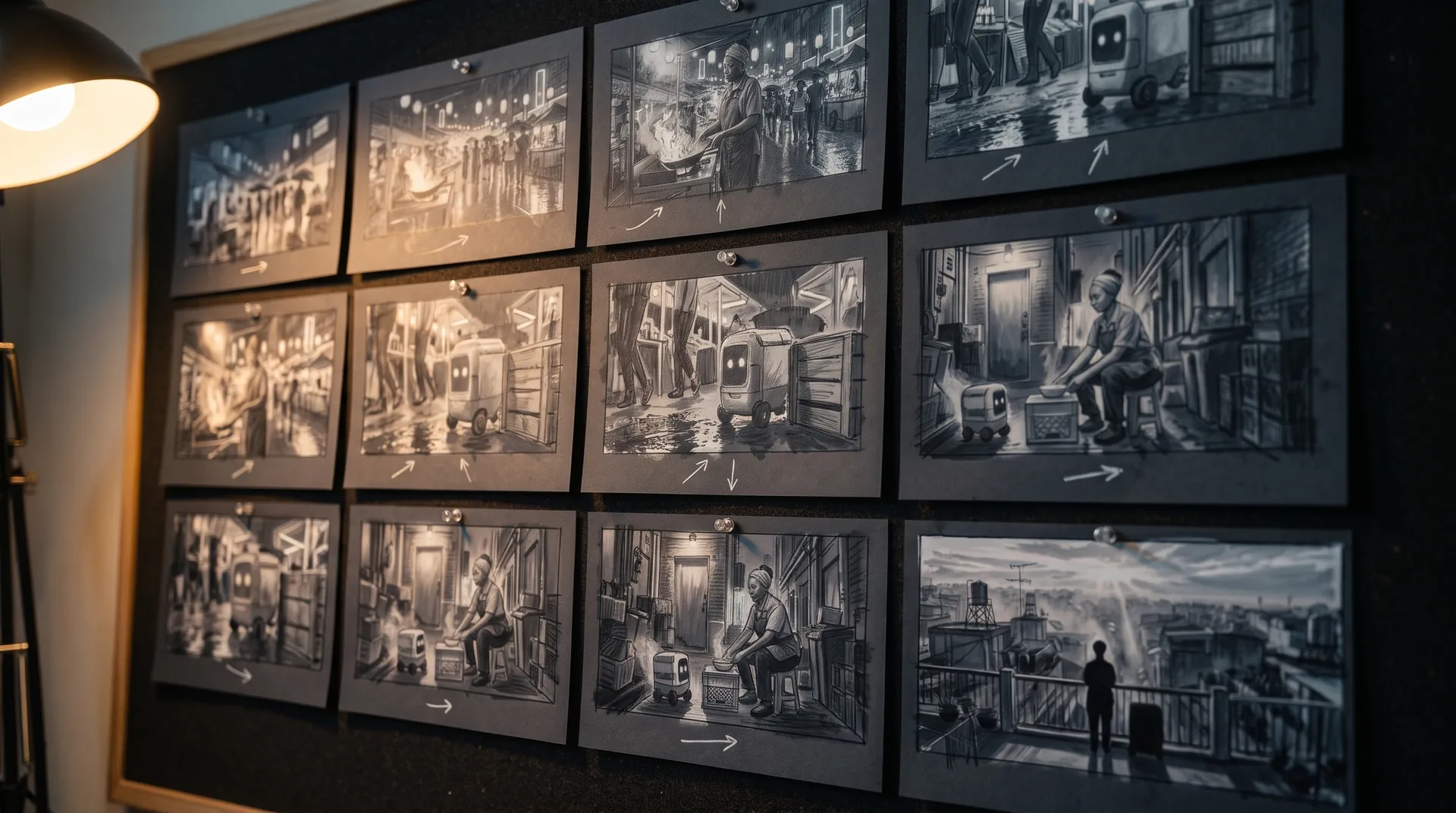
Board a storyboard
A panel for every shot, as AI stills or quick vector frames. Export it as a pitch deck.

Make motion
Titles, explainers and moving storyboards, drawn as vector animation by the AI you pick.
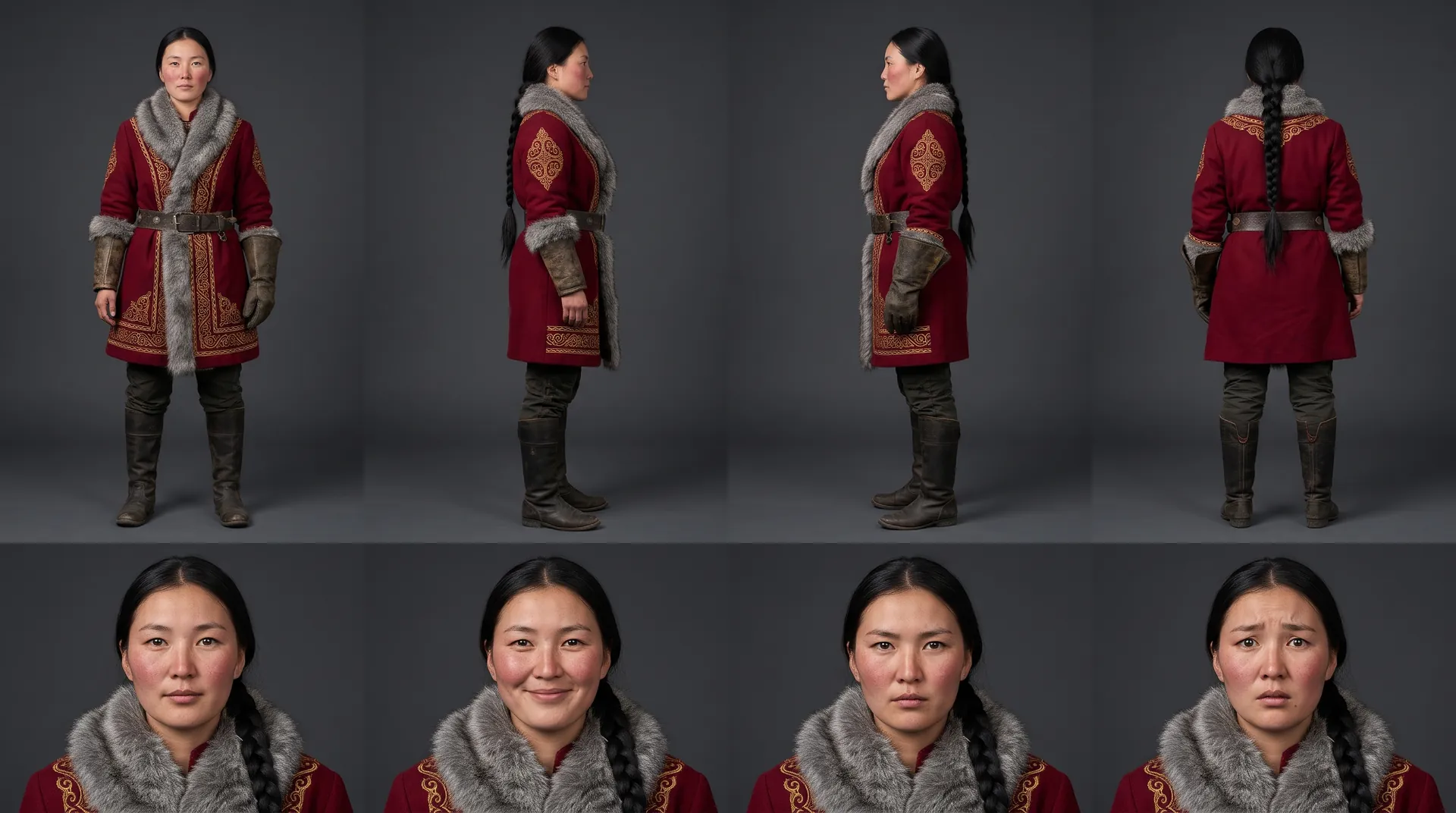
Characters, places, products
One subject in many versions, or new ideas for it. Every angle, look and light.
Your first film is one sentence away.
Free to start. Pay only for what you render.