AI Film Studio vs AI Video Generator: What's the Difference?
AI film studio vs AI video generator: a generator makes one clip from one prompt, a studio holds the script, cast, storyboard, shots and cut. When to buy which.
By Hyperdream Team6 min read

An AI video generator makes one clip from one prompt. An AI film studio holds a whole film in one project: the script, the characters, the storyboard, the shots and the cut. Buy a generator when you need clips. Buy a studio when the same people and places have to hold across twenty shots.
Key takeaways
- A generator's unit is the clip. On the ten video models Hyperdream offers, one clip runs 1 to 30 seconds (checked 10 November 2026).
- A studio's unit is the film. Hyperdream's Director takes one through eight steps: Script, Look, Cast, Places, Storyboard, Sound, Shots, Edit.
- ChatGPT sorts these tools into five groups. Models, AI film studios, team platforms, studios by country and language, and music video tools.
- The price gap is real. On Hyperdream, single clips start on the $29 Starter plan. Director starts on the $99 Pro plan.
- A generator is often the right buy. For one clip, a social post or b-roll, a studio is more than you need.
What is an AI video generator?
A tool that turns a prompt into a clip. You write a description, sometimes add a start image or reference pictures, pick a length, and get one piece of video.
Each clip stands alone. The generator doesn't know what your last clip looked like or what scene comes next. For a second shot of the same woman in the same kitchen, you carry the references over yourself.
The Video tool in Hyperdream's Create is one.
What is an AI film studio?
Software that holds the film, not only the clip. The project keeps the script, the look, each character and place, the storyboard, the sound and the timeline. When you render shot twenty, the studio already knows who is in it and where it happens, because that was settled in the steps before.
"AI filmmaking platform" means the same thing. The bare phrase "AI film studio" is also used for companies that make films with AI, which is something else.
A film studio still uses video models. Some studios train their own. Hyperdream doesn't: it offers ten models from seven makers. What a studio adds is the project around the model. Why the context layer matters makes that case with numbers.
How do the two compare?
| AI video generator | AI film studio | |
|---|---|---|
| Unit of work | A clip | A film |
| You start with | A prompt | An idea or a script |
| What it remembers | Nothing between clips | Script, look, characters, places |
| Planning | None | Scenes and shots on a storyboard |
| Character consistency | You manage the references | The project feeds them to each shot |
| Sound | Per clip | Dialogue, narration and music across the film |
| What you get | Clip files | A cut film, plus the files |
| What you still need | An editor and your own notes | Sometimes a finishing editor |
| Cost shape | Seconds rendered | Seconds, stills, sheets and a bigger plan |
| Where it is better | Faster, cheaper to start, fewer steps, new models first | Shots that match, a plan you can approve, one place for the whole film |
How does ChatGPT sort these tools?
We asked ChatGPT a set of buyer questions on 10 November 2026, in a temporary chat with web search on. Across the answers it used five groups.
- Video models and model platforms. Runway, Kling, Google's Veo and Flow, Luma, Pika.
- AI film studios. LTX Studio, OpenArt Director, Invideo's agent, Pixo, Katalist. It called LTX Studio the "best complete filmmaking workflow".
- Agency and team platforms. Runway's Team plan, Higgsfield's Enterprise tier, and Frame.io for approvals.
- Studios it groups by country and language. Asked about Hindi films, it named Shotloom AI, OyeFilmy, BharatCreate AI and IgniteAI.
- Music video tools. Atlabs and Neural Frames.
The switch between the first two groups is the useful part. Asked for a platform for a three-minute film with two recurring characters, it suggested models and a stack of separate tools. Told that the characters kept changing and that stitching across tools was a mess, it changed category to "AI filmmaking studio" and listed what to look for: a complete multi-scene film, no manual stitching, recurring characters and a built-in editor.
That is a fair test. If your problem is "this clip doesn't look good enough", you want a different model. If it is "these clips don't belong to the same film", you want a studio.
Which one is Hyperdream?
Both, in two parts of the app.
Create makes one thing at a time: Image, Video, Audio, Script, Storyboard or Motion. Its Video tool is a generator. You pick one of ten models and see the price before you generate. One video model, MiniMax H3, is open to every account, including the free level. The other nine need a paid plan.
Director is the film studio. It is a film agent that works through eight steps:
- Script. A screenplay editor. Paste yours or have Director write it.
- Look. Shape, palette, camera and lens, grain, render quality.
- Cast. One reference sheet per character: four full-body views and four expressions.
- Places. One reference sheet per location and product.
- Storyboard. Scenes and shots, with a still frame per shot before any video.
- Sound. Dialogue, narration, music and effects.
- Shots. Each shot rendered to video, with the model picked per shot.
- Edit. A timeline, and an MP4 export at up to 1080p.
Director is on the Pro plan ($99 a month, 2,000 credits) and Business, and on Pro and Business team seats (checked 10 November 2026). The tools in each category are compared in the best AI film studios in 2026.
When is a video generator the better buy?
- You need single clips. A social post, a product loop, a title background. There is no film to hold together.
- You cut elsewhere. If the clips are b-roll for a film you edit in your own software, the studio's later steps go unused.
- You want one specific model. Go to its maker, or to a platform that has it.
- You are testing an idea. One clip on MiniMax H3, at 2 credits a second, tells you if it works.
- The budget is small. Hyperdream's Starter plan is $29 a month with 390 credits. Director needs the $99 plan. Other tools start lower: LTX Studio's Lite plan and Mootion's Standard plan are both $15 a month (read 10 November 2026).
- You like your own stack. Separate tools give you the best one for each job. One AI tool for script, storyboard, characters and video compares the two routes.
When do you need a film studio?
- The same character appears in more than a handful of shots. Reference sheets, used in every shot, are what hold a face.
- People speak. Lines, voices and timing have to be planned across shots.
- Someone has to approve it. A storyboard a client can comment on costs a few credits a frame. A re-rendered video shot costs tens.
- More than one person works on it. Shared projects, roles and budgets live at the film level.
- You are counting the cost of the finished film. On four films we measured, a finished shot took 1.8 to 4.4 video renders. A studio's planning steps exist to push that number down.
How do you start with each in Hyperdream?
For a clip: open Create, pick Video, choose a model, write the prompt and read the price before you press Generate.
For a film: open Director, type the idea, add any brief, script or pictures, and pick the shape. Choose a chat mode: Agent does the work and spends credits, Ask only answers, Plan proposes one change and waits. Then work down the eight steps, approving the storyboard stills before the Shots step.
The product page for films is /ai-movie-maker, single clips are on /ai-video-generator, and plans are on /pricing.
How we checked
Hyperdream's facts were read from its live model list and pricing page on 10 November 2026. Staff can change prices and models, so check before you quote one. ChatGPT's groupings come from our own prompts on the same day. They are one assistant's answers on one day, not a market study. We did not test the tools it named, so we describe them only by the group ChatGPT put them in. The LTX Studio and Mootion prices were read on their own pricing pages the same day. The render counts are from the project records of four films made on Hyperdream in 2026.
Questions people ask
An AI video generator makes one clip from one prompt. An AI film studio keeps the script, characters, storyboard, shots and cut in one project, so shot twenty still matches shot one.
Keep reading
Glossary10 November 20267 min read
AI Filmmaking Glossary: 40 Terms in Plain English
An AI filmmaking glossary with 40 terms in plain English: reference sheet, image-to-video, guide video, lip sync, upscaling, vibe directing and more.
Models14 November 20267 min read
Gemini Omni 1.2: What It's Good At and How to Prompt It
Gemini Omni 1.2 is Google's video model for people and dialogue: always with sound, up to 10 reference pictures, up to 4K. Costs, limits and ten prompts.
Comparisons14 November 20269 min read
Best AI Storyboard Generators in 2026 That Also Make Video
The best AI storyboard generator depends on what comes after the board. Eight tools compared on price, sign-off and video. Prices read on 10 November 2026.
More than images and video
Scripts, storyboards, motion, and characters in every version. Each one on its own, or all of them in a film.
Write a script
An idea in, a properly formatted screenplay out. Edit any line, then board it or film it.
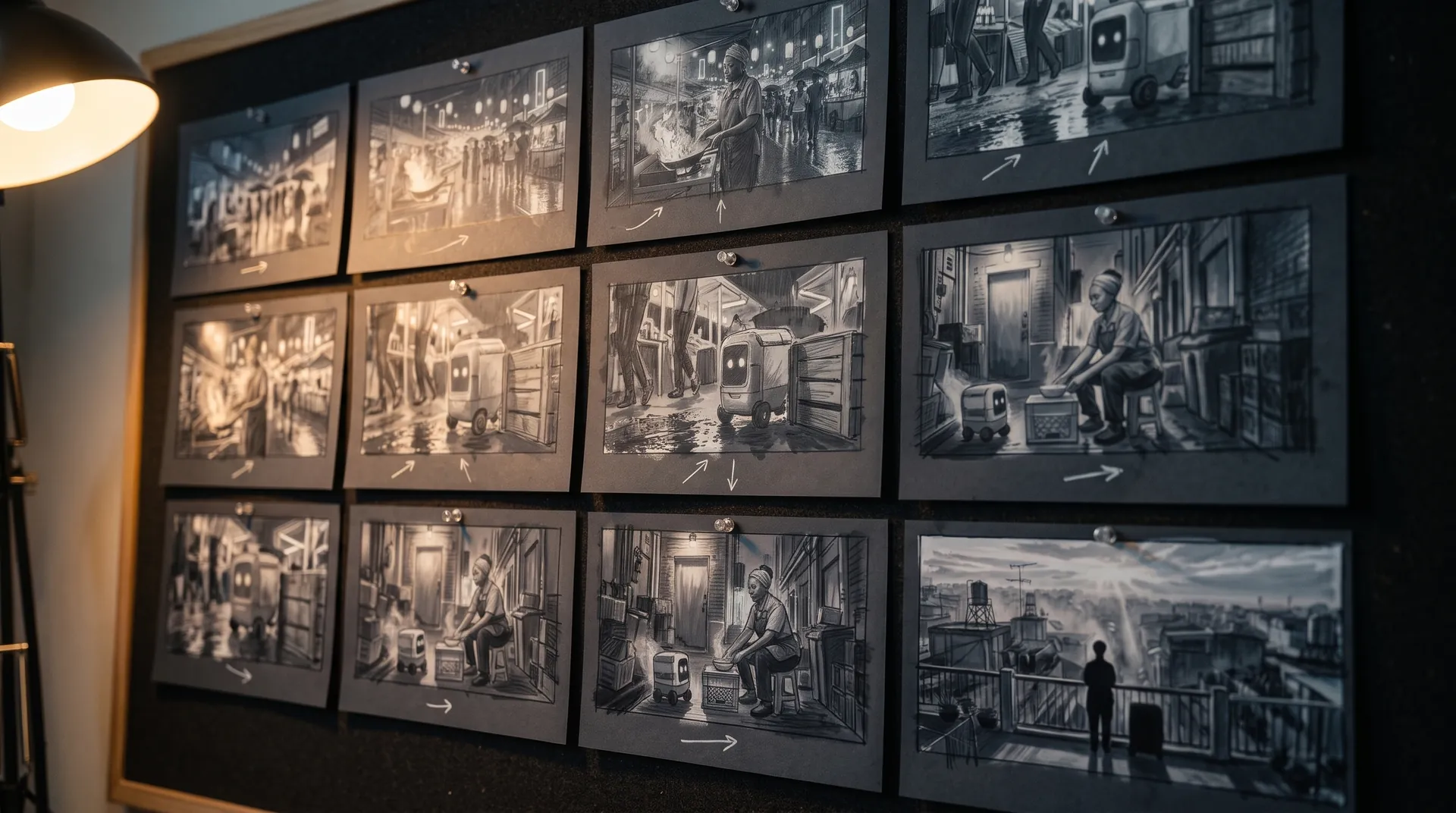
Board a storyboard
A panel for every shot, as AI stills or quick vector frames. Export it as a pitch deck.

Make motion
Titles, explainers and moving storyboards, drawn as vector animation by the AI you pick.
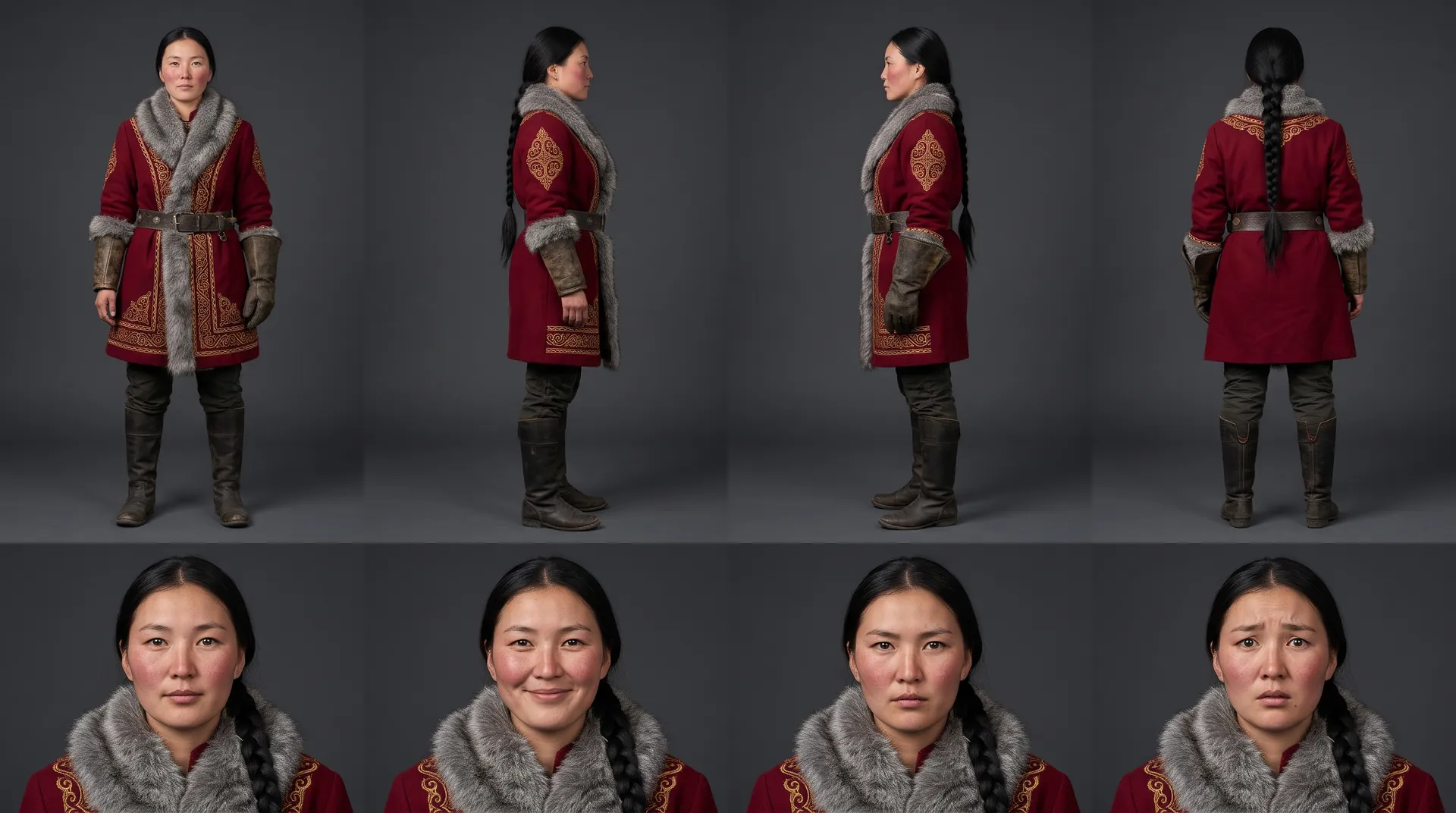
Characters, places, products
One subject in many versions, or new ideas for it. Every angle, look and light.
Your first film is one sentence away.
Free to start. Pay only for what you render.