AI Filmmaking Glossary: 40 Terms in Plain English
An AI filmmaking glossary with 40 terms in plain English: reference sheet, image-to-video, guide video, lip sync, upscaling, vibe directing and more.
By Hyperdream Team7 min read

This glossary explains 40 terms you will meet when making films with AI, each in two or three plain sentences. Where a term has a specific meaning or number on Hyperdream, that is stated and dated 10 November 2026.
Key takeaways
- 40 terms in six groups: kinds of tool, ways to make a clip, consistency, planning, camera and picture, and sound, finish and cost.
- Three terms do most of the work: start frame, reference sheet and take.
- Image-to-video and reference-to-video are different. One starts from your picture. The other is guided by your pictures.
- Vibe directing and agentic video editor are product words, from OpenArt and Invideo AI. They are defined here with their sources.
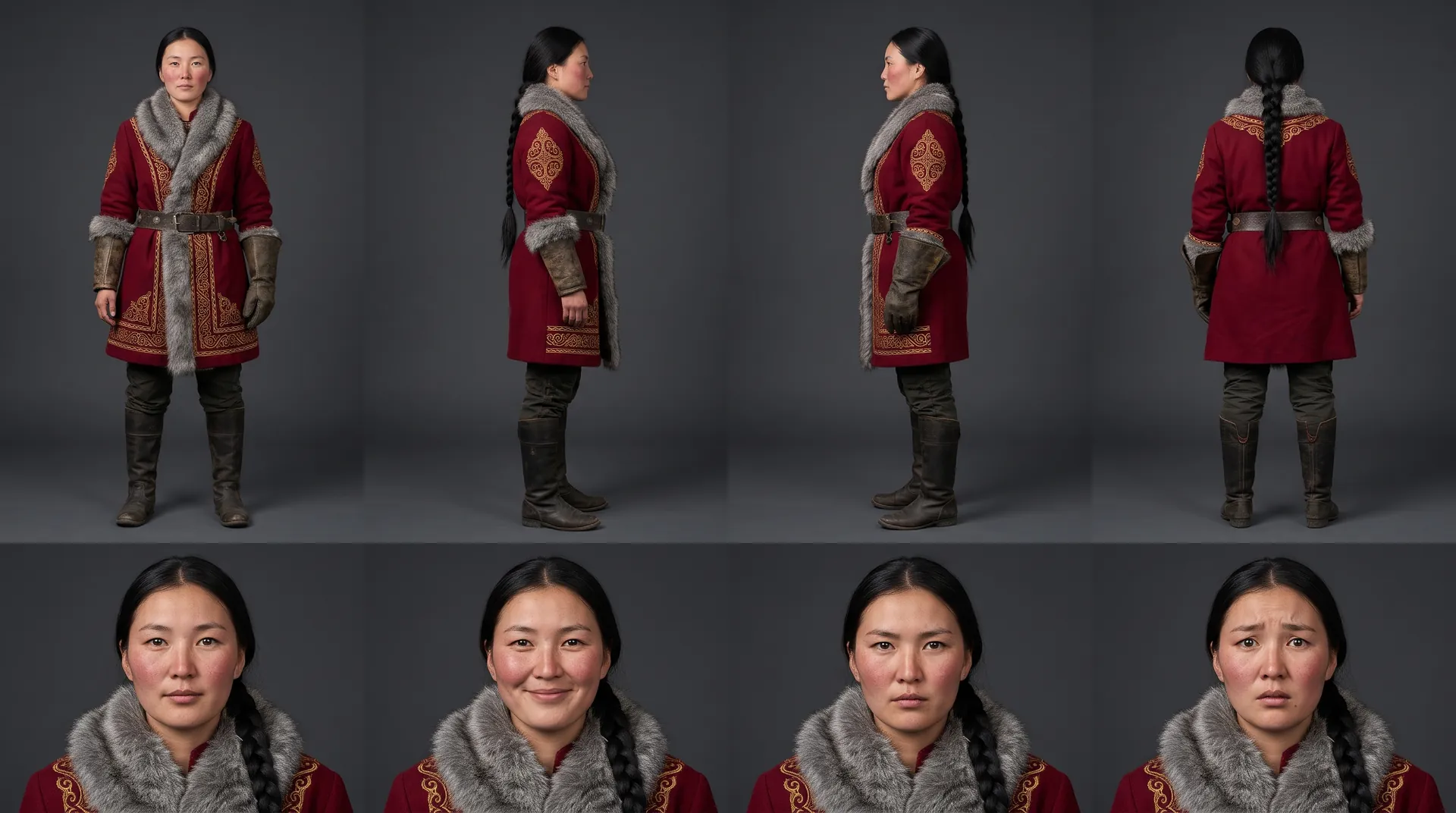
- On Hyperdream, a character's reference sheet is four full-body views from head to toe and four expressions.
What kinds of tool are there?
AI video generator. A tool that makes one video clip from one prompt. It has no memory of your other clips, so keeping a character the same across clips is your job.
AI film studio. A tool that keeps a whole film in one project: script, characters, storyboard, shots and edit. Every shot draws on the same cast and look, so the film holds together. Hyperdream is one. See one AI tool for script, storyboard, characters and video.
AI director (film agent). An AI agent that plans and makes a film with you, step by step, and can do the work itself. Hyperdream's is called Director. It has three modes: Agent makes changes and spends credits, Ask only answers, and Plan proposes a change and waits.
Agentic video editor. Invideo AI's description of its own product: "The agentic video editor for serious creatives" (invideo.io, read 10 November 2026). In general use it means an editor where an AI agent carries out the editing steps from your instructions.
Vibe directing. OpenArt's name for making AI video by chat. You make the creative calls in conversation and the tool generates (OpenArt's explainer, read 10 November 2026). OpenArt compares it with "vibe coding".
Thinking model. The language model that plans, writes and reasons, as opposed to the model that makes pictures or video. On Hyperdream you pick the thinking model that Director, the script writer and the storyboard planner use, from GPT and Claude models.
What are the ways to make a clip?
Prompt. The written instruction you give a model. A good video prompt names the subject, the action, the camera and the light.
Text-to-video. Making a clip from a written prompt alone. It is the fastest way to start and the hardest way to keep anything consistent, because the model invents every detail.
Image-to-video. Making a clip that begins from a still picture you supply. The picture is the first frame and the model adds motion.
Start frame. The still picture a clip begins from. Getting the start frame right before you render is the cheapest way to control a shot, because a still costs far less than a clip.
End frame. A still picture the clip must finish on. With a start frame and an end frame, the model fills in the motion between two known pictures. Not every model takes one.
Reference-to-video. Making a clip while giving the model pictures of the people, places or products that must appear. The pictures guide the look but are not the first frame. On Hyperdream, six of the ten video models take reference pictures, from 4 up to 10 each. See AI video models compared.
Guide video. An existing clip you give the model so it follows that clip's motion or layout. This is also called video-to-video. On Hyperdream, four video models take a guide video, and a Motion clip can be the guide.
Multi-shot. One render that contains several shots with cuts between them, made from a single prompt. It saves stitching, but you have less control over each shot.
Take. One attempt at a shot. Making another is called a re-roll. The number of takes per finished shot decides what a film really costs: in our project records it runs from 1.8 to 4.4.
What keeps a film consistent?
Character consistency. The same face, body and costume in every shot. It is the hardest part of AI filmmaking, because a model starts each clip with no memory of the last. See how to keep characters consistent.
Reference sheet. One image that fixes how a character, place or product looks. On Hyperdream a character's sheet is four full-body views from head to toe and four expressions. A place's shows the wide, the reverse, the middle and the details. See how to make a character reference sheet.
Character turnaround. The row of views that turns a character around: front, sides and back. A reference sheet is a turnaround plus expressions.
Look. The film's visual rules: colour palette, camera and lens feel, grain and light. Set it once for the whole film so shots match. On Hyperdream, Look is the second of Director's eight steps.
Style reference. A picture you give a model to copy the style from, not the content. It says "make it feel like this" without putting that picture's subject in your shot.
What are the planning words?
Screenplay. The script in standard film format: scene headings, action, character names, dialogue. A scene is one continuous piece of action in one place and time.
Shot. One continuous piece of picture between two cuts. In AI film, one shot is usually one generated clip.
Shot list. A table with one row per shot: what we see, shot size, camera, length, references and sound. See how to write a shot list for an AI film.
Storyboard. The film drawn as a sequence of still frames, one per shot. It lets you see and fix the film before paying for video.
Animatic. A storyboard played in time, with each frame held for the length of its shot, usually with rough sound. It shows the pacing before any real footage exists.
Previs. Short for previsualisation: a rough version of a film or sequence made to plan the real one. A storyboard and an animatic are both kinds of previs.
Coverage. The set of different shots you make of the same moment, such as a wide, two close-ups and an over-the-shoulder. More coverage gives the edit more choices and costs more to make.
What are the camera and picture words?
Shot size. How much of the subject fills the frame: wide, medium, close-up, extreme close-up. Wide shows where we are. Close shows what someone feels.
Camera move. How the camera travels during the shot: push in, pull back, pan, tilt, track, crane, handheld. One move per shot is a safe rule with AI video.
Aspect ratio. The shape of the frame, written as width to height. 16:9 is wide, 9:16 is tall for phones, 1:1 is square, and 2.39:1 is the cinema-wide shape. Hyperdream calls this the film's shape.
Resolution. The size of the picture in pixels: 720p, 1080p, 4K. Higher looks sharper and costs more to render. On Hyperdream, Draft is 720p and Final is 1080p, and a film exports at 1080p at most.
What are the sound, finish and cost words?
Lip sync. Matching a character's mouth to the spoken words. Some video models make speech and matching lips in the same render. Others need the voice first.
Talking head. A clip made from one picture of a face and a line of speech: the face says the line. It works best with one clear face looking at the camera.
Text to speech. Turning written words into a spoken voice. On Hyperdream this is Voice, with two models (Eleven v3 and MiniMax Speech 2.8) that each have their own library of voices.
Narration. A voice that speaks over the picture and is not seen speaking. It is the easiest voice to keep consistent, because one voice reads everything and no lips have to match.
Captions. The spoken words shown as text on screen. They can be burned into the picture or saved beside it as an .srt file. On Hyperdream, captions are English only today.
Upscaling. Making a picture or clip larger and sharper after it is made, for example from 720p to 1080p or 4K. It adds detail the original didn't have, so check faces afterwards.
Frame interpolation. Making extra frames between the real ones so motion looks smoother, for example taking a clip to 60 frames a second. Hyperdream's tool for this is called Smoother motion.
Credits. The unit most AI video tools charge in. On Hyperdream each model shows its price in credits before you generate, video is priced per second (2 to 9 credits a second at default size), and a failed render refunds itself. See Hyperdream pricing explained.
Director allowance. Hyperdream's separate budget for planning with Director, the script writer and the storyboard planner. It comes with Pro and Business, runs in a 24-hour session window and a weekly window, and is not paid from credits. Renders still cost credits.
Where do these terms show up in Hyperdream?
Most of them are steps or buttons. In Create, Image, Video, Audio, Script, Storyboard and Motion are the things you can make, and the Video box takes a start frame, an end frame, reference pictures or a guide video, depending on the model. In Director, the eight steps follow the planning words in order: Script, Look, Cast, Places, Storyboard, Sound, Shots, Edit. Reference sheets live in Cast and Places. Takes live in Shots. Captions and narration live in Sound and Edit. The image and video generator page covers Create, and how to make a movie with AI walks through a whole film.
How we checked
Hyperdream-specific numbers and names were checked against the live app, /pricing and /models on 10 November 2026. The Invideo AI and OpenArt phrases were read on their own sites the same day. The general film terms follow common usage, and usage varies between studios. We could not find one agreed definition of "agentic video editor" or "vibe directing" beyond the companies that use them, so we have quoted the source for each.
Questions people ask
Image-to-video means making a clip that begins from a still picture you supply. The picture is the first frame, and the model adds the motion.
Keep reading
Guides11 July 20269 min read
How to Make a Movie With AI in 2026: Script to Screen
How to make a movie with AI in eight steps: script, look, cast, places, storyboard, sound, shots and edit, with real costs and hours from finished films.
Guides25 June 20267 min read
How to Keep Characters Consistent Across AI Video Scenes
Character consistency in AI video comes from one reference sheet per character, given to the model on every shot. The steps, the models and real numbers.

Models12 November 20268 min read
AI Video Cost per Second: 10 Models Ranked by Credits
AI video cost per second on Hyperdream: ten models ranked from 2 to 9 credits a second, what size does to the price, and how many seconds each plan buys.
More than images and video
Scripts, storyboards, motion, and characters in every version. Each one on its own, or all of them in a film.
Write a script
An idea in, a properly formatted screenplay out. Edit any line, then board it or film it.
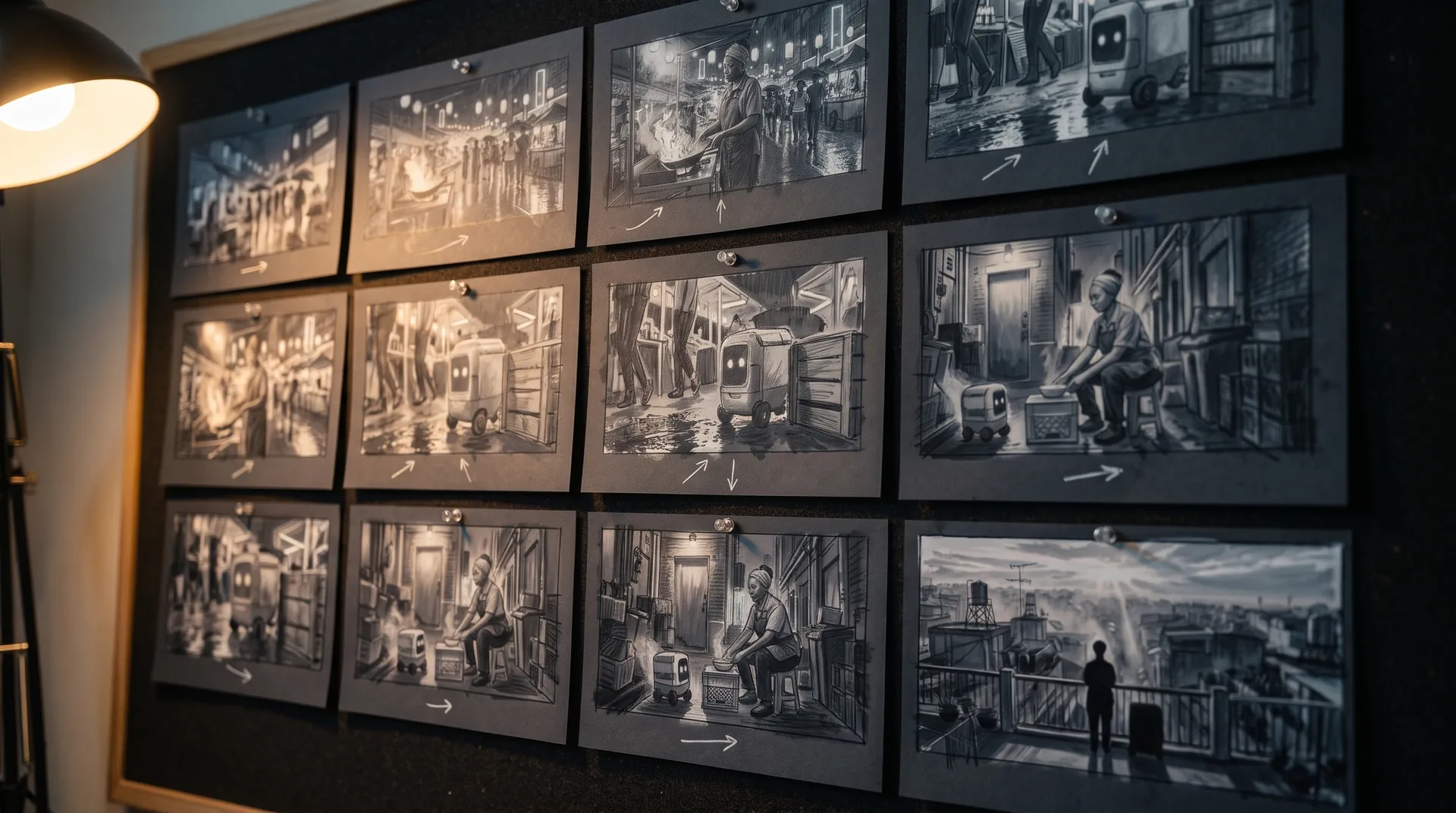
Board a storyboard
A panel for every shot, as AI stills or quick vector frames. Export it as a pitch deck.

Make motion
Titles, explainers and moving storyboards, drawn as vector animation by the AI you pick.
Characters, places, products
One subject in many versions, or new ideas for it. Every angle, look and light.
Your first film is one sentence away.
Free to start. Pay only for what you render.