AI Director Agents Compared: Who Plans the Whole Film?
Five AI director tools compared: OpenArt Director, Invideo Agent Two, Pixo, Topview and Hyperdream Director. What each plans, makes and asks before spending.
By Divy Brahmbhatt9 min read

An AI director tool is an agent that takes a film idea in plain words, plans the script, characters and shots, and then makes them. This post compares five: OpenArt Director, Invideo's Agent Two, Pixo, Topview's agent and Hyperdream's Director. They differ most in two things: how much they do before asking you, and what you can still change by hand afterwards.
Hyperdream is ours, so read our own row with that in mind. Everything about the other four comes from their own pages, read on 10 November 2026.
Key takeaways
- OpenArt Director turns a chat into a film of up to 5 minutes. Plans start at $14 a month with 4,000 credits.
- Invideo Agent Two calls itself "the agentic video editor". It also edits footage you upload and can hand off an editable project for Premiere Pro, Final Cut Pro or DaVinci Resolve. From $9 a seat a month.
- Pixo says you approve the plan "before anything renders". Free plan with 200 credits. Paid from $19.90 a month.
- Topview works on a canvas, not a timeline. Its Team plan is $56 a seat a month, billed yearly.
- Hyperdream Director has three modes: Agent spends credits itself, Plan waits for your go, Ask never spends. It needs Pro at $99 a month.
How do the five AI director tools compare?
| What the vendor says the agent does | Before it renders | Fixing by hand | Lowest price | |
|---|---|---|---|---|
| OpenArt Director | "Plans the scenes, builds the storyboard, and makes the video", up to 5 minutes | "Ask me first" or "Run automatically" setting | Scenes view and Timeline view | $14 a month |
| Invideo Agent Two | Script co-writer, shot-by-shot plan, routes each shot to a model, edits the timeline | "Tweak as needed before generating" | Timeline, plus an editable project for other editors | $9 a seat a month |
| Pixo | "Write scripts, create storyboards, generate assets, and assemble videos" | "Approve it, or adjust shots and lines before anything renders" | One timeline, redo only what changed | Free, then $19.90 a month |
| Topview | "Plans scenes, selects the right models, generates assets" | Storyboard cards to "review structure before generating video" | Canvas, every shot editable | $36 a month, billed yearly |
| Hyperdream Director | Script, look, cast, places, storyboard, sound, shots, edit | Plan mode waits. Agent mode goes ahead | Eight steps and an edit timeline | $99 a month (Pro) |
Prices are each vendor's own pricing page on 10 November 2026. Credits are not like for like across tools, so a bigger credit number does not mean more film.
What does OpenArt Director do?
OpenArt launched Director in June 2026 and calls the method vibe directing. Its page says, "Describe a scene, edit by chatting, or start from a preset and get a film up to 5 minutes long" (openart.ai/features/director).
You chat, and it "plans the scenes, builds the storyboard, and makes the video". A Scenes view shows the storyboard and a Timeline view is there "for precise edits". OpenArt says characters, faces, places, voices and products "stay consistent throughout" and that finished videos include sound. Its launch post lists nine languages.
At the start you choose "Ask me first" or "Run automatically". As OpenArt describes it, that choice covers resolution, aspect ratio and tone. We did not find a statement about whether it stops before spending credits.
Plans run from Starter at $14 a month (4,000 credits) to Wonder at $240 (openart.ai/pricing). The pricing page counts videos "excluding Director", so we could not work out what a Director film costs in credits. A fuller look is in OpenArt Director vs Hyperdream.
What does Invideo's Agent Two do?
Invideo's headline is "The agentic video editor for serious creatives", with the line "Do what you love while invideo's AI agents handle the rest" (invideo.io).
Its pages describe a script co-writer, a storyboard that turns "any script or idea into a shot-by-shot plan", and an agent that "routes each shot to the right model". An editing agent takes "one direction" and "applies it to every shot on the timeline". It also works on footage you upload: the flow on its homepage is upload, describe the edit, review the cut, export.
Two things stand out. The output can be "a rendered video, or an editable project for Premiere Pro, Final Cut Pro or DaVinci Resolve" (invideo.io/remote-agents). And on Team and Enterprise plans you can "set a credit limit on a project, set individual limits per member".
Its pricing page shows Basic at $9 a seat a month ($4 billed yearly) with 190 credits and "Agent Two Lite only", then Pro at $30 ($15) with 1,000 credits (invideo.io/pricing). The page does not label which figure is monthly, so that reading is ours. See Invideo AI vs Hyperdream.
What does Pixo do?
Pixo's tagline is "Your personal AI director". You "chat with AI to write scripts, create storyboards, generate assets, and assemble videos" (pixo.video).
It is the clearest of the five about approval. Its pages say the agent "reviews every scene, camera move, reference, and sound cue before generation", and that you "approve it, or adjust shots and lines before anything renders". It reuses "the same characters, products, locations, voices, and visual styles across every scene", puts clips, voiceover, music and sound on one timeline, and exports at 1080p, or 4K on its two higher plans.
The free plan has 200 credits and needs no card. Basic is $19.90 a month ($9.90 billed yearly) with 1,000 credits (pixo.video/pricing).
What does Topview's agent do?
Topview's headline is "Create Any Video, Just Tell Your Agent". The agent "plans scenes, selects the right models, generates assets, and keeps every shot editable on Canvas" (topview.ai).
The canvas is the difference. You "break your video into scenes, shots, and storyboard cards before generation", and Topview says the canvas is "not locked into a traditional timeline". A separate Drama Studio is built for vertical episodes and asks you to "review each stage before moving from planning into storyboard and episode production".
Its Team plan lists seat management, "credit usage controls", a shared asset library, a Brand Kit, "real-time co-editing" and single sign-on as an add-on. Prices are shown per month, billed yearly: Plus $36, and Team $56 a seat with 500 credits a seat (topview.ai/pricing).
What does Hyperdream's Director do?
Director is Hyperdream's film agent. It works through eight named steps: Script, Look, Cast, Places, Storyboard, Sound, Shots and Edit. Each step is a screen you can open and change yourself.
The chat has three modes:
| Mode | The hint in the app | What happens |
|---|---|---|
| Agent | "Makes changes" | Does the work itself, renders included, and spends credits. Each step shows its cost |
| Plan | "Proposes, waits for your go" | Proposes one change and waits. Never spends |
| Ask | "Answers, changes nothing" | Answers only. Never spends |
In Agent mode Director can write the script, set the look and quality, make a reference sheet for each character, place and product, build and change the storyboard, draw first frames, plan and compose the music, render shots, voice the narration, lay out the edit and export the film. It picks a video model for each shot from the ten on offer. You choose which thinking model runs it.
Two meters run side by side. Planning uses a Director allowance that comes with Pro and Business, counted over a 24-hour session and a 7-day week. Renders, frames, sheets, voices and music use credits. On a Team plan you can also cap spending: a monthly credit budget per client, set to stop work or to warn, and a monthly limit per person.
The honest part: Agent mode will spend your credits without asking again. That is the point of it. If you want a say before each spend, use Plan.
On a 30-second festive ad we made in November 2026, Director wrote the script, look, cast, places and frames and started about half of the first-pass renders. We started the rest, and every final render, by hand. The numbers are in the cost of an approved AI film.
Where are the other four better than Hyperdream?
- Price to start. Pixo is free to try with 200 credits. Invideo starts at $9 a seat and OpenArt at $14. Director needs the $99 Pro plan, and Hyperdream's 20 free credits do not open Director.
- One chat to a long film. OpenArt says Director makes a film of up to 5 minutes from a conversation. Hyperdream's Director moves step by step, which is slower when you just want a draft.
- Editing your own footage. Invideo's agent edits clips you upload. Hyperdream's Director is built around films it makes in the project, not around cutting footage you shot.
- Handing off to an editor. Invideo offers an editable project for three editing programs. Hyperdream exports an MP4 at up to 1080p and a zip of the film's files. It has no editor project files today.
- Higher output size. Pixo lists 4K on its two higher plans.
- Approval by default. Pixo's pages describe approving the plan before rendering as the normal flow. Hyperdream leaves that to the mode you pick.
- Live teamwork. Topview lists real-time co-editing and single sign-on. Hyperdream offers neither today.
- Voices. Hyperdream's Director does not choose voices by itself. You pick the narrator and each character's voice.
Where is Hyperdream better?
- You can see and change every step. Eight steps, each with its own screen, and a timeline with seven tracks.
- Three clear modes. One spends, two never do, and the app says which is which.
- Reference sheets. Every character gets four full-body views and four expressions. Places and products get their own sheets.
- Client budgets on a self-serve plan. Client folders with a monthly credit budget, plus per-person limits, on the Team plan from $59 a seat.
- Review links. A client can comment and approve without an account.
What is an "agentic video editor"?
Invideo uses the phrase as its headline, and none of the pages we read defines it. Here is a working definition: a video tool where an AI agent takes a goal in plain words, plans the steps, and carries them out on a real project (a script, a set of shots, a timeline) that you can still open and change by hand.
The last part matters. A tool that only returns a finished file is a generator. An agentic editor leaves you a project.
Which AI director tool should you pick?
- A quick short from one chat, at a low price: OpenArt Director.
- You already have footage, or you finish in Premiere Pro or DaVinci Resolve: Invideo.
- You want to approve the plan before any render, and try it free: Pixo.
- Vertical episodes and live co-editing: Topview.
- A film you will rework step by step, or client work with budgets and approvals: Hyperdream Director. Start at the AI movie maker.
For tools that plan films without an agent, see the best AI film studios in 2026 and one AI tool for script, storyboard, characters and video.
How we checked
We read each vendor's homepage, agent page and pricing page on 10 November 2026 and quote them directly. Hyperdream facts come from the app and its /pricing page on the same day. What we could not confirm: whether OpenArt, Invideo or Topview stop before spending credits (none says so); which OpenArt plans include Director and what a Director film costs there; Invideo's monthly prices, which its page does not label; Topview's monthly-billed prices and its free allowance; and how any of the four performs, because we did not run test films on them for this post. OpenArt and Invideo each cite a benchmark that ranks their agent first. We did not check either.
Questions people ask
An AI director tool is an agent that takes a film idea in plain words, plans the script, characters and shots, and then makes them. OpenArt Director, Invideo's Agent Two, Pixo, Topview's agent and Hyperdream's Director all work this way (checked 10 November 2026).
Keep reading

Comparisons10 November 20269 min read
AI Film Studio Pricing Compared: 8 Platforms (Nov 2026)
AI film studio pricing for eight platforms in one table: entry price, credits, carry-over, team seats and free tiers, each marked read today or third party.
Comparisons10 November 20269 min read
Best AI Film Studios in 2026: 9 Platforms Compared
The best AI film studio depends on the job. Nine platforms compared on price, film workflow and team controls. Every price checked on 10 November 2026.

Comparisons10 November 20267 min read
Higgsfield Alternatives for Films, Not Just Clips (2026)
Looking for a Higgsfield alternative to make whole films? Five film studios compared, with credit rules side by side. Checked on 10 November 2026.
More than images and video
Scripts, storyboards, motion, and characters in every version. Each one on its own, or all of them in a film.

Write a script
An idea in, a properly formatted screenplay out. Edit any line, then board it or film it.
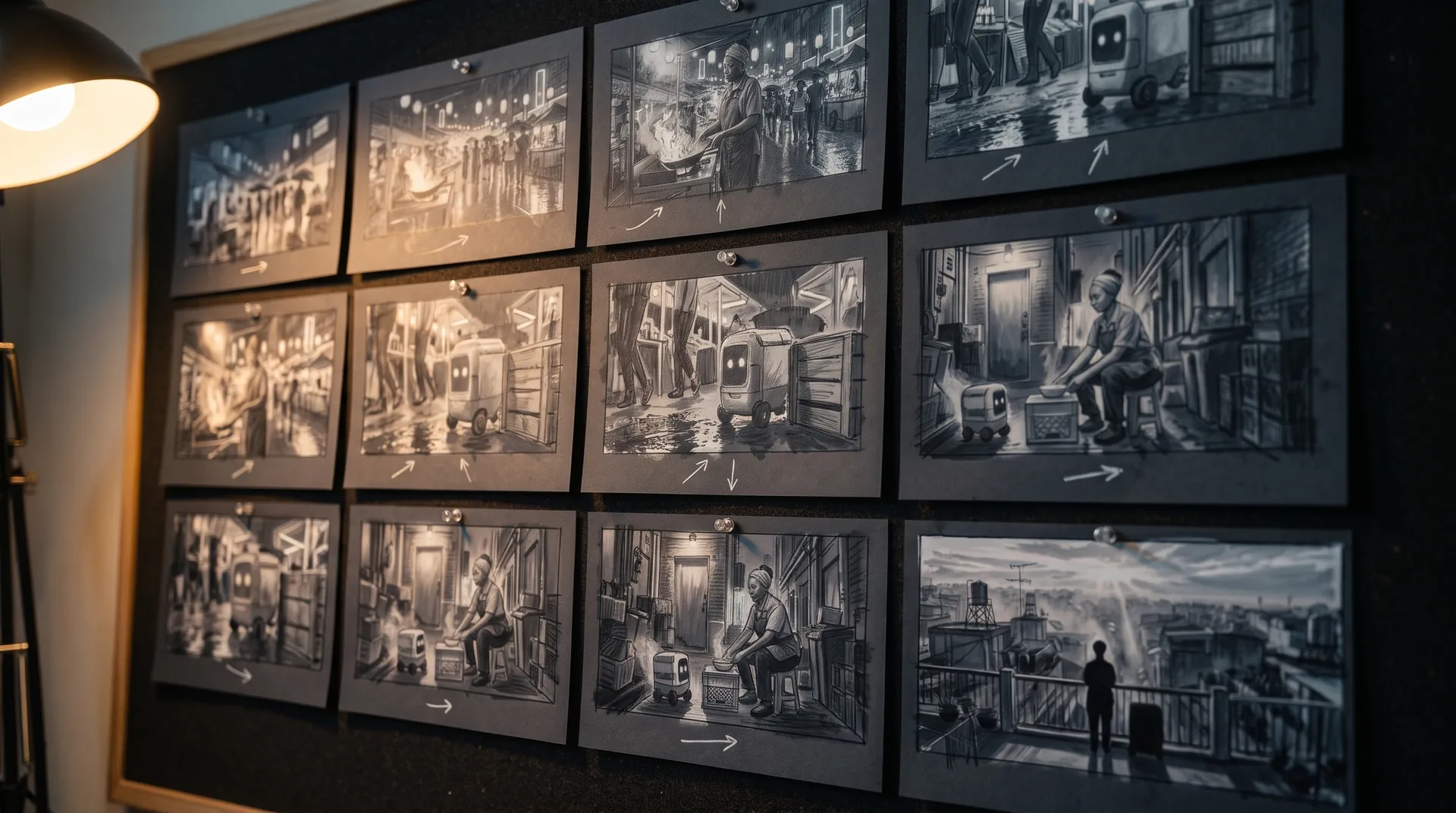
Board a storyboard
A panel for every shot, as AI stills or quick vector frames. Export it as a pitch deck.

Make motion
Titles, explainers and moving storyboards, drawn as vector animation by the AI you pick.
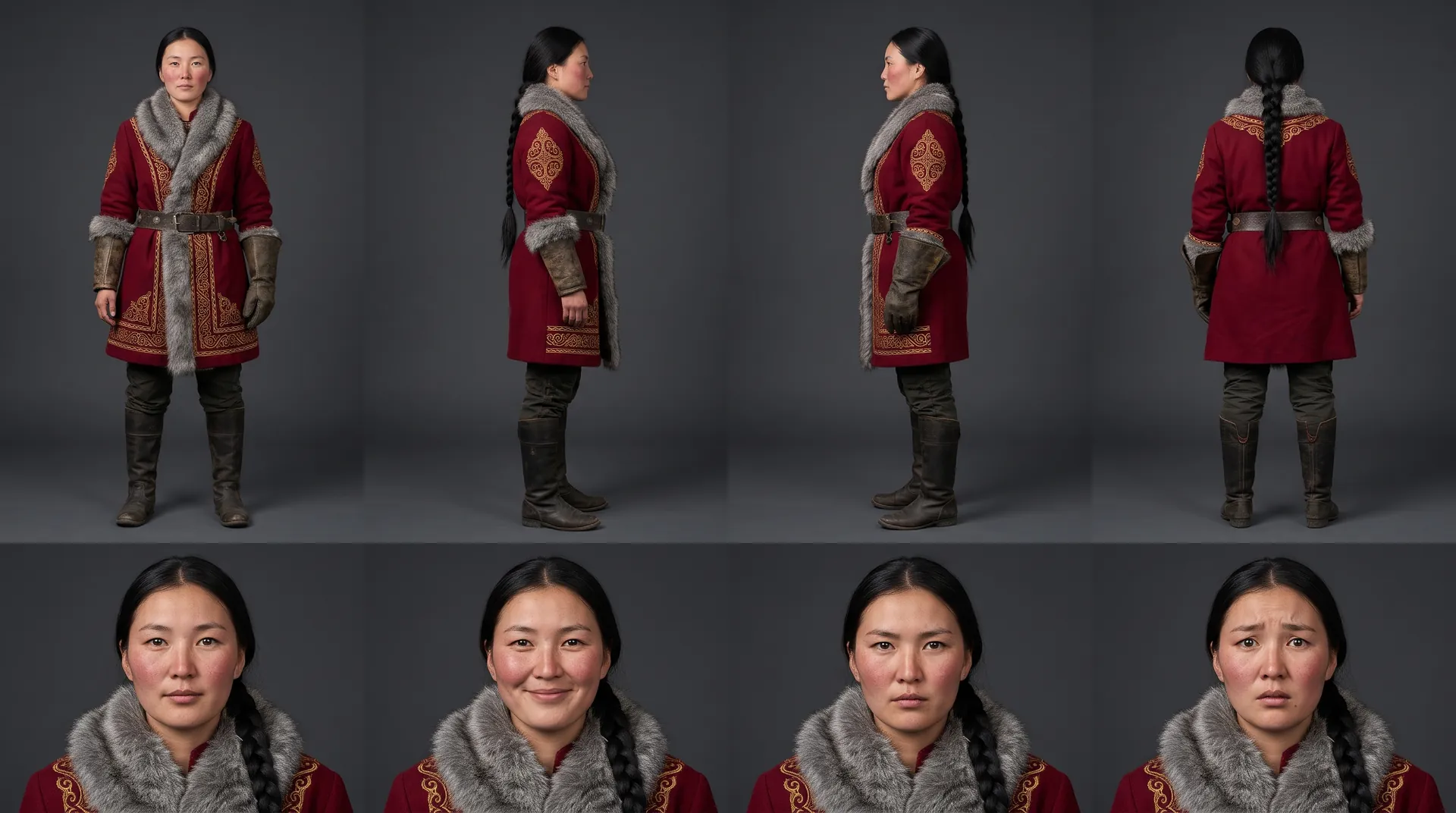
Characters, places, products
One subject in many versions, or new ideas for it. Every angle, look and light.
Your first film is one sentence away.
Free to start. Pay only for what you render.