Runway Alternatives for Filmmakers Who Need Whole Films
Seven Runway AI alternatives for filmmakers who need whole films, not single clips, with prices checked on 10 November 2026 and where Runway AI is still better.
By Divy Brahmbhatt8 min read
The best Runway AI alternative for a whole film is a tool that keeps the script, the cast, the storyboard, the shots and the cut in one project. Seven do some or all of that: LTX Studio, OpenArt Director, Google Flow, Invideo AI, Katalist, Morphic and Hyperdream. Runway AI is still the better choice for its own models, its API and its professional output options (checked 10 November 2026).
Key takeaways
- Runway AI's Standard plan is $15 a month for 625 credits, which Runway lists as 52 seconds of its Gen-4.5 model.
- Runway AI has moved towards whole films too: it lists Runway Agent, a Multi-Shot Video App and storyboarding tools.
- Storyboard-first alternatives: LTX Studio and Katalist. Chat-first: OpenArt Director, from $14 a month. Timeline-first: Invideo AI, from $9 a seat.
- Hyperdream runs a film through 8 steps and has per-client budgets for teams, but starts at $29 a month and does not offer Runway's models.
- Stay on Runway AI for Gen-4.5, Aleph 2.0, the API, HDR and ProRes output, and its Academy.
Why do filmmakers look for a Runway AI alternative?
Usually not because the clips are bad. Runway AI makes its own video models and has years of public work behind it.
The reason is the job. A model-first tool is built around one generation at a time. A short film is thirty shots that have to agree with each other: the same two faces, the same kitchen, the same light. When we asked ChatGPT on 10 November 2026 about a three-minute film with two recurring characters, it first suggested a stack of separate tools. When we said the characters kept changing and stitching across tools was a mess, it switched to what it called AI filmmaking studios.
That is the group this post covers. If you only want a different clip model, see AI video models compared.
What does Runway AI offer today?
Runway AI, still often searched for as RunwayML, is the company behind the Gen series of video models. These facts were read on its own pages on 10 November 2026.
| Runway AI | |
|---|---|
| Plans | Free (125 one-time credits), Standard $15, Pro $35, Max $95 a month. Yearly billing is $12, $28 and $76 a month |
| Credits a month | 625, 2,250 and 9,500. Max rolls unused credits over for one month |
| What credits buy | Gen-4.5 uses 12 credits a second, so 625 credits is 52 seconds |
| Team | $69 a seat, two to nine people, 6,900 pooled credits a seat |
| Own models | Gen-4.5, Aleph 2.0 and Act-Two, plus models from other makers |
| Film tools | Runway Agent, a Multi-Shot Video App, storyboarding, animatics, node-based Workflows |
| For professionals | An API, plugins for Premiere Pro, After Effects and Resolve, and HDR, ProRes and image sequences on Max |
Sources: runway.com/pricing, runway.com/product, runway.com/team-plan.
Be fair to it. Runway's product page says Runway Agent will "create end-to-end videos with simple conversations", and its Academy has a tutorial on making a short film with the agent. So Runway AI is not only a clip tool. What we did not see on that page is a script-writing step, a cast or reference-sheet step, or a timeline editor.
Which Runway AI alternatives plan a whole film?
| Tool | How it plans a film | Lowest paid plan | Where Runway AI is better |
|---|---|---|---|
| LTX Studio | Storyboards, saved characters, pitch decks | $15 a month (third party, 24 August 2026) | Gen-4.5 and Aleph 2.0, a self-serve Team plan with pooled credits |
| OpenArt Director | A film agent you direct by chat | $14 a month, 4,000 credits | Its own models, HDR and ProRes output |
| Google Flow | Google's creative studio for video | Inside Google AI plans | Its own models, plugins for editing software |
| Invideo AI | Script, storyboard and a timeline editor | $9 a seat a month | Its own models, HDR and ProRes output |
| Katalist | Script to storyboard to video | $19 a month | Its own models, a far larger user base |
| Morphic | A canvas for frames and shots | $19 a month | Its own models, a longer public record |
| Hyperdream | Eight steps, Script to Edit, with a film agent | $29 a month | Lower entry price, its own models, an API, more proof |
The last column lists things Runway's own pages state. Apart from Runway's models, which only Runway has, we did not confirm that each alternative lacks them.
LTX Studio
LTX Studio comes from the company behind the LTX video models and is built around a storyboard. Its site would not load for our reader on 10 November 2026, so its prices here are as listed by omidsaffari.com on 24 August 2026: Lite $15, Standard $35 and Pro $125 a month. Full comparison: Hyperdream vs LTX Studio.
OpenArt Director
OpenArt Director describes itself as "Create videos by chatting with AI", with a Director Mode labelled "Full film / long video". OpenArt's pricing page lists "Access to Director" on all four paid plans: Starter $14 a month with 4,000 credits, Plus $34, Pro $56 and Wonder $240. It is the cheapest way here to try a film agent.
Google Flow
Flow is Google's tool for video. It is sold inside the Google AI plans, and the plans page lists 200, 1,000, 10,000 and 25,000 Flow credits a month across Plus, Pro and the two Ultra tiers. The page showed us no US prices, and Flow's own site showed only a sign-in page, so we can't describe its film tools first-hand.
Invideo AI
Invideo AI calls itself "The agentic video editor for serious creatives". Its homepage lists script writing, storyboarding ("Turn any script or idea into a shot-by-shot plan") and a timeline editor ("Picture Premiere Pro with full AI"). Plans are per seat: Basic $9, Pro $30 and Ultra $80 a month, with 190, 1,000 and 3,000 credits a seat. Unused credits don't roll over.
Katalist
Katalist says it "breaks it into shots and generates a storyboard with consistent characters and scenes", then makes video from the board. Its pricing page shows two sets of prices: Essential $19, Pro $39 and Unlimited $99 a month, and a second set at $29, $31 and $79. We could not tell which is current.
Morphic
Morphic describes itself as "an AI video and image studio — from ideation to a finished story." Its pricing page lists a free level with up to 20 credits, then Basic $19, Standard $24, Pro $45 and Max $170 a month. The page shows those next to yearly totals, so check which billing period applies.
Hyperdream
Hyperdream is ours, so weigh this with that in mind. Its film agent, Director, takes a film through eight steps: Script, Look, Cast, Places, Storyboard, Sound, Shots, Edit. Each character, place and product gets one reference sheet that goes into the shots it appears in. A character's sheet shows four full-body views and four expressions.
Plans are $29, $49, $99 and $199 a month, with 390, 1,000, 2,000 and 4,000 credits. Director is on the $99 Pro plan and up. The plans are explained in Hyperdream pricing explained.
Where it is weaker than Runway AI:
- It does not offer Runway's models. It has ten video models from seven makers (Google, Kuaishou, ByteDance, Alibaba, MiniMax, xAI and Black Forest Labs), and trains none of its own.
- It costs more to start. $29 against Runway AI's $15.
- It has no API and no plugins for editing software. The exported film is one MP4 at up to 1080p.
- It is new. The current version went live on 9 November 2026, and independent reviews are few.
Where is Runway AI better than all of them?
- Its own models. Gen-4.5, Aleph 2.0 for editing video, and Act-Two for character performance are made by Runway. If the look you want comes from them, no alternative has it.
- Professional output. Max lists "HDR, ProRes, image sequences", and Pro and Max list unlimited 4K video upscaling.
- An API. dev.runwayml.com calls it "One API for AI Video, Image and Audio".
- Plugins. Runway lists plugins for Premiere Pro, After Effects and Resolve.
- Teaching. Runway Academy has courses such as "AI for Advertising" and "AI for Visual Effects".
- Proof. Runway's homepage says "Used by 60m+ creatives around the world", and its product page links stories about an Amazon series and an Under Armour TV commercial.
Which should you pick?
- You want Runway's models, an API or ProRes: stay on Runway AI.
- You think in storyboards: LTX Studio or Katalist.
- You want to try a film agent for $14: OpenArt Director.
- You think in timelines: Invideo AI.
- You already pay for a Google AI plan: Google Flow.
- You want to shape frames on a canvas: Morphic.
- You make multi-scene films for clients and need budgets per client: Hyperdream. The team side is in Runway Team vs Hyperdream Team.
Nine platforms, Runway AI and Higgsfield among them, are compared in the best AI film studios in 2026.
How do you make a film in Hyperdream?
- Open Director, type the idea and add references: a brief, a script, pictures, clips you have already made.
- Choose a chat mode. Agent does the work and spends credits. Plan proposes one change and waits. Ask only answers.
- Script, then Look, Cast and Places: one reference sheet per character, place and product.
- Storyboard: a still frame for every shot before any video.
- Sound and Shots: voices and music, then render each shot on the model you pick.
- Edit: trim on the timeline and export the MP4.
A 30-second ad made this way took 941 credits. See the Shilp case study. For single clips, the AI video generator page shows the ten models.
How we checked
We read Runway's pricing, product, team, developer and Academy pages on 10 November 2026, and each alternative's own pricing page and homepage the same day. LTX's site would not load, so its prices are third-party and dated 24 August 2026. Google showed no US prices and Flow's site showed only a sign-in page. Katalist shows two price sets. We did not see a free-plan watermark rule or a clip-length limit on the Runway pages we read. We did not run the same film through each tool, so this compares what each offers and costs, not picture quality. Usage rights and privacy terms are left out: read each tool's terms before client work.
Questions people ask
It depends on how you work. LTX Studio and Katalist start from a storyboard, OpenArt Director and Hyperdream's Director plan a film by chat, and Invideo AI is built around a timeline. Hyperdream runs a film through eight steps, Script to Edit, with Director on its $99 Pro plan (checked 10 November 2026).
Keep reading

Comparisons10 November 20267 min read
Higgsfield Alternatives for Films, Not Just Clips (2026)
Looking for a Higgsfield alternative to make whole films? Five film studios compared, with credit rules side by side. Checked on 10 November 2026.

Comparisons10 November 20267 min read
7 LTX Studio Alternatives for Multi-Scene Films (2026)
Seven LTX Studio alternative tools that plan a film across scenes, not single clips: prices, strengths, and when to stay on LTX. Checked 10 November 2026.

Comparisons22 November 20268 min read
Invideo AI vs Hyperdream: Two Film Agents Compared
Looking for an Invideo AI alternative? Invideo AI vs Hyperdream on price, agents, folders, credit limits, storyboards and export. Checked 10 November 2026.
More than images and video
Scripts, storyboards, motion, and characters in every version. Each one on its own, or all of them in a film.

Write a script
An idea in, a properly formatted screenplay out. Edit any line, then board it or film it.
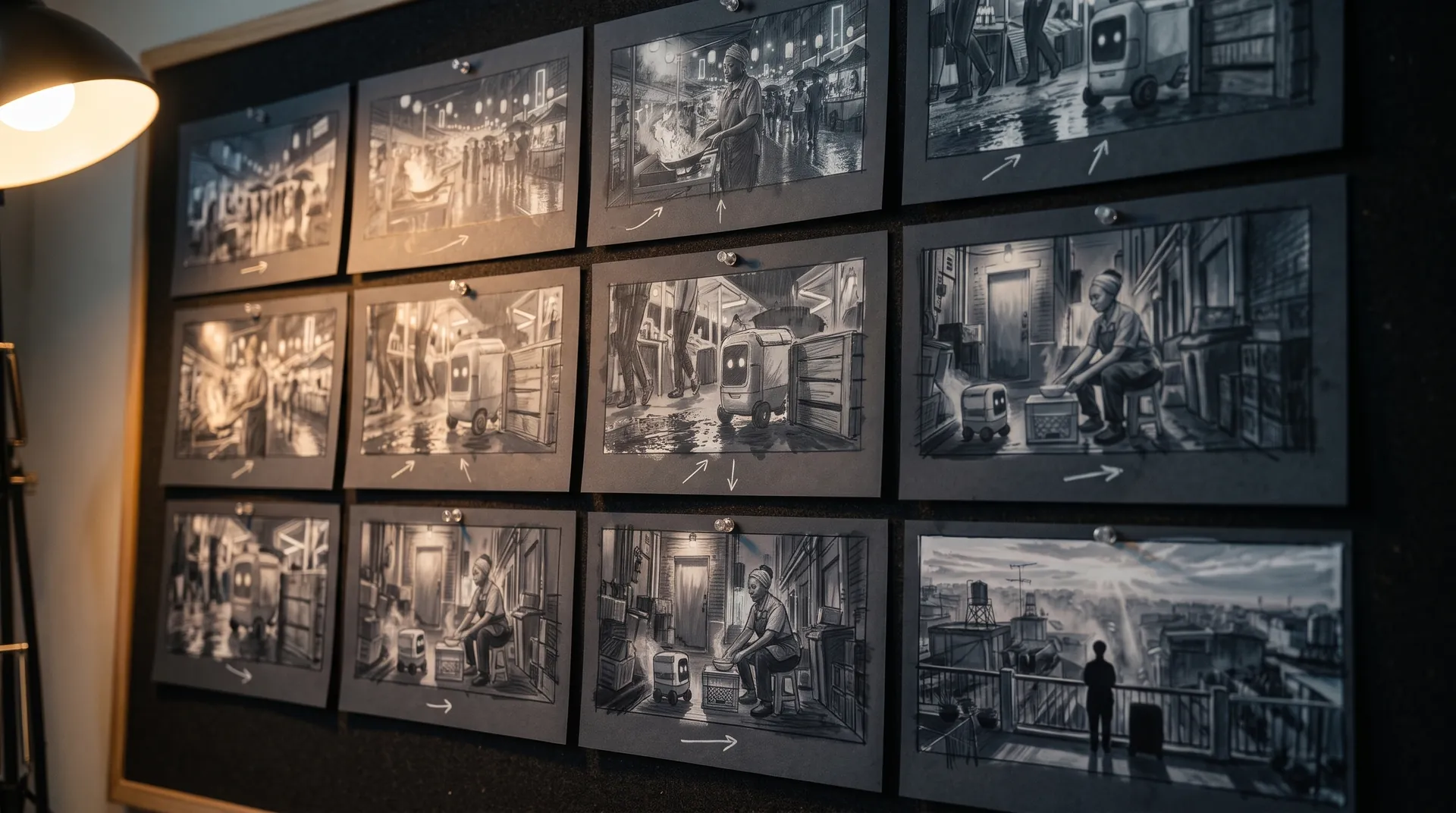
Board a storyboard
A panel for every shot, as AI stills or quick vector frames. Export it as a pitch deck.

Make motion
Titles, explainers and moving storyboards, drawn as vector animation by the AI you pick.
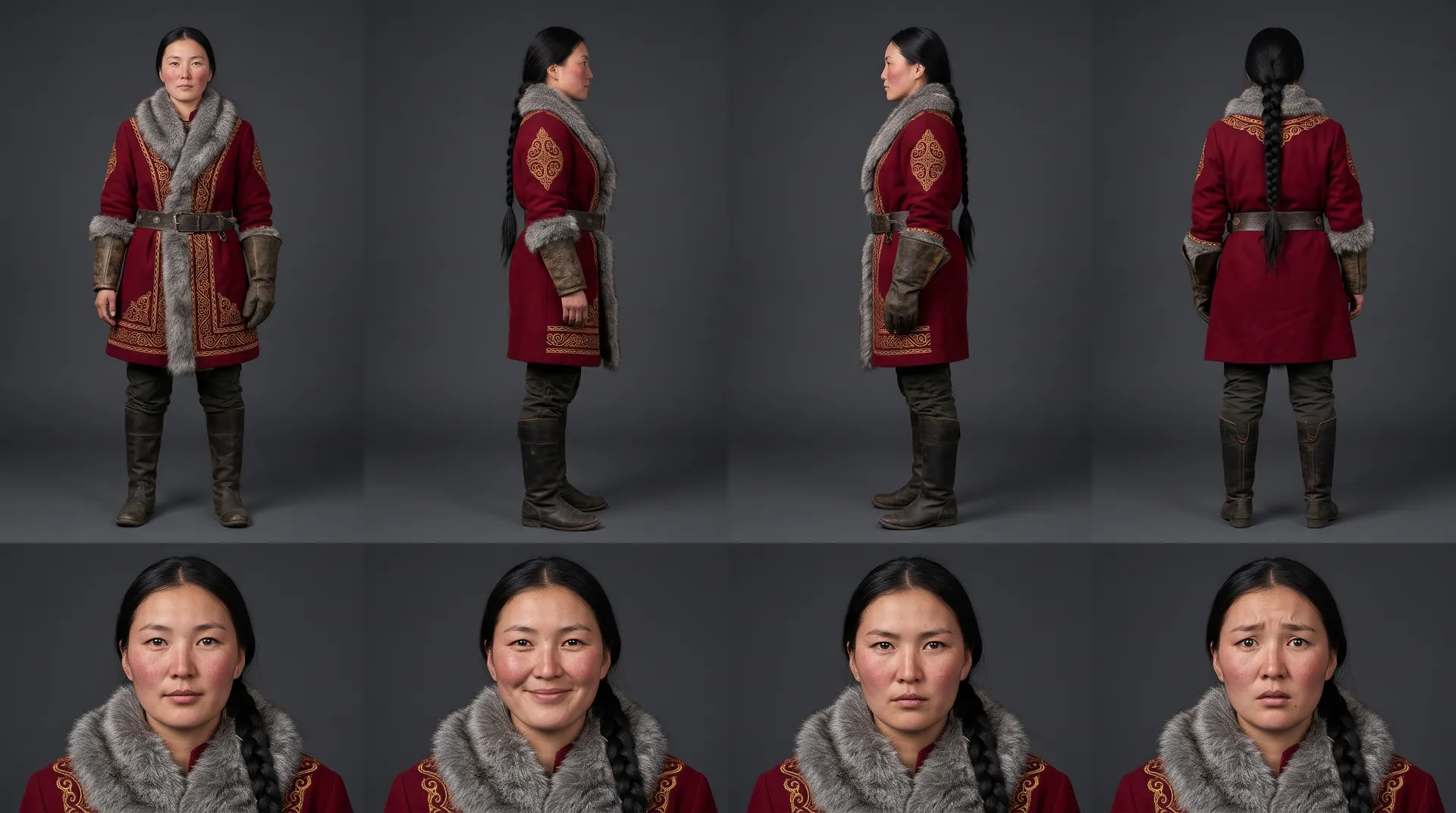
Characters, places, products
One subject in many versions, or new ideas for it. Every angle, look and light.
Your first film is one sentence away.
Free to start. Pay only for what you render.