AI for Production Houses: Where It Fits and Where It Doesn't
AI video for production houses fits previs, pitch films, B2B and festive films. A crew still wins for real people, real products and long dialogue scenes.
By Divy Brahmbhatt7 min read
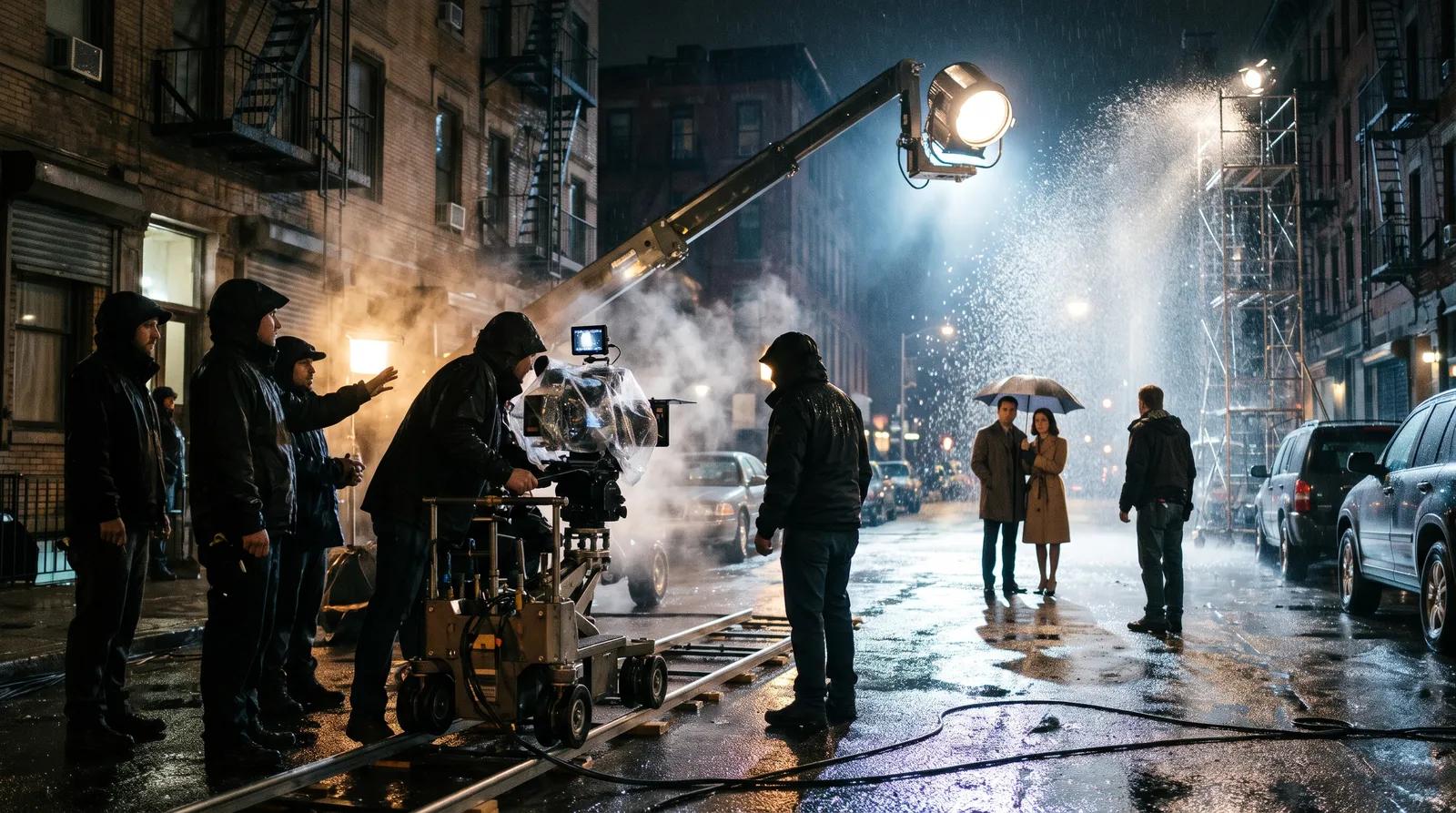
AI video for production houses fits four kinds of work today: previs, pitch films, B2B and industry films, and short festive brand films. A crew still wins when the film depends on a real person, a real product that must look exact, or a long acted dialogue scene. This is my opinion. I build an AI film studio and work with the teams that make client films on it, so read it with that in mind. The numbers are from our own project records.
Key takeaways
- Fits: previs, pitch films, B2B and industry films, festive films.
- Doesn't fit: real people, real products, long dialogue scenes.
- Real numbers: a 22-shot industry film took 1,200 credits and 40 video renders. A 30-second festive ad took 941 credits and 31.
- The edit stayed outside. MAHA-GFC's two films were cut in the team's own editing software.
- For a team: Hyperdream's Team plan is 2 to 9 seats at $59, $119 or $249 a seat a month (checked 10 November 2026).
Where does AI fit in a production house today?
Previs and animatics
This is the safest place to start, because nothing you make is the final picture. The job is to agree the film before the shoot.
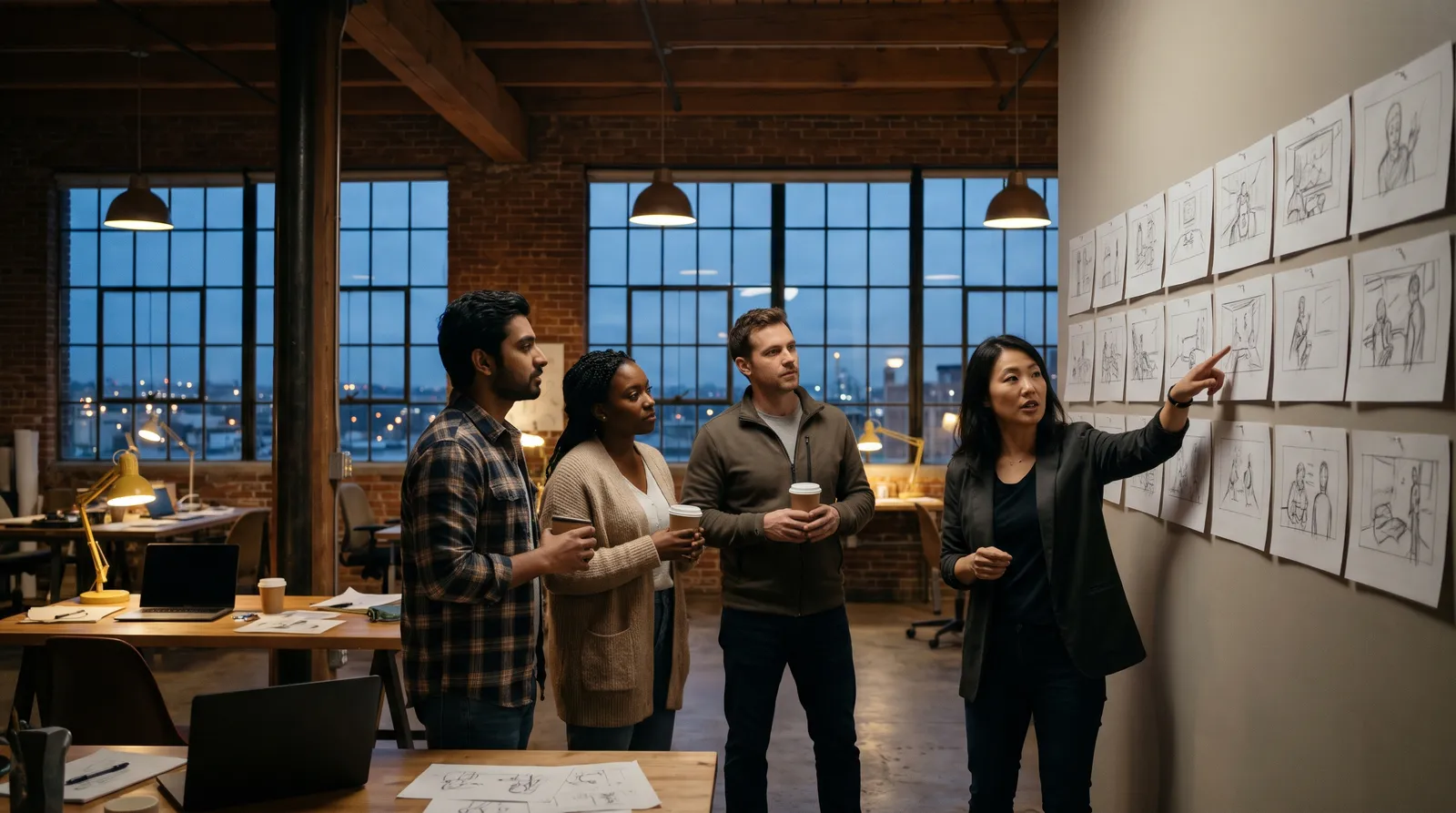
In Hyperdream's Storyboard tool (Pro and up), a film is planned shot by shot and drawn as AI stills or as "Vector frames" at 1 credit a frame (checked 10 November 2026). The board saves as a pitch deck PDF. Motion can turn a storyboard into a moving one at 3 credits a second. That lets a director and a client agree the shots early. How to storyboard a short film covers the craft.
Pitch films
A pitch film exists to win a job that has no budget yet. A crew day for a film that may never be made is hard to justify. A one-minute mood film made from the script is not.
Tell the client it is AI, and make it on a paid plan: on Hyperdream, work made at the Free level is for personal projects.
B2B and industry films
These films are often about things a camera can't reach: a plant that is not built, a supply chain, a process inside a machine.
Our team made two Hindi films for MAHA-GFC, a planned furniture city. The second has 22 shots and 144 seconds of kept footage. It took 1,200 credits, 40 video renders and 5.5 to 6.2 hours of logged work over three working days. The record is in the MAHA-GFC case study.
Festive films
Festive work has a fixed date and a short life. Our team made a 30-second vertical Diwali ad for Shilp Group in two days: 941 credits, 31 video renders for 7 video shots, and 3.8 to 4.4 hours of logged work, plus 36 minutes on the script. Five residents each say one Hindi line to camera.
It also shows the limit. The first pass of pictures drew a bungalow and cramped rooms. The client builds apartments. We fed in screenshots of real Shilp buildings and the logo file, and the pictures improved. They are still drawings guided by references, not footage of a flat a buyer can visit.
Where does a crew still win?
Real people
A founder's message, a customer testimonial, a celebrity, your client's staff. The value of these films is that the person is real and said it.
Hyperdream's Avatar can make a face say a line of up to 60 seconds, and it comes with a rule: only use faces you have permission to use. Voices come from a library, or you clone your own from a recording. Even so, a cloned voice reading a script is not that person's recorded performance. If the brief is "our CEO speaks to the staff", book the camera.
Real products
Food, jewellery, a car, a phone, an apartment. If the buyer will hold the real thing next to the film, the film has to match it exactly.
A product in Hyperdream gets a reference sheet that shows every side and the details, and that raises the odds that a label stays put. We have not published a test of how exactly a product holds across shots, so I won't promise it. In the Shilp ad the logo was placed as a still frame. It was not generated as video. For a hero product shot, a tabletop shoot is still the sure way.
Long dialogue scenes
Two people talking for ninety seconds is hard for AI today, for three reasons.
- Clip length. Video models make clips of 1 to 30 seconds. On Hyperdream the longest clip is 20 seconds on Pro and 30 on Business, and only Wan 3.0 and Kling 4.0 reach 30 (checked 10 November 2026).
- One line per shot. On our films, a spoken line sat in a shot of 5 or 6 seconds. A scene becomes many short shots, each rendered on its own.
- Voices drift. When the video model makes the voice, it can change between shots. There is a tool to fix it, shot by shot.
Actors on a set do this in one take, and they are better at it.
How do the jobs compare?
| Job | AI or crew | Why |
|---|---|---|
| Previs, animatic, pitch deck | AI | Nothing is final. Speed matters most |
| Pitch or mood film | AI | No budget exists yet |
| Industry film about a place not built | AI | There is nothing to point a camera at |
| Festive brand film, short and seasonal | AI, with the client's real references | Fixed date, short life |
| Founder or customer on camera | Crew | The person must be real |
| Hero product shot | Crew | It must match the real thing |
| Long acted dialogue scene | Crew | Clips are short, and actors hold a scene better |
| Establishing shots and cutaways inside a shot film | Either | Tell the client which is which |
Does AI replace the crew, or change the job?
It changes it. On the films above, AI replaced the shoot days. It did not replace the director, the producer or the editor.
Someone still wrote and rewrote: the Shilp script went through 7 versions in 36 minutes. Someone picked takes: 31 renders for 7 shots means 24 were passed over. And someone cut the film. Both MAHA-GFC films and the Shilp ad were finished in outside editing software, from the files the project gave us.
I expect most production houses to work this way: AI shots where they fit, camera shots where they don't, and one edit in the software your editors already know. Hyperdream's Edit step is a timeline for assembling a cut and exporting an MP4 at up to 1080p. It does not replace professional editing software. You can download a zip of every file in the film and finish in your own editor.
What should a production house ask of an AI tool?
The picture is half of it. A house with several clients also needs control. On Hyperdream's Team plan (checked 10 November 2026):
- Client folders. Work, films and spending are filed under a client. People see only the clients they have access to.
- Budgets. Each client can have a monthly credit budget, set to stop work or to warn. Each member can have a monthly limit.
- Roles. Owner, Admin, Editor and Viewer. Viewers watch and comment for free and take no seat.
- Approvals. "Share for review" makes a link. The client comments on a moment in the video and approves or sends it back, with no account.
- Hand-overs and an audit log. Work belongs to the team, so it stays when a freelancer leaves.
Seats are $59, $119 or $249 a month by level, for 2 to 9 people. Whoever runs Director, the film agent, needs a Pro or Business seat. If review is the centre of your pipeline, a dedicated review tool goes deeper than ours. We compare the options in AI video platforms for agencies.
How would I start?
- Pick one job with nothing real in it. A previs, or an industry film.
- Set up the client in Settings > Clients, with a budget set to stop work.
- Get three sign-offs: the script, the storyboard, the cut. The stages are in an agency workflow for AI films.
- Count the renders. Divide video renders by finished shots. Ours ran from 1.8 to 4.4. That number is what you quote from, as how to price AI films for clients explains.
- Finish where your editors are fastest.
The team features are on the agencies page.
How we checked
This post is opinion, and the fit list is mine. The film numbers come from three project records read on 10 November 2026. Plan prices, clip limits and team features were checked against the live pricing and models data the same day. What we could not confirm: a cost comparison with a shoot day, which we have no data for, and how exactly a real product holds across AI shots, which we have not tested in public. The MAHA-GFC films were made in summer 2026 on an earlier version of the app.
Questions people ask
In my view, in four places today: previs and animatics, pitch films, B2B and industry films, and short festive brand films. In each, nothing on screen has to be a real, exact person or product.
Keep reading

For Teams18 November 20267 min read
How to Price AI Films for Clients (With Real Numbers)
How to price AI video services: start from your real cost. Three client films took 941 to 1,289 credits and 3.4 to 6.2 logged hours each. Then add a margin.
For Teams16 November 20267 min read
Client Folders for AI Video: Keep Each Client's Work Apart
Set up client folders for AI video: one folder per client, access per person, a monthly budget each and an archive at the end. Six clients, step by step.
For Teams13 November 20267 min read
An Agency Workflow for AI Films: Brief to Approved Cut
An AI video agency workflow in six stages: brief, pitch deck, storyboard sign-off, shots, review link and export, with who does what at each stage.
More than images and video
Scripts, storyboards, motion, and characters in every version. Each one on its own, or all of them in a film.
Write a script
An idea in, a properly formatted screenplay out. Edit any line, then board it or film it.
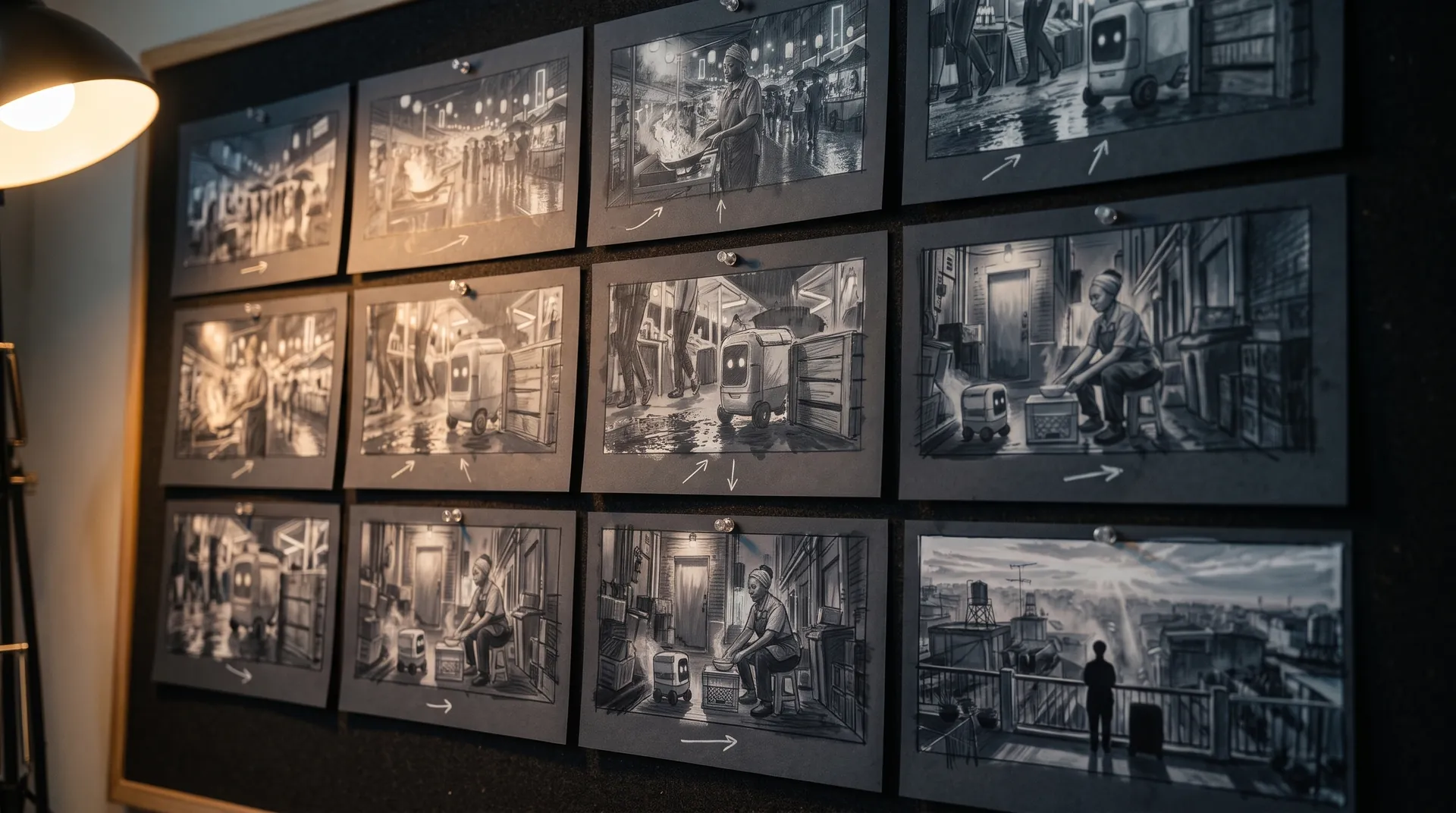
Board a storyboard
A panel for every shot, as AI stills or quick vector frames. Export it as a pitch deck.

Make motion
Titles, explainers and moving storyboards, drawn as vector animation by the AI you pick.

Characters, places, products
One subject in many versions, or new ideas for it. Every angle, look and light.
Your first film is one sentence away.
Free to start. Pay only for what you render.